CM Fadnavis Meets Women Farmers Backing Historic 2026 Bill
Synopsis
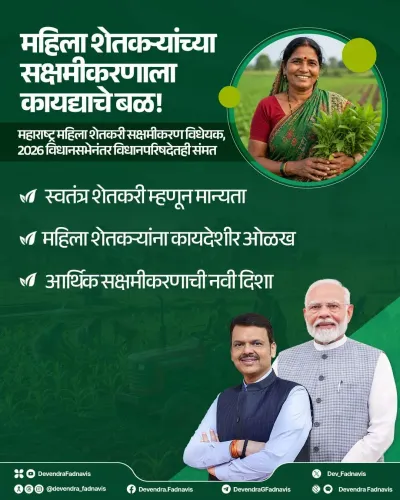
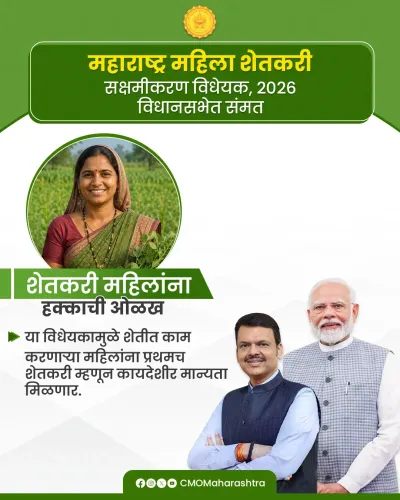
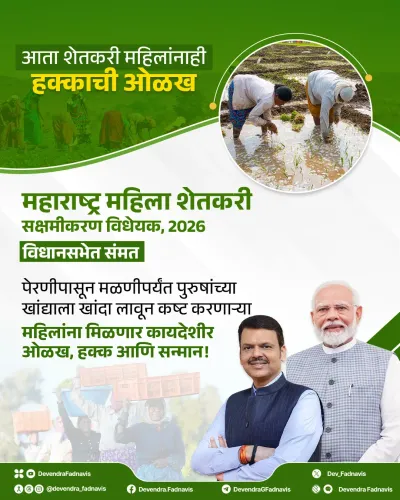
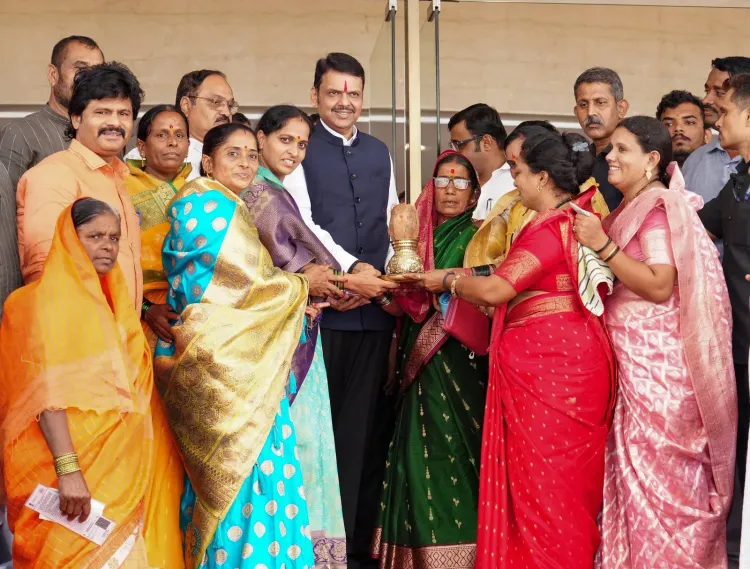
Maharashtra CM Devendra Fadnavis received a delegation of women farmers at Vidhan Bhavan, Mumbai on 10 July 2026, who expressed gratitude for the 'Maharashtra Mahila Shetkari Sakshamikaran Vidheyak, 2026' — a landmark bill aimed at empowering women in the state's agricultural sector.
Key Takeaways
Maharashtra CM Devendra Fadnavis met women farmers at Vidhan Bhavan, Mumbai on 10 July 2026 .
The women expressed gratitude for the 'Maharashtra Mahila Shetkari Sakshamikaran Vidheyak, 2026' , described by Fadnavis as a 'historic decision'.
Fadnavis called the blessings and joy of the visiting women farmers the 'greatest strength' his work has received.
The bill aligns with the national Mahila Kisan Sashaktikaran Pariyojana framework, but goes further by establishing a dedicated state law.
Implementation rules, pilot districts, and subordinate legislation are the key next steps to watch.
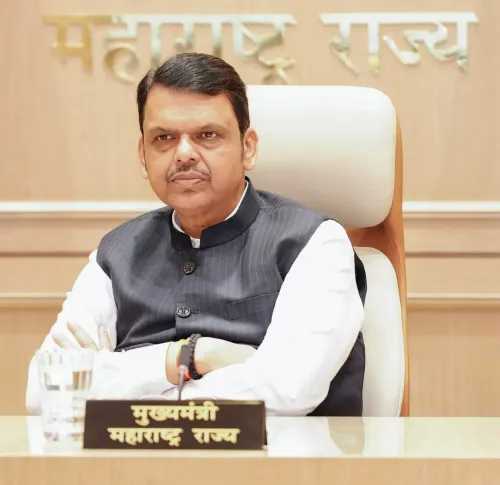
Maharashtra Chief Minister Devendra Fadnavis on Friday, 10 July 2026, received a delegation of women farmers at Vidhan Bhavan, Mumbai, who called on him to express gratitude for the passage of the 'Maharashtra Mahila Shetkari Sakshamikaran Vidheyak, 2026' — a bill aimed at empowering women in agriculture across the state.
Context
Posting on X, CM Fadnavis described the visit as deeply moving. In his words: 'त्यांच्या चेहऱ्यावरील आनंद, मनातील विश्वास आणि प्रेमाने दिलेले आशीर्वाद हेच माझ्या कार्याला मिळालेले सर्वात मोठे बळ आहेत' — ('The joy on their faces, the faith in their hearts, and the blessings given with love are the greatest strength my work has received.')
The Chief Minister characterised the bill as a 'historic decision' (ऐतिहासिक निर्णय) for women farmers, and the gathering at Vidhan Bhavan was framed as an expression of grassroots appreciation for the legislation.
Policy Backdrop
Women constitute a substantial share of India's agricultural workforce, yet have historically faced significant barriers to land ownership, institutional credit, and formal recognition as farmers in their own right. Maharashtra has periodically introduced targeted welfare measures for this constituency, including during Fadnavis' earlier tenure as Chief Minister between 2014 and 2019.
The new bill aligns with the broader national framework established by the Mahila Kisan Sashaktikaran Pariyojana, a centrally sponsored sub-scheme launched in 2011 to address gender gaps in agriculture. Maharashtra's move to enact a dedicated state-level empowerment law represents an escalation of that approach — from scheme-based support to legislative guarantee.
The bill was deliberated at Vidhan Bhavan, the seat of Maharashtra's legislative assembly in Mumbai, underscoring its formal statutory character rather than a mere policy announcement.
Stakeholders and Impact
The primary beneficiaries identified are women farmers and rural women engaged in agricultural activity across Maharashtra. If implemented effectively, a dedicated empowerment law could provide women farmers with clearer legal standing for land rights, access to government schemes, and institutional credit — areas where they have traditionally been underserved.
The delegation that met CM Fadnavis at Vidhan Bhavan on 10 July symbolised the political and social resonance of the legislation among its intended beneficiaries. Their visit also provided the Chief Minister with visible public validation ahead of anticipated scrutiny over implementation details.
What's Next
The immediate focus shifts to the notification of implementation rules, identification of pilot districts, and the administrative machinery that will translate the bill's provisions into on-ground benefits for women farmers. Observers will watch whether Maharashtra issues detailed subordinate legislation and timelines in the coming weeks.
More broadly, the bill's passage could set a precedent for other states to enact standalone legislative frameworks for women in agriculture, reinforcing a wider pattern of gender-focused interventions in the farm sector across India.
Point of View
The Chief Minister is positioning the bill as a grassroots mandate rather than a top-down initiative. This fits a broader BJP state-government pattern of anchoring welfare legislation in visible beneficiary outreach. The real test, however, will be whether Maharashtra's administrative machinery delivers substantive change in land rights and credit access for women farmers — areas where past schemes have fallen short of stated goals.
NationPress
10 Oct 2026
Frequently Asked Questions
What is the Maharashtra Mahila Shetkari Sakshamikaran Vidheyak 2026?
It is a bill passed by the Maharashtra legislature aimed at empowering women farmers in the state, addressing barriers such as land ownership and access to institutional credit. CM Devendra Fadnavis has described it as a historic decision for rural women.
Why did women farmers visit Vidhan Bhavan on 10 July 2026?
A group of women farmers visited Vidhan Bhavan, Mumbai on 10 July 2026 to meet CM Devendra Fadnavis and express their gratitude for the passage of the Maharashtra Mahila Shetkari Sakshamikaran Vidheyak, 2026.
What does Mahila Shetkari Sakshamikaran mean?
'Mahila Shetkari Sakshamikaran' is a Marathi phrase meaning 'women farmer empowerment.' It refers to Maharashtra's new 2026 legislation designed to give women engaged in agriculture greater legal recognition and support.
How does Maharashtra's 2026 women farmer bill relate to central government schemes?
The bill complements the nationally initiated Mahila Kisan Sashaktikaran Pariyojana launched in 2011, but goes further by creating a dedicated state-level legislative framework rather than relying solely on scheme-based support.
What are the next steps after the Maharashtra Mahila Shetkari Sakshamikaran Vidheyak 2026 was passed?
The key next steps include the state government notifying implementation rules, identifying pilot districts, and establishing the administrative mechanisms needed to translate the law's provisions into tangible benefits for women farmers across Maharashtra.