CM Fadnavis Orders SIT Probe into Nashik Health Scheme Fraud

Synopsis
Maharashtra CM Devendra Fadnavis has constituted an SIT under Nashik Divisional Commissioner Praveen Gedam to investigate nearly 16,000 suspected fraudulent claims under the MJPJAY and AB-PMJAY, with five Nashik hospitals already deregistered and district-level fraud units ordered across the state.
Key Takeaways
SIT constituted : Headed by Nashik Divisional Commissioner Praveen Gedam , the team will probe alleged irregularities in the Mahatma Jyotirao Phule Jan Arogya Yojana in Nashik district .
16,000 suspected claims : The State Health Assurance Society identified nearly 16,000 suspected claims and surgeries for 2024–2026 , including around 9,500 from Nashik .
Five hospitals deregistered : Empanelment of five hospitals in Nashik has already been cancelled in connection with the fraud probe.
Special audits mandated : All high-value treatment claims will undergo individual case-by-case verification through special audits.
District fraud units : Dedicated fraud prevention units will be set up in every district and linked to real-time monitoring dashboards.
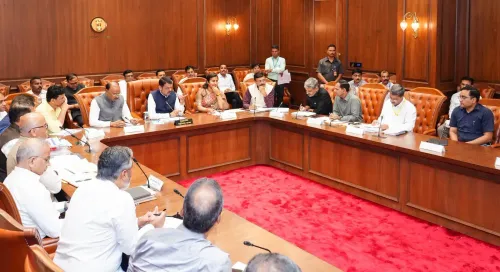
The review was held at Vidhan Bhavan, Mumbai , on 10 July 2026 , with senior ministers and officials present.
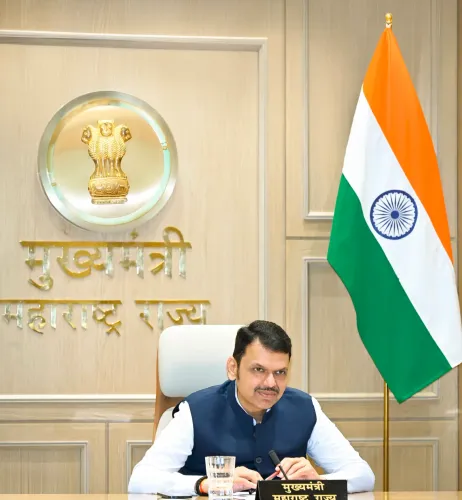
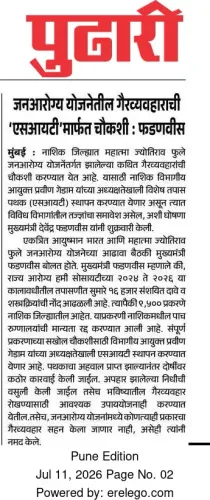
Maharashtra Chief Minister Devendra Fadnavis on Friday, 10 July 2026, chaired a high-level review meeting at Vidhan Bhavan, Mumbai, on the integrated Ayushman Bharat – Pradhan Mantri Jan Arogya Yojana (AB-PMJAY) and the Mahatma Jyotirao Phule Jan Arogya Yojana (MJPJAY), announcing a Special Investigation Team (SIT) to probe alleged irregularities in the schemes in Nashik district.
Context
The review was triggered by an ongoing inquiry into alleged irregularities under the MJPJAY in Nashik. An inspection conducted by the State Health Assurance Society covering the period 2024 to 2026 flagged nearly 16,000 suspected claims and surgeries across Maharashtra, of which around 9,500 originated from Nashik district alone. The empanelment of five hospitals in Nashik has already been cancelled in connection with the case.
Fadnavis announced that the SIT will be headed by Nashik Divisional Commissioner Praveen Gedam and will comprise experts drawn from multiple departments to ensure a thorough and credible investigation.
Policy Backdrop
The Ayushman Bharat – PMJAY, launched nationally in 2018, provides health coverage of up to Rs 5 lakh per family annually to economically vulnerable households. Maharashtra's MJPJAY, introduced in 2017, operates as a state-level complement targeting low-income beneficiaries, and the two schemes have been progressively integrated to reduce duplication and extend coverage.
Fraud detection in public health insurance has emerged as a persistent challenge across states implementing PMJAY. Suspicious billing, ghost surgeries, and inflated high-value claims have prompted several state governments to deploy technology-driven audit mechanisms. Maharashtra's latest measures follow this national pattern but add a district-level institutional layer.
Stakeholders and Impact
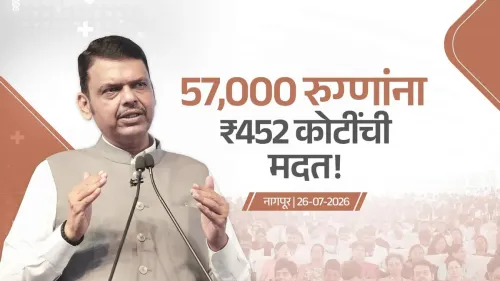
Fadnavis directed that all high-value treatment claims undergo special audits with individual case verification. He also announced that dedicated fraud prevention units will be established in every district and integrated with advanced dashboard systems for real-time monitoring, analysis, and prompt action against suspicious transactions.
The Chief Minister underscored that 'quality and transparent healthcare for poor and needy people remains the Government's highest priority and that no irregularities in public health insurance schemes will be tolerated.' Beneficiaries of both schemes — primarily low-income families relying on cashless hospital treatment — stand to gain from tighter oversight, while hospitals found to have submitted fraudulent claims face cancellation of empanelment and legal scrutiny.
The review meeting was attended by Minister Chandrashekhar Bawankule, Minister Prakash Abitkar, Minister of State Dr. Pankaj Bhoyar, Minister of State Meghnatai Bordikar, MLA Dr. Rahul Aher, and senior government officials.
What's Next
The SIT led by Praveen Gedam is expected to submit its findings on the Nashik irregularities, with the scope of the probe potentially widening given that suspected claims have been identified across the state. The rollout of district-level fraud prevention units and their integration with real-time dashboards will be a key metric of implementation success.
If the SIT uncovers systemic collusion between hospitals and scheme officials, the case could prompt a broader legislative or administrative review of empanelment norms for public health insurance across Maharashtra — and serve as a template for other states grappling with similar vulnerabilities in their PMJAY implementation.
Point of View
Not merely an administrative lapse — the public constitution of an SIT and the pre-emptive cancellation of hospital empanelments suggest political intent to demonstrate zero tolerance ahead of potential legislative scrutiny. The scale of flagged claims — nearly 16,000 across two years — points to systemic vulnerabilities in the empanelment and claims-processing architecture of both the central and state schemes. Deploying district-level fraud units integrated with real-time dashboards mirrors a broader national trend of using technology as a substitute for thin administrative capacity in welfare delivery. The SIT's findings will test whether the response matches the rhetoric: a narrow Nashik-focused probe that ends with a few hospital cancellations would fall short of the structural reform the numbers seem to demand.
NationPress
9 Oct 2026
Frequently Asked Questions
What is the SIT formed by CM Fadnavis for health scheme fraud?
The Special Investigation Team (SIT) is headed by Nashik Divisional Commissioner Praveen Gedam and comprises experts from multiple departments. It was constituted to investigate alleged irregularities under the Mahatma Jyotirao Phule Jan Arogya Yojana in Nashik district , where around 9,500 suspected claims were flagged for the period 2024 to 2026.
How many suspected fraudulent claims were found in Maharashtra health schemes?
The State Health Assurance Society identified nearly 16,000 suspected claims and surgeries across Maharashtra for the period 2024 to 2026 , of which around 9,500 were from Nashik district alone.
Which hospitals were cancelled in the Nashik health scheme fraud case?
The empanelment of five hospitals in Nashik has been cancelled in connection with the irregularities identified under the Mahatma Jyotirao Phule Jan Arogya Yojana . Their specific names have not been officially disclosed in the Chief Minister's statement.
What is the Mahatma Jyotirao Phule Jan Arogya Yojana?
The Mahatma Jyotirao Phule Jan Arogya Yojana (MJPJAY) is Maharashtra's state-run health insurance scheme, introduced in 2017 , designed to provide cashless medical treatment to low-income households. It has been integrated with the central Ayushman Bharat – PMJAY to extend coverage and reduce duplication.
What new measures is Maharashtra taking to prevent health insurance fraud?
Maharashtra will establish dedicated fraud prevention units in every district , integrated with advanced dashboard systems for real-time monitoring. Additionally, all high-value treatment claims will undergo special audits with individual case verification, as directed by CM Devendra Fadnavis at the review meeting on 10 July 2026 .