Maharashtra Assembly Speaker Cautions Bureaucrats on Attendance During Critical Debates
Synopsis
Maharashtra Assembly Speaker Rahul Narwekar has issued a strong warning to bureaucrats about their attendance during legislative discussions. With key officials absent, the Speaker emphasized the importance of their presence to maintain the integrity of crucial debates, particularly during budget discussions.
Key Takeaways
Rahul Narwekar emphasizes bureaucratic responsibility in legislative proceedings.
Serious attendance issues among secretary-level officers have been noted.
Government plans to support farmers through a cold storage initiative.
Significant reductions in electricity tariffs for agriculture and dairy sectors.
The Solar Agriculture Feeder Scheme aims to enhance power supply for farmers.
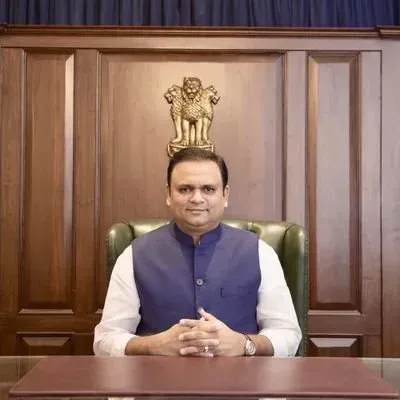
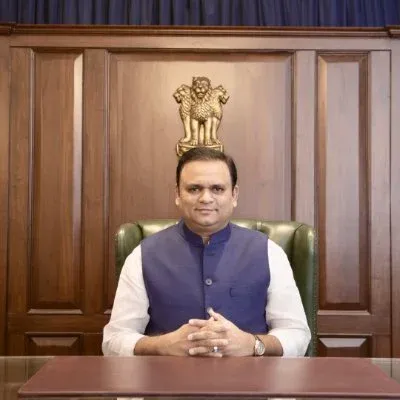
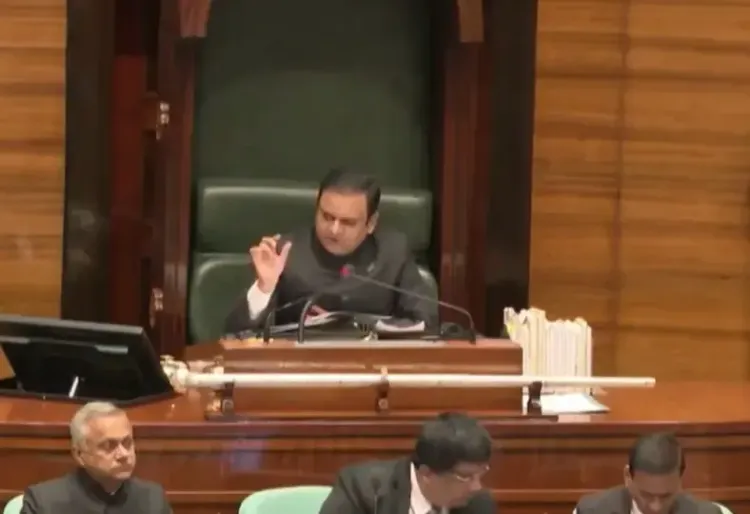
Mumbai, March 10 (NationPress) The Speaker of the Maharashtra Legislative Assembly, Rahul Narwekar, has issued a firm admonition to bureaucratic officials, emphasizing that the Assembly holds the authority to implement necessary measures if secretary-level officers are discovered absent from the gallery during significant legislative sessions.
This warning was articulated during the budget discussion in the Assembly, where it was noted that only four ministers were present while the officers’ gallery was predominantly unoccupied.
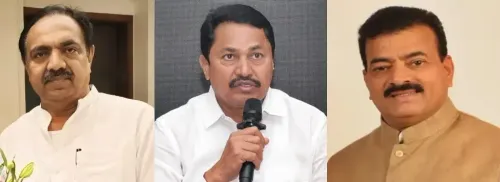
Dilip Walse Patil, a leader from the Nationalist Congress Party (NCP) and former Speaker, drew attention to this issue of bureaucratic absenteeism.
He commented, "The budget is a paramount topic for the House. Senior officials, such as the Chief Secretary, Finance Secretary, and Planning Secretary, are expected to be present in the lobby to absorb the sentiments and proposals of the members. To preserve the integrity of discussions, such debates must be regarded with utmost seriousness."
Walse Patil also stressed the necessity for senior departmental heads to attend discussions pertinent to their departments.
Echoing Walse Patil’s concerns, Speaker Rahul Narwekar affirmed, "The concern regarding the officials' presence is valid. Although this is an 'invisible gallery,' it is essential for all senior IAS officers to be in attendance. Officials have been previously informed of this through correspondence."
In a decisive ultimatum directed at the state’s administrative body, Narwekar stated, "This is the final opportunity for the administration. Going forward, if Additional Chief Secretary (ACS) level officers fail to appear in the gallery during such pivotal discussions, the House is equipped to enact disciplinary actions against them."
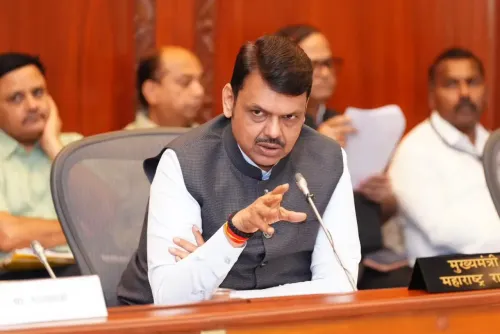
On the same day, Chief Minister Devendra Fadnavis announced that the state government is planning to create a comprehensive cold storage chain aimed at safeguarding agricultural products and ensuring fair pricing for farmers.
Additionally, he revealed a substantial decrease in electricity rates intended to alleviate burdens on the agriculture and dairy sectors.
In response to a query from NCP MLA Anil Patil regarding standardized electricity rates for the dairy processing sector, the Chief Minister noted the critical role of chillers in dairy collection centers.
As a result, the state government has requested the Maharashtra Electricity Regulatory Commission (MERC) to provide special concessions to this industry.
"MERC has approved our request, and the new electricity tariffs will be implemented starting July 1, 2026," the Chief Minister stated.
He detailed the tariff reductions for the Low Tension (LT) Commercial Category, which was slashed from Rs 16.55 per unit to Rs 7.31 per unit, and for the High Tension (HT) Commercial Category, the tariff was also reduced and fixed at Rs 9.06 per unit.
Furthermore, the Chief Minister highlighted the government’s serious considerations regarding the expansion of cold storage facilities. While solar-based cold storage currently presents limitations, he mentioned that the government is investigating a "hybrid model" combining solar and traditional energy to minimize costs.
Moreover, CM Fadnavis provided an update on the Solar Agriculture Feeder Scheme: "To date, we have accomplished 4,000 MW of power generation, supplying daytime electricity to nearly 8 lakh farmers. Our goal is to generate an additional 10,000 MW by year-end, which will enable us to offer daytime power to 75% of the state's farmers."
Frequently Asked Questions
What did Rahul Narwekar warn bureaucrats about?
He warned that the Assembly could take disciplinary action against secretary-level officers absent from key legislative discussions.
Why is the presence of officials important during discussions?
Officials, including senior bureaucrats, are expected to attend to understand the sentiments of Assembly members and ensure informed decision-making.
What measures are being taken to support farmers in Maharashtra?
The state government plans to establish a cold storage chain and has announced significant reductions in electricity rates for the agriculture sector.
When will the new electricity tariffs come into effect?
The new power tariffs will be implemented on July 1, 2026.
What is the goal of the Solar Agriculture Feeder Scheme?
The scheme aims to generate additional power to provide daytime electricity to a larger percentage of farmers in the state.