What Happened at the Conclusion of Maharashtra's Winter Session?

Synopsis
The Maharashtra Legislature's Winter Session concluded with significant policy announcements and legislative actions. Key bills were passed, and the government set the stage for the upcoming Budget Session, scheduled to start on February 23, 2024. Discover the implications of the decisions made during this crucial session.
Key Takeaways
The Maharashtra Winter Session lasted for seven days.
A total of 18 bills were introduced, with 16 passing.
Key policy decisions were made in anticipation of the BMC elections.
The Maharashtra Stamp Duty Bill aims to simplify dispute resolution.
Amendments to MOFA strengthen protections for homebuyers.
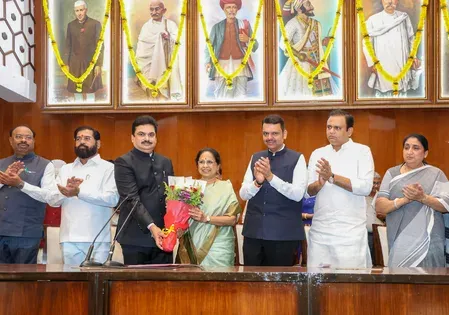
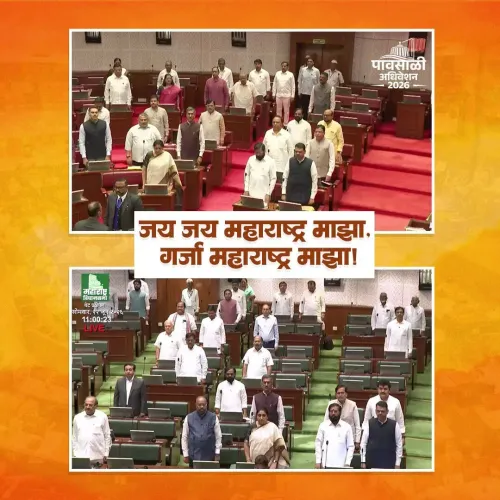
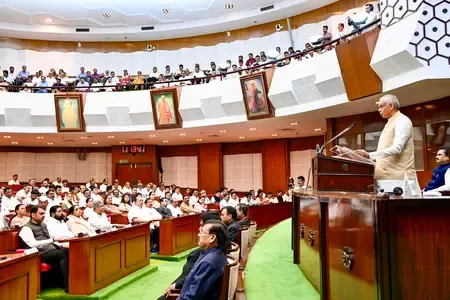
Nagpur, Dec 14 (NationPress) The Maharashtra Legislature's week-long Winter Session wrapped up on Sunday, with Governor Ramesh Bais officially proroguing both Houses. Maharashtra Legislative Council Chairman Ram Shinde and Legislative Assembly Speaker Rahul Narwekar confirmed that the upcoming Budget Session will kick off on February 23 next year in Mumbai.
During the seven-day period, the Legislature engaged in a total of 72 hours and 35 minutes of business, averaging 10 hours and 22 minutes of work per day, with seven sittings held. Overall attendance amongst members was recorded at 75.94%, peaking at 90.98% and dipping to 43.85%.
Throughout this session, 18 Bills were introduced in the Maharashtra Legislative Assembly, with 16 passing. The Legislative Council also saw four Bills being approved. Additionally, six Ordinances were presented for legislative endorsement in both Houses.
In anticipation of the upcoming Brihanmumbai Municipal Corporation (BMC) elections, the state government revealed various policy initiatives during the session.
These initiatives included relief for approximately 20,000 buildings in Mumbai that do not have Occupancy Certificates (OC), efforts to make Mumbai “pagdi-free”, provisions for housing alternatives within a five-kilometre radius for 25,000 National Park employees, amendments to the rules governing the redevelopment of chawls (tenements) on Mumbai’s mill lands, a 10% reduction in prices for homes developed by the City and Industrial Development Corporation (CIDCO), and the launch of the Cluster Redevelopment Scheme for large plots exceeding 50 acres, with 17 projects chosen for the initial phase.
The Maharashtra Stamp Duty (Second Amendment) Bill, 2025, was also passed in both Houses during the session.
This legislation seeks to alleviate stamp duty disputes for citizens by providing a more accessible mechanism for resolution. Citizens will now be able to appeal directly to the state government on stamp duty issues instead of resorting to the High Court.
Moreover, significant amendments aimed at safeguarding the rights of flat owners and housing societies, while discouraging malpractice by developers who withhold property titles, were enacted. The Legislature updated the long-standing Maharashtra Ownership Flats (Regulation of the Promotion of Construction, Sale, Management and Transfer) Act, 1963 (MOFA).
These amendments are designed to rectify a significant legal gap concerning conveyance deeds for newer residential projects registered under the Real Estate (Regulation and Development) Act (RERA), 2016, thereby enhancing protections for homebuyers and cooperative housing societies.
Point of View
I recognize the importance of the Maharashtra Legislature's Winter Session. The decisions made here not only shape local governance but also resonate with the electorate ahead of significant elections. Our commitment is to provide unbiased coverage that reflects the interests of the constituents and the broader implications of these legislative actions.
NationPress
16 Sept 2026
Frequently Asked Questions
When does the next Budget Session of the Maharashtra Legislature begin?
The next Budget Session will commence on February 23 next year in Mumbai.
How many bills were passed during the Winter Session?
A total of 16 bills were passed in the Maharashtra Legislative Assembly during the Winter Session.
What measures were taken to address housing issues in Mumbai?
The government announced relief for buildings lacking Occupancy Certificates, steps to make Mumbai 'pagdi-free', and housing provisions for National Park employees.