Mahayuti wins 16 of 17 Maharashtra Council seats; Nashik rebel defeats Shinde's Sena
Synopsis
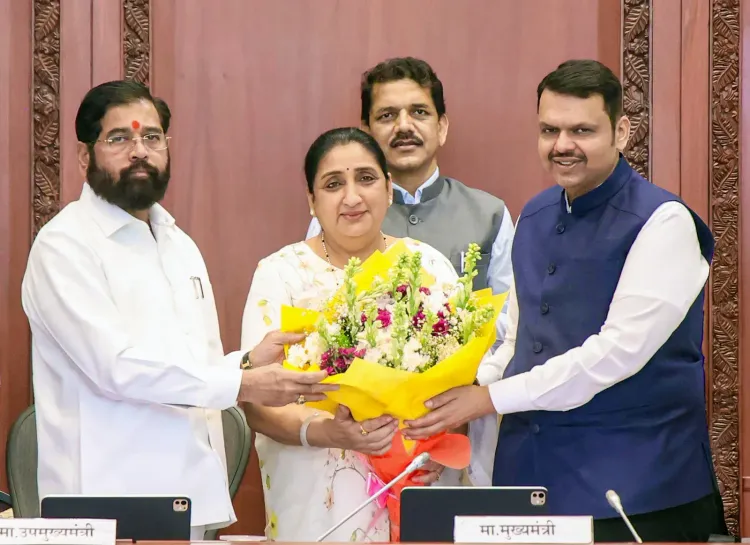
Mahayuti swept 16 of 17 Maharashtra Council seats — but the alliance's near-perfect run was upended in Nashik, where BJP rebel Gokul Gite defied heavy pressure from senior party leaders to defeat Shinde's Shiv Sena incumbent. The result hands the ruling combine a structural upper-house majority while exposing a coalition fault line that neither side can easily paper over.
Key Takeaways
Mahayuti alliance won 16 of 17 Maharashtra Legislative Council seats, with counting concluding on 22 June .
BJP led with 11 seats ; Shiv Sena (Shinde) won 3 , NCP (Ajit Pawar) won 2 , and an Independent took 1 .
BJP rebel Gokul Gite defeated Mahayuti's official Nashik candidate, incumbent MLC Narendra Darade of Shinde's Shiv Sena, despite pressure to withdraw.
Six seats were secured uncontested after multiple MVA candidates withdrew nominations on the final withdrawal deadline.
The MVA was routed across virtually all constituencies, failing to convert local body strength into upper house seats.
Shiv Sena (UBT) candidate Sharad Tayde alleged money power and a 'magic pen' operation in Jalgaon ; the claims remain unverified.
The ruling Mahayuti alliance swept the Maharashtra Legislative Council (Vidhan Parishad) elections on 22 June, capturing 16 of 17 seats and dealing a comprehensive blow to the Opposition Maha Vikas Aghadi (MVA). The result cements the alliance's dominance in Maharashtra's upper house, though an internal rebellion in Nashik denied the ruling combine a clean sweep and exposed fault lines within Chief Minister Eknath Shinde's Shiv Sena faction.
Alliance Seat Tally
Of the 17 seats in contention, six were secured unopposed before polling day. The remaining 11 contested seats were voted on 18 June, with counting concluding on Monday. The final breakdown: Bharatiya Janata Party (BJP) — 11 seats, Shiv Sena (Shinde faction) — 3 seats, Nationalist Congress Party (Ajit Pawar faction) — 2 seats, and Independent — 1 seat.
The six candidates who won uncontested include Arun Lakhani (BJP) from Wardha-Chandrapur-Gadchiroli, Prajakt Tanpure (BJP) from Ahilyanagar (Ahmednagar), Ravindra Phatak (Shiv Sena, Shinde) from Thane, Dushyant Chaturvedi (Shiv Sena, Shinde) from Yavatmal, Aniket Tatkare (NCP, Ajit Pawar) from Raigad-Ratnagiri-Sindhudurg, and Vikram Kakade (NCP, Ajit Pawar) from Pune.
The Nashik Upset
The most striking result of the election came from the Nashik Local Authorities' constituency, where Independent candidate Gokul Gite — a BJP rebel — defeated the Mahayuti's official nominee, incumbent MLC Narendra Darade of Shinde's Shiv Sena. The outcome was notable given that senior BJP leaders Girish Mahajan and Uday Samant had reportedly applied significant pressure on Gite to withdraw from the race.
Gite ran an unconventional campaign, reportedly eschewing mainstream public rallies, yet secured a decisive win. Speaking to reporters after his victory, Gite described the result as a 'triumph of truth' over what he characterised as high-handed pressure tactics.
Key Constituency Results
Across contested seats, the Mahayuti delivered commanding margins. In Bhandara-Gondia, BJP's Avinash Bramhankar defeated Congress-backed Naresh Ishwarkar by 148 votes (304 against 152). In Chhatrapati Sambhajinagar-Jalna, BJP's Suhas Shirsat routed Shiv Sena (UBT) candidate Ganesh Lokhande by 454 votes to 134.
In Nanded, Mahayuti's Amarnath Rajurker polled 339 votes, far ahead of MVA candidate Krishna Patil Ashtikar (84 votes) and Vanchit Bahujan Aghadi's Prashant Ingole (5 votes). In Dharashiv-Latur-Beed, BJP's Basavraj Patil claimed 845 votes. In Sangli-Satara, BJP's Dhairyasheel Kadam secured 591 first-preference votes — well above the winning quota of 443 — defeating NCP's Abhayasinh Jagtap (295 votes). In Jalgaon, BJP's Nandkishore Mahajan won by a margin of 577 votes.
MVA's Collapse and Controversy
The MVA's rout was near-total, with the opposition failing to translate its local body networks into legislative representation across almost every major region. The structural disadvantage was compounded when multiple MVA candidates withdrew their nominations on the final day of the withdrawal window, handing the Mahayuti six uncontested seats at the outset.
In Jalgaon, trailing MVA candidate Sharad Tayde of Shiv Sena (UBT) publicly alleged the use of money power and raised suspicions over voting instruments, calling it a 'magic pen' operation. The claims have not been independently verified.
What This Means for Maharashtra Politics
The results reinforce the Mahayuti's grip on Maharashtra's political architecture ahead of upcoming electoral cycles. Notably, the Nashik rebellion signals that internal discipline within the alliance — particularly in Shinde's Shiv Sena — remains a pressure point. How the BJP and Shinde camp manage the Gite episode will be closely watched as a test of coalition cohesion.
Point of View
But the Nashik result is the more revealing story. A BJP rebel withstanding pressure from two senior ministers — and winning — signals that Shinde's Shiv Sena holds weaker intra-alliance leverage than the seat count implies. The MVA's near-total collapse, meanwhile, reflects a deeper structural problem: local body networks that cannot be converted into upper-house votes suggest the opposition's organisational machinery in Maharashtra is badly fractured. The alliance's real test will be whether it can enforce discipline before the next electoral cycle, or whether Nashik becomes a template for future rebels.
NationPress
20 Sept 2026
Frequently Asked Questions
What were the results of the Maharashtra Legislative Council elections 2024?
The Mahayuti alliance won 16 of the 17 Maharashtra Legislative Council seats, with counting completed on 22 June. BJP secured 11 seats, Shiv Sena (Shinde faction) 3, NCP (Ajit Pawar faction) 2, and an Independent candidate took 1 seat. The Opposition MVA was routed across most constituencies.
Who is Gokul Gite and why did his Nashik win matter?
Gokul Gite is an Independent candidate and BJP rebel who defeated Mahayuti's official nominee, incumbent MLC Narendra Darade of Shinde's Shiv Sena, in the Nashik Local Authorities' constituency. His win is significant because he defied reported pressure from senior BJP leaders Girish Mahajan and Uday Samant to withdraw, exposing internal friction within the ruling alliance.
How did the MVA perform in the Maharashtra Council polls?
The Maha Vikas Aghadi suffered a comprehensive defeat, failing to win seats in almost every major region despite having local body networks across Maharashtra. Multiple MVA candidates also withdrew nominations on the final deadline, conceding six seats uncontested to the Mahayuti.
Which seats did Mahayuti candidates win uncontested?
Six Mahayuti candidates won uncontested: Arun Lakhani (BJP) in Wardha-Chandrapur-Gadchiroli, Prajakt Tanpure (BJP) in Ahilyanagar, Ravindra Phatak (Shiv Sena, Shinde) in Thane, Dushyant Chaturvedi (Shiv Sena, Shinde) in Yavatmal, Aniket Tatkare (NCP, Ajit Pawar) in Raigad-Ratnagiri-Sindhudurg, and Vikram Kakade (NCP, Ajit Pawar) in Pune.
What allegations were raised about the Jalgaon election result?
Trailing MVA candidate Sharad Tayde of Shiv Sena (UBT) publicly alleged the use of money power in Jalgaon and raised suspicions about the voting instruments, calling it a 'magic pen' operation. The allegations have not been independently verified.