Mahua Moitra Questions Supreme Court on Transparency
Synopsis
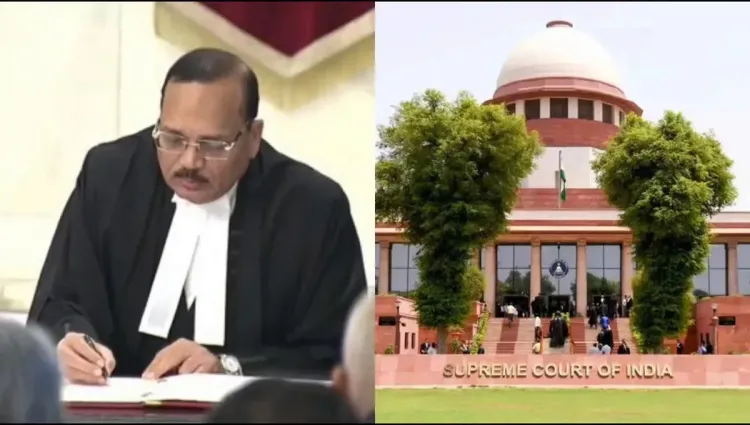
TMC MP Mahua Moitra on 25 July 2026 publicly challenged the Supreme Court of India to explain what had become of its stated commitment to transparency, invoking the court's own 'sunlight is the best disinfectant' principle and warning — in Hindi — that everything will be remembered.
Key Takeaways
TMC MP Mahua Moitra posted on X on 25 July 2026 questioning the Supreme Court of India 's commitment to transparency.
She invoked the court's own stated principle — 'sunlight is the best disinfectant' — as the benchmark against which it should be judged.
Her closing Hindi phrase, 'Sabh yaad rakha jayega' ('Everything will be remembered'), signals an intent to hold the institution to account over time.
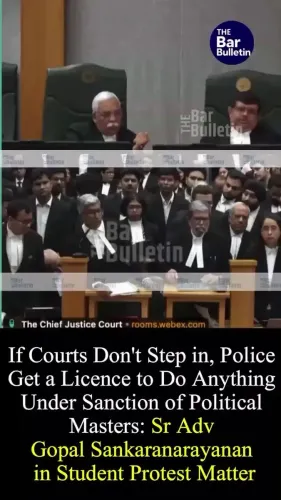
The post was accompanied by a video; the specific institutional action that triggered it was not publicly identified at the time of publication.
The Supreme Court struck down the Electoral Bonds Scheme in 2024 on transparency grounds, making its own credibility on the issue a point of public reference.
Opposition figures regularly use the court's prior transparency rulings to spotlight perceived inconsistencies in institutional conduct.
TMC MP Mahua Moitra took to X on Friday, 25 July 2026, invoking the Supreme Court of India's own stated commitment to transparency — asking pointedly what had become of it — in a post that drew immediate attention from judicial observers and opposition circles.
Context
Moitra's post reads: 'Huh? Didn't this very Supreme Court claim sunlight is the best disinfectant? Whatever happened to transparency? Sabh yaad rakha jayega [Everything will be remembered].' The closing Hindi phrase, a recurring political refrain, signals that she intends to hold the institution to account over time. The post was accompanied by a video, the contents of which were not independently verified at the time of publication.
The phrase 'sunlight is the best disinfectant' has been cited in Indian judicial discourse as a principle favouring open proceedings, public disclosure, and institutional accountability. Moitra's question implies a perceived gap between that stated principle and a recent action or decision by the court — though the specific trigger for the post was not publicly identified.
Policy Backdrop
The Supreme Court has a documented record of invoking transparency as a democratic value. Most prominently, in 2024, the court struck down the Electoral Bonds Scheme, ruling that opacity in political funding violated voters' right to information — a landmark moment that opposition leaders, including Moitra, had championed.
That ruling made the court's credibility on transparency a high-water mark. Critics argue that any subsequent institutional step perceived as retreating from openness — whether in judicial appointments, case listings, or disclosure norms — invites exactly the kind of scrutiny Moitra is applying here. Right to Information applicability to the Supreme Court itself remains a contested legal and policy question.
Stakeholders and Impact
Mahua Moitra has consistently positioned herself as a voice for institutional accountability, both in Parliament and on social media. Her posts frequently frame judicial and governmental conduct against stated principles, building a cumulative public record — which the phrase 'Sabh yaad rakha jayega' explicitly references.
Judicial observers note that opposition MPs referencing the court's own language on transparency creates a form of reputational pressure distinct from formal legal challenge. It shifts debate from courtrooms to public discourse, where the court has limited ability to respond. Civil-society groups tracking RTI applicability to constitutional bodies are likely to amplify the post.
What's Next
The specific institutional action that prompted Moitra's post will likely surface through parliamentary questions, petitions, or further social-media commentary in the coming days. Any Supreme Court proceedings touching on transparency, disclosure, or judicial accountability will now carry the added weight of this public scrutiny.
If the matter reaches Parliament, it could feed into broader debates on judicial accountability legislation and whether constitutional courts should fall within the ambit of disclosure laws — a question that has been deferred repeatedly across successive governments.
Point of View
She avoids a direct legal challenge while maximising reputational pressure. The Hindi sign-off — 'Sabh yaad rakha jayega' — is a deliberate archival move, signalling that this is not a one-off remark but part of a cumulative public record. This tactic fits a broader opposition pattern of using the court's landmark 2024 Electoral Bonds ruling as a transparency yardstick against which subsequent judicial conduct is measured. If the specific trigger for the post is identified, it could quickly escalate from social-media commentary into formal parliamentary or legal scrutiny.
NationPress
24 Jul 2026
Frequently Asked Questions
Why did Mahua Moitra criticise the Supreme Court on 25 July 2026?
Mahua Moitra posted on X questioning the Supreme Court's commitment to transparency, invoking the court's own stated principle that 'sunlight is the best disinfectant.' The specific institutional action that prompted the post had not been publicly identified at the time of publication.
What does 'Sabh yaad rakha jayega' mean in Mahua Moitra's post?
The Hindi phrase translates to 'Everything will be remembered.' Moitra used it as a warning that the court's actions — and any perceived departures from its stated transparency principles — will be recorded and recalled.
What is the Supreme Court's 'sunlight is the best disinfectant' principle?
Indian courts have cited the phrase — originally attributed to American jurist Louis Brandeis — to argue that openness and public disclosure are essential to accountability in democratic institutions. The Supreme Court invoked transparency most prominently when it struck down the Electoral Bonds Scheme in 2024.
What was the Electoral Bonds Scheme and why is it relevant here?
The Electoral Bonds Scheme was a political-funding mechanism struck down by the Supreme Court in 2024 on the ground that it violated voters' right to information. That ruling established the court's credibility on transparency, making it the benchmark opposition figures now use to evaluate subsequent judicial conduct.
Does the Right to Information Act apply to the Supreme Court of India?
The RTI applicability to the Supreme Court remains a contested legal question. Certain administrative information is disclosed, but the full scope of RTI coverage over constitutional courts has not been definitively settled, and it continues to be debated by civil-society groups and legal scholars.