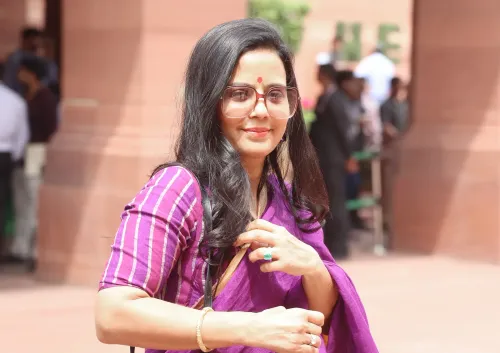
Mahua Moitra Slams Alleged 12-Page Women's Form, PM Degree Row
Synopsis
TMC MP Mahua Moitra on X juxtaposed a reported 12-page disclosure form for women in West Bengal with the Union government's stance on Right to Information queries about Prime Minister Narendra Modi's degree, calling out a perceived double standard on transparency and data collection.
Key Takeaways
TMC MP Mahua Moitra posted on X on 3 June 2026 flagging a perceived contradiction on transparency.
She alleged a 12-page form is being pushed onto women in West Bengal seeking family education, health and asset details.
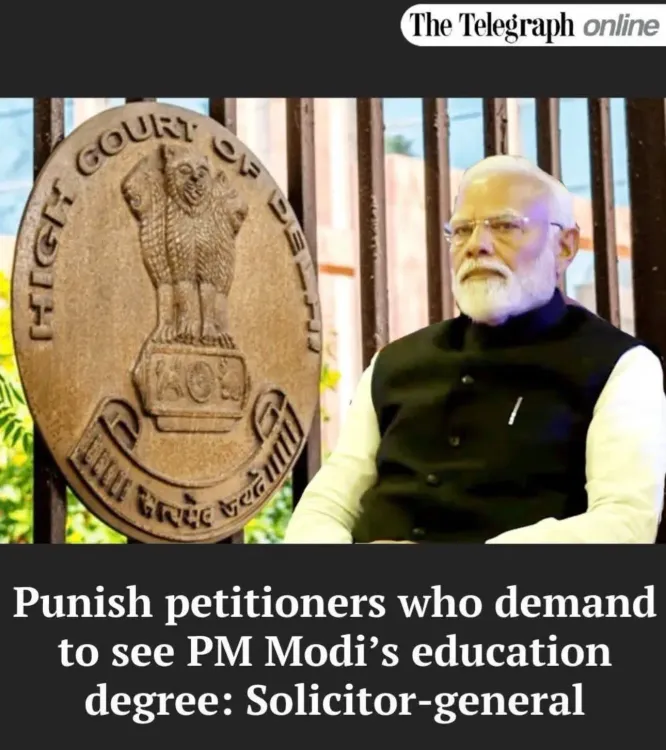
She contrasted this with the Union government's stance on queries about PM Narendra Modi's educational degree.
RTI applications over the PM's Delhi University degree have been contested in courts since 2014.
The post comes ahead of the West Bengal assembly elections scheduled in 2026.
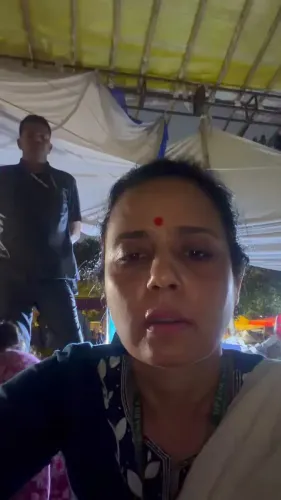
TMC MP Mahua Moitra on Wednesday, 3 June 2026, took to X to draw a sharp contrast between what she described as an intrusive disclosure form being pushed onto women in West Bengal and the Union government's resistance to disclosing details of Prime Minister Narendra Modi's educational qualifications. The post, addressed to her followers from the Krishnanagar MP's verified handle, juxtaposes welfare-scheme data collection with the long-running controversy over the PM's degree.
In her post, Moitra wrote that the 'New Bengal BJP govt is forcing a 12 page form onto all women seeking details of education, health, land, possessions of all family members' while 'Union Govt wants to punish someone for seeking PM's degree.' She closed with a sardonic 'Wah!' ('Bravo!').
Context
Moitra, the All India Trinamool Congress Lok Sabha member from Krishnanagar, has been among the more vocal opposition voices on transparency and data-collection issues in Parliament. Her remarks appear timed against the political backdrop of West Bengal, where the Trinamool Congress has been in power since 2011 and where assembly polls are scheduled in 2026.
The post does not name a specific scheme, department or government order. It also does not specify who is sought to be 'punished' in the matter relating to the Prime Minister's degree, leaving both halves of the comparison framed as broad political assertions rather than referenced policy documents.
Policy backdrop
Questions around Prime Minister Narendra Modi's academic qualifications have surfaced repeatedly since 2014, with Right to Information applications filed for records of his degree from Delhi University and subsequent litigation reaching the courts between 2014 and 2016. The issue has periodically returned to public debate whenever opposition leaders or activists have sought certified copies of the documents.
Separately, several Indian states have, since the mid-2010s, introduced detailed multi-page application forms for women-focused welfare schemes. These typically seek information on family assets, landholding, education levels and health status to determine eligibility and prevent leakage. Critics have argued that such forms risk exclusion and privacy intrusion; defenders say granular data enables better targeting.
Stakeholders and impact
The two strands Moitra invokes touch different sets of stakeholders. Women applicants for welfare schemes are directly affected by the design and length of intake forms, with implications for last-mile access in rural and lower-income households. RTI petitioners, civil-society groups and lawyers form the other constituency, watching how disclosure norms apply to public officials.
For the Bharatiya Janata Party, which heads the Union government and is the principal opposition in West Bengal, the post is a politically loaded framing ahead of state polls. For the Trinamool Congress, it folds welfare-delivery questions into a broader transparency argument typically pressed by opposition benches in Parliament.
What's next
The immediate test will be whether any specific government order, scheme notification or enforcement action is cited to substantiate the claims in the post. Parliamentary questions, RTI filings and any state-level circulars in West Bengal are likely venues where the underlying facts, if any, will be pinned down.
Beyond the immediate exchange, the post sits within a wider Indian policy arc: the tension between expansive data collection for welfare delivery, digitisation of beneficiary lists and Aadhaar-linked schemes on one side, and limits on disclosure about public figures under the RTI Act on the other. With Digital Personal Data Protection rules and potential RTI amendments on the horizon in upcoming parliamentary sessions, the friction Moitra has flagged is unlikely to subside.
Point of View
Neither of which the post itself cites. Politically, the timing aligns with the run-up to the West Bengal assembly polls, where data-collection optics for women voters and anti-Centre messaging are both salient. The deeper arc is India's unresolved balance between welfare-state data appetite and disclosure norms for public officials.
NationPress
18 Oct 2026
Frequently Asked Questions
What did Mahua Moitra say in her latest X post?
Mahua Moitra alleged that a new Bengal BJP government is forcing a 12-page form on women seeking family education, health and asset details, while the Union government wants to punish someone for seeking the Prime Minister's degree. She posted the remark on 3 June 2026.
Which constituency does Mahua Moitra represent?
Mahua Moitra is the Lok Sabha MP from Krishnanagar in West Bengal, representing the All India Trinamool Congress.
Why is PM Narendra Modi's degree a recurring controversy?
Right to Information applications seeking details of Prime Minister Narendra Modi's degree from Delhi University have been filed and contested in court since 2014, periodically reviving public debate over disclosure of qualifications of public officials.
When are the next West Bengal assembly elections?
West Bengal assembly elections are due in 2026, with the Trinamool Congress having governed the state since 2011.
What broader policy debate does Moitra's post touch on?
It touches the tension between large-scale personal data collection for welfare schemes and limits on disclosure about public figures under the RTI Act, an issue that intersects with the Digital Personal Data Protection framework.