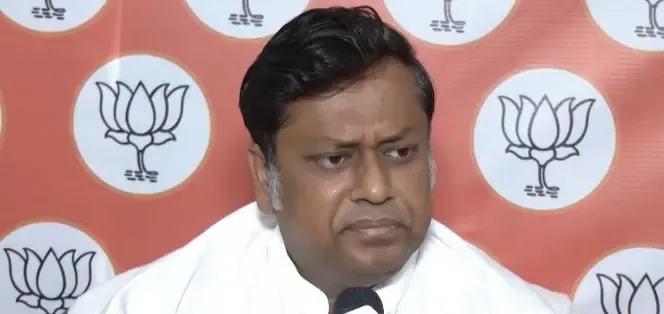
Sukanta Majumdar: BJP will act on corruption, no top leader will be spared
Synopsis
BJP leader Sukanta Majumdar has put TMC's top brass on notice — including Chief Minister Mamata Banerjee — warning that no one will be spared if found guilty of corruption, while insisting any action will follow due legal process. With CAPF deployment extended 60 days post-results and the 'detect, delete, deport' policy front and centre, the BJP is framing West Bengal's political battle as a law-and-order reckoning.
Key Takeaways
Sukanta Majumdar warned on 1 May that no leader, including CM Mamata Banerjee , will be shielded from legal action if found guilty of corruption.
He clarified that any investigation into the Chief Minister would only begin after a BJP government is formed and must follow due legal procedure.
The BJP reiterated its "detect, delete and deport" infiltration policy, calling it a national security priority.
Union Home Minister Amit Shah has assured that Central Armed Police Forces will remain deployed for nearly 60 days post-results to prevent post-poll violence.
Majumdar dismissed TMC's electoral complaints, saying the Election Commission of India had already clarified procedural aspects.
BJP projects a "massive victory" in West Bengal , citing migrant workers returning home to vote against the TMC regime.
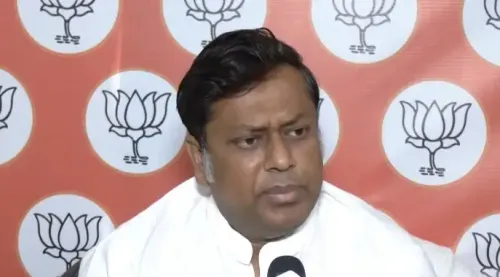
Sukanta Majumdar, Union Minister of State and Bharatiya Janata Party (BJP) leader, on Friday, 1 May sharply escalated his offensive against the ruling All India Trinamool Congress (TMC) in West Bengal, alleging rampant corruption, unchecked infiltration, and a collapse of law and order under the current state government. Speaking exclusively to IANS from Kolkata, Majumdar asserted that any action against individuals — including the most senior leaders — would follow due legal procedure, not political vendetta.
No One Will Be Spared, Says Majumdar
Asked about the ongoing central agency probes into Chief Minister Mamata Banerjee and TMC MP Abhishek Banerjee by the Central Bureau of Investigation (CBI) and the Enforcement Directorate (ED), Majumdar was unequivocal. "Wherever there is corruption, strict action will be taken. Whoever the person is, no one will be spared," he said, stressing that the BJP government would act within the framework of the law rather than out of retribution.
He clarified that any decision regarding an investigation into the Chief Minister would only be taken after a government is formed, and strictly through due legal process. "First, let the government be formed. After that, the Chief Minister and the Cabinet will take decisions as per the law. Any investigation or action must follow due legal procedure and cannot be based on vindictive motives. A government should function according to the rule of law," Majumdar said.
BJP's Electoral Confidence and People's Mandate
Majumdar expressed strong confidence that the BJP would form the next government in West Bengal with a decisive mandate, citing what he described as an unprecedented voter resolve against the TMC's governance failures. "I believe that a BJP government will be formed in West Bengal with a decisive mandate. The scale of voting reflects the people's resolve to bring change. Even migrant workers returned home to cast their votes against the present regime," he said, projecting a "massive victory" under the leadership of Prime Minister Narendra Modi.
He argued that public anger over corruption and administrative failures had directly translated into growing electoral support for the BJP. Notably, this comes amid a broader BJP push to dislodge the TMC, which has governed West Bengal since 2011.
Infiltration: A National Security Concern
On the sensitive issue of cross-border infiltration, Majumdar reiterated the BJP's stated "detect, delete and deport" policy, framing it as a matter of national security rather than a purely state-level administrative issue. He accused the TMC-led state government of failing to curb infiltration and directly linked it to the deteriorating law and order situation in the state.
"The current situation reflects administrative failure. Infiltration has security implications, and it cannot be ignored. A BJP government will address it in a systematic and lawful manner," he said. Critics, however, have previously argued that such framing risks stoking communal tensions ahead of elections.
Post-Poll Violence and Security Deployment
Addressing concerns about post-election violence — a recurring issue in West Bengal — Majumdar cited Union Home Minister Amit Shah's assurance that Central Armed Police Forces (CAPF) would remain deployed in the state for nearly 60 days after results are declared. "The priority is to ensure that the people of Bengal do not suffer violence after exercising their democratic rights. Adequate security arrangements will be in place," he said.
Majumdar also dismissed TMC's allegations regarding electoral procedures, saying the Election Commission of India (ECI) had already clarified the relevant procedural aspects. He suggested the TMC's conduct indicated a party mentally braced for an Opposition role. "Their conduct shows they are mentally prepared to sit in the Opposition. These tactics reflect insecurity," he remarked.
With results awaited and central forces still deployed, all eyes are now on whether the BJP's confident projections translate into the decisive mandate Majumdar envisions — or whether the TMC's entrenched organisational machinery holds ground once more.
Point of View
Yet central agency probes against TMC leaders have moved slowly through the courts, raising the question of whether a state BJP government would have the institutional leverage to accelerate outcomes. The 60-day CAPF deployment pledge is significant: post-poll violence in West Bengal has historically undermined winning parties' legitimacy, and the BJP is clearly trying to pre-empt that narrative. What mainstream coverage underplays is that Majumdar's framing — linking infiltration directly to law and order — is as much an electoral dog-whistle as a policy statement, one that will face scrutiny the moment governance responsibility shifts.
NationPress
16 Sept 2026
Frequently Asked Questions
What did Sukanta Majumdar say about action against Mamata Banerjee?
Majumdar said that if allegations against Chief Minister Mamata Banerjee are being probed by the CBI or ED, the matter will be decided by the courts. He added that any investigation would only be initiated after a BJP government is formed and must strictly follow due legal procedure.
What is the BJP's 'detect, delete and deport' policy?
It is the BJP's stated policy to identify, remove from voter rolls, and deport illegal immigrants, which the party frames as a national security imperative. Majumdar reiterated this policy on 1 May, accusing the TMC government of failing to act on infiltration in West Bengal.
Why are Central Armed Police Forces staying deployed after West Bengal election results?
Union Home Minister Amit Shah has assured that CAPF units will remain in West Bengal for nearly 60 days after results are declared to prevent post-poll violence. West Bengal has a documented history of political violence following election outcomes.
What is the BJP's confidence level going into West Bengal results?
Majumdar expressed strong confidence of a 'massive victory' under PM Narendra Modi's leadership, citing large voter turnout and the return of migrant workers to cast votes against the TMC regime as indicators of public resolve for change.
How did Majumdar respond to TMC's allegations about electoral procedures?
Majumdar dismissed the allegations as misleading, saying the Election Commission of India had already clarified the relevant procedural aspects. He suggested the TMC's conduct indicated the party was mentally prepared to sit in Opposition.