Swati Maliwal Exits AAP, Blasts Kejriwal Over Corruption & Assault

Synopsis
In a stunning political collapse, Rajya Sabha MP Swati Maliwal resigned from AAP on April 25, accusing Arvind Kejriwal of personally orchestrating her assault and shielding the accused. Hours earlier, 7 of AAP's 10 Rajya Sabha MPs merged with the BJP — signalling what may be the beginning of the end for the party built on honest politics.
Key Takeaways
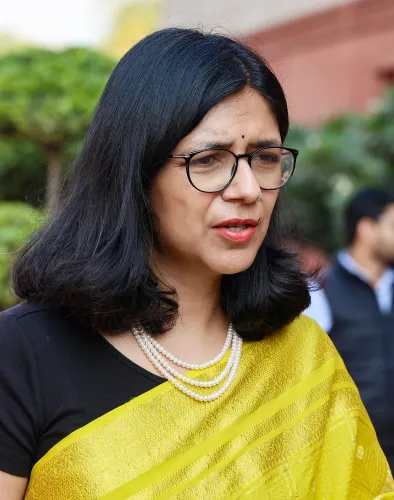
Swati Maliwal , Rajya Sabha MP and former Delhi Commission for Women chief, resigned from AAP on April 25, 2025 .
She accused Arvind Kejriwal of backing criminal elements, enabling corruption, and personally orchestrating a physical assault against her at his residence.
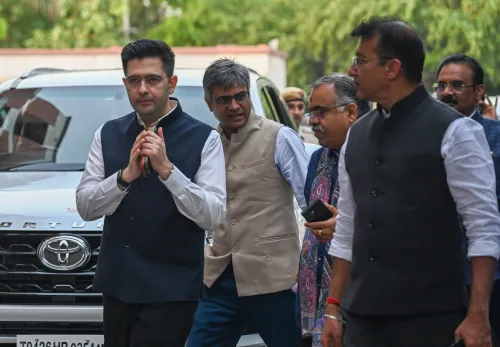
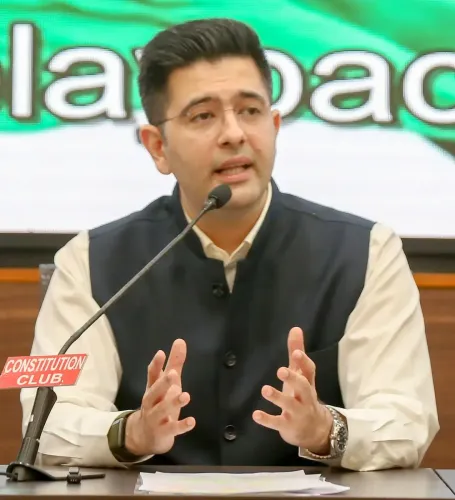
Seven of AAP's ten Rajya Sabha MPs , led by Raghav Chadha , simultaneously announced a merger with the BJP , citing ideological betrayal.
Maliwal has been associated with public service since 2006 and served eight years as head of the Delhi Commission for Women .
The mass exit follows AAP 's devastating loss in the February 2025 Delhi Assembly elections and Kejriwal 's arrest in the Delhi liquor policy case in 2024 .
Maliwal confirmed she will hold a detailed press conference in Delhi with further disclosures upon returning from Itanagar .
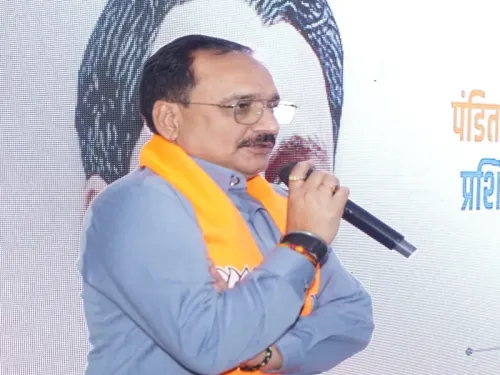
New Delhi, April 25 (NationPress) — Rajya Sabha MP Swati Maliwal formally resigned from the Aam Aadmi Party (AAP) on Friday, April 25, levelling explosive allegations against party founder Arvind Kejriwal, including claims of shielding criminal elements, rampant corruption, and a physical assault she says she suffered inside Kejriwal's official residence. Her departure marks one of the most dramatic exits in AAP's history and comes on the same day that seven of the party's ten Rajya Sabha MPs announced a merger with the BJP.
The Breaking Point: Why Maliwal Walked Out
Maliwal, who was in Itanagar for a parliamentary committee meeting when she made the announcement via a post on X (formerly Twitter), said she could no longer remain in a party that had abandoned its founding ideals. She cited four specific grievances: unchecked corruption flourishing under Kejriwal's watch, harassment and violence against women, deliberate promotion of thuggish elements, and what she called the betrayal and looting of Punjab — the state where AAP currently holds government.
Maliwal stated: Seeing the unchecked corruption growing in the Aam Aadmi Party under Kejriwal ji's patronage, incidents of harassment and assault against women, the promotion of thuggish elements, and the betrayal and looting happening with Punjab, I have decided to leave the party today.
She added that she would hold a detailed press conference upon her return to Delhi to elaborate on her allegations.
Assault Allegation: Maliwal Claims She Was Beaten at Kejriwal's Home
The most incendiary charge in Maliwal's statement was her claim of being physically assaulted at Kejriwal's residence. She alleged that the attack was carried out on his signal and that Kejriwal subsequently rewarded the accused with a high position rather than taking any action.
Maliwal alleged: At his residence, on his signal, I was brutally beaten and treated with utmost indecency. To protect his goon, he went to extreme lengths and rewarded him with high positions. Threats were made to ruin me, and every possible effort was made against me.
This charge is not entirely new. Maliwal had previously filed a complaint related to an alleged assault incident involving Kejriwal's aide Bibhav Kumar in May 2024, which triggered a political storm. Her renewed and direct charge against Kejriwal personally, however, significantly escalates the severity of the accusation.
From Anna Hazare Movement to AAP's Downfall: Maliwal's Journey
Maliwal traced her political roots back to 2006, when she left a stable job to join public service. She was a key participant in the RTI movement and the landmark Anna Hazare anti-corruption movement of 2011 — the very agitation that gave birth to AAP. She later served an eight-year tenure as chief of the Delhi Commission for Women (DCW), where she was credited with raising the profile of women's rights in the capital.
She said: With great sorrow today, I must say that the principles, values, and resolve for honest politics with which we began this journey have been abandoned by Arvind Kejriwal ji and, at his behest, the entire Aam Aadmi Party.
Mass Exodus: Raghav Chadha Leads 7 MPs Into BJP
Earlier on the same day, Raghav Chadha — once one of AAP's most prominent national faces — announced that seven of the party's ten Rajya Sabha members were merging with the BJP, invoking constitutional provisions that allow a two-thirds faction of a legislative group to merge with another party without inviting disqualification under the anti-defection law.
At a press conference alongside AAP MPs Ashok Mittal and Sandeep Pathak, Chadha declared: We have decided that we, the 2/3rd members belonging to the AAP in Rajya Sabha, exercise the provisions of the Constitution of India and merge ourselves with the BJP.
Chadha, who had been with AAP for 15 years, cited suffocation within the party and a lack of opportunity to serve the public. He explicitly named Harbhajan Singh and Swati Maliwal as among those parting ways with AAP.
Deeper Context: AAP's Structural Collapse and What It Means
This implosion of AAP's Rajya Sabha group is not happening in a vacuum. The party has been under sustained pressure since Kejriwal's arrest in the Delhi liquor policy case in March 2024, followed by his eventual bail and the party's bruising defeat in the February 2025 Delhi Assembly elections, where it was virtually wiped out by the BJP. The party that once swept 67 of 70 Delhi seats in 2015 is now struggling to maintain organisational cohesion at the national level.
Notably, AAP built its entire brand identity on the promise of honest politics — a direct contrast to what it called the corrupt establishments of the Congress and BJP. The irony of its own leaders now defecting to the BJP while citing corruption within AAP is a contradiction that will define the party's legacy. Critics argue that the centralisation of power around Kejriwal — a model that helped AAP rise rapidly — has also become the primary driver of its current disintegration.
The Punjab angle is particularly significant. AAP governs Punjab and any perception of misgovernance or looting in the state directly threatens its only remaining major political stronghold. If Maliwal's allegations gain traction and trigger a formal investigation, the political and legal fallout could extend well beyond Delhi.
As Maliwal prepares to hold her detailed press conference in Delhi and the constitutional validity of the Rajya Sabha merger faces likely legal scrutiny, the coming weeks will be critical in determining whether AAP can survive as a credible national opposition force — or whether April 25, 2025 marks the beginning of its terminal decline.
Point of View
Yet the very leaders who built it are now using the language of that movement — corruption, betrayal, assault — against its own founder. The deeper irony is that these MPs are joining the BJP, the establishment AAP was designed to disrupt, suggesting that for many, power proximity now outweighs ideological purity. With Punjab as its last major electoral asset, AAP's ability to contain this narrative will determine whether it survives as a political force or becomes a cautionary tale about movements that mistake a charismatic leader for an institution.
NationPress
19 Sept 2026
Frequently Asked Questions
Why did Swati Maliwal quit AAP?
Swati Maliwal resigned from AAP on April 25, 2025 , citing rampant corruption under Arvind Kejriwal 's leadership, promotion of criminal elements, harassment of women, and alleged looting of Punjab . She also claimed she was physically assaulted at Kejriwal 's residence and that the accused was subsequently rewarded with a high position.
What assault allegation has Swati Maliwal made against Kejriwal?
Maliwal alleged that she was brutally beaten at Arvind Kejriwal 's residence on his signal and that Kejriwal protected the accused by giving him a senior position. This relates to a prior complaint she filed in May 2024 involving Kejriwal 's aide Bibhav Kumar , though her latest statement directly implicates Kejriwal himself.
How many AAP Rajya Sabha MPs have joined the BJP?
Seven out of ten AAP Rajya Sabha MPs announced a merger with the BJP on April 25, 2025 , led by Raghav Chadha . They invoked constitutional provisions allowing a two-thirds legislative faction to merge with another party without attracting disqualification under the anti-defection law.
What is the current political situation of AAP after these resignations?
AAP has lost the bulk of its Rajya Sabha presence and two of its most prominent national faces — Raghav Chadha and Swati Maliwal — in a single day. Combined with its near-total defeat in the February 2025 Delhi elections , the party now relies almost entirely on its government in Punjab to maintain national relevance.
Why did Raghav Chadha leave AAP and join BJP?
Raghav Chadha cited suffocation within AAP and a lack of opportunity to serve the public as reasons for leaving after 15 years with the party. He stated that AAP had stepped away from honest politics and announced the merger of seven AAP Rajya Sabha MPs with the BJP .