Mandaviya Hails Indian Youth After Tricolor Triumph
Synopsis
Union Sports Minister Mansukh Mandaviya on 7 July 2026 celebrated Indian youth athletes raising the national flag at an international sporting event, calling them 'unstoppable' — a moment that underscores the government's sustained push to build a competitive young sporting generation through schemes like Khelo India.
Key Takeaways
Union Minister Mansukh Mandaviya posted on X on 7 July 2026 congratulating Indian youth athletes for a tricolor-raising sporting achievement.
The minister described the athletes as 'unstoppable,' signalling a significant podium finish at an international youth competition.
The post aligns with a broader government policy arc anchored by the Khelo India scheme, launched in 2017 to promote grassroots sports talent.
Mandaviya holds dual charge of the Ministry of Labour and Employment and the Ministry of Youth Affairs and Sports .
The government's follow-through — via TOPS fellowships and Khelo India centre expansion — will determine the long-term impact on youth athletes recognised in moments like this.
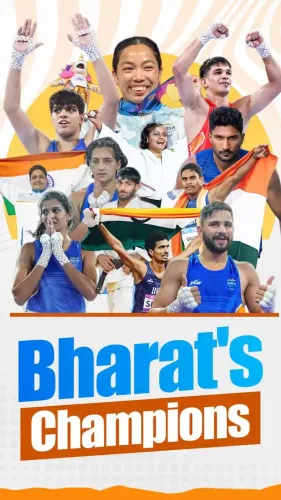
Union Labour and Sports Minister Mansukh Mandaviya on Tuesday, 7 July 2026 congratulated Indian youth athletes for what he described as an outstanding sporting achievement, posting on X that they were 'raising the tricolor high' and calling them 'unstoppable.'
Context
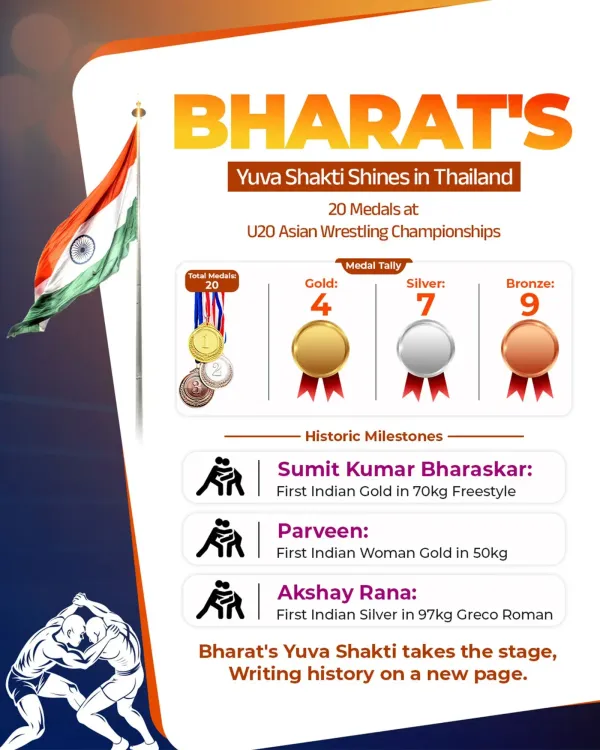
Mandaviya's post, shared at 4:29 PM IST, accompanied an image and celebrated a podium moment for Indian youth in an international sporting contest. The minister's choice of words — 'raising the tricolor high' — is a well-established idiom in Indian public life that signals a medal win or top-ranking finish on a global stage. While the specific event has not been officially identified in government communications at the time of publication, the celebratory tone and the tricolor reference are consistent with a podium finish by a youth team or individual athlete representing India.
Policy Backdrop
The congratulatory post sits within a sustained government push to elevate Indian youth sports. The Khelo India scheme, launched in 2017, has been the central pillar of this effort — identifying grassroots talent, funding training centres, and creating competitive pathways for young athletes across disciplines. Successive central governments have expanded both the scheme's budget and its geographic reach, with revised Khelo India centres being rolled out in smaller towns and tier-two cities to widen the talent pool. Mandaviya, who holds the dual charge of the Ministry of Labour and Employment and the Ministry of Youth Affairs and Sports, has positioned sports achievement as integral to youth development and India's soft-power ambitions.
Flag-raising statements by sports ministers have become a recognisable signal in Indian political communication, typically marking wins at events such as the Asian Games, the Commonwealth Games, or dedicated youth-category tournaments including the Youth Olympic Games and the Asian Youth Games. The pattern reflects a deliberate effort to link sporting success with national pride and government policy outcomes.
Stakeholders and Impact
The immediate beneficiaries of ministerial recognition are the young athletes whose performance prompted the post. Public acknowledgement from a Union Minister carries institutional weight — it signals that the government is watching, and it amplifies the visibility of youth sport in mainstream discourse. For the broader ecosystem, including coaches, sports academies, and state sports bodies, such statements reinforce the case for continued or increased funding under schemes like Khelo India. Corporate sponsors and national federations also take cues from ministerial enthusiasm when calibrating their own investment in emerging athletes.
Youth athletes from non-traditional sporting states have particularly benefited from the expanded infrastructure push, and a high-profile win — even before full details are officially confirmed — tends to accelerate interest in talent identification programmes at the district level.
What's Next
All eyes will be on the government's follow-through: whether the athletes recognised in this moment receive structured support through the Target Olympic Podium Scheme (TOPS) or dedicated Khelo India fellowships will be the true measure of the policy commitment behind the minister's words. India's performance at the next Youth Olympic Games and the Asian Youth Games will serve as the broader benchmark for whether the current investment cycle is translating into sustained international competitiveness. Mandaviya's post, brief as it is, adds political momentum to a sports-development agenda that the government has staked considerable credibility on.
Point of View
Emotive, and designed to attach government credit to athletic success. It arrives at a moment when the BJP-led administration has made youth sports a visible pillar of its development narrative, using schemes like Khelo India to demonstrate tangible outcomes beyond economic metrics. The 'unstoppable youth' framing also carries a subtle electoral undercurrent, projecting energy and forward momentum onto a demographic that constitutes an enormous share of India's voter base. Whether the rhetorical enthusiasm converts into deeper structural support for the athletes involved will be the question analysts and sports administrators will watch closely.
NationPress
6 Oct 2026
Frequently Asked Questions
What did Mansukh Mandaviya say about Indian youth athletes on 7 July 2026?
Mandaviya posted on X congratulating Indian youth athletes for 'raising the tricolor high' and called them 'unstoppable,' celebrating an international sporting achievement on 7 July 2026.
What is the Khelo India scheme?
Khelo India is a central government scheme launched in 2017 to promote grassroots sports, identify young talent across India, and create structured pathways to competitive and international-level performance.
What ministry does Mansukh Mandaviya head?
Mansukh Mandaviya is the Union Minister of Labour and Employment and Youth Affairs and Sports, holding dual charge of both ministries in the central government.
Why do Indian ministers post about sports victories on social media?
Ministers use platforms like X to publicly acknowledge sporting wins because it amplifies national pride, signals policy success linked to government schemes, and increases the visibility and morale of young athletes.
What support do Indian youth athletes get after international wins?
Athletes recognised for international performance can access support through the Target Olympic Podium Scheme (TOPS) and Khelo India fellowships, which provide funding, coaching, and infrastructure access.