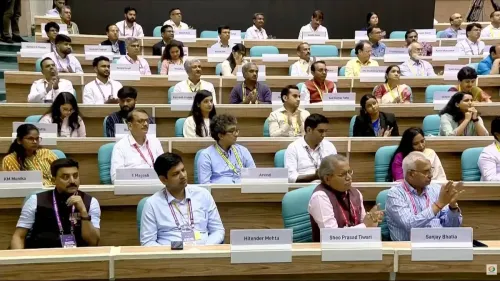
Mandaviya Marks World Youth Skills Day, Hails Skilling as New India's Identity
Synopsis
On World Youth Skills Day, Union Minister Mansukh Mandaviya declared youth skill and self-respect as the identity of new India. His message reinforces the government's Skill India Mission and Atmanirbhar Bharat vision, spotlighting vocational training as a national priority for India's demographic dividend.
Key Takeaways
World Youth Skills Day is observed on 15 July every year, as proclaimed by the United Nations.
Union Minister Mansukh Mandaviya greeted the day on 15 July 2026 , framing youth skill and self-respect as the identity of new India.
India's Skill India Mission , launched in 2015 , targets training of over 400 million Indians in vocational skills.
The Pradhan Mantri Kaushal Vikas Yojana (PMKVY) is the flagship scheme delivering short-duration, industry-recognised skill certification.
Mandaviya holds dual charge of the Labour and Employment and Youth Affairs and Sports ministries, placing him at the centre of youth workforce policy.
Union Labour and Sports Minister Mansukh Mandaviya on Wednesday, 15 July extended greetings on World Youth Skills Day, framing skill development and self-respect as the defining markers of a new India. The minister posted on X, calling youth skilling a symbol of national identity and dignity.
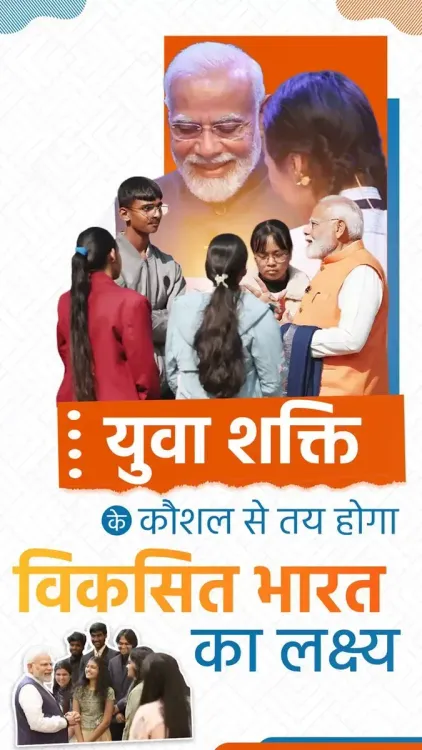
In his post, Mandaviya wrote: 'नए भारत की पहचान, युवाओं का कौशल और स्वाभिमान!' — translated as 'The identity of new India is the skill and self-respect of its youth!' — accompanied by warm wishes for the day.
Context
World Youth Skills Day is observed every year on 15 July, proclaimed by the United Nations to highlight the strategic importance of equipping young people with skills for employment, decent work, and entrepreneurship. For India, the day carries particular resonance given the country's vast and growing youth population, which policymakers have long described as a demographic dividend waiting to be harnessed.
Mandaviya's message connects youth skilling directly to national pride — a framing consistent with the broader Atmanirbhar Bharat (self-reliant India) vision that has shaped economic and employment policy in recent years.
Policy Backdrop
India's flagship skill development architecture rests on the Skill India Mission, launched in 2015 with an ambition to train over 400 million Indians across diverse vocational streams. The Pradhan Mantri Kaushal Vikas Yojana (PMKVY), introduced the same year, serves as the mission's primary delivery vehicle, funding short-duration skill certification programmes across hundreds of job roles.
As the minister holding the Labour and Employment as well as the Youth Affairs and Sports portfolios, Mandaviya sits at the intersection of workforce policy and youth development — making his invocation of 'skill and self-respect' as national identity a signal of continued political priority attached to vocational training.
Stakeholders and Impact
The direct beneficiaries of India's skilling push are vocational trainees, school dropouts, and first-time job-seekers across urban and rural India. Industry bodies and sector skill councils that design and certify training curricula are also key stakeholders, as are state governments that co-implement PMKVY and allied schemes.
The minister's emphasis on swabhimaan (self-respect) alongside skill signals an intent to elevate the social standing of vocational education — a long-standing challenge in a society where degree-based education has historically been valued over trade and craft training.
What's Next
Observers will watch for announcements tied to World Youth Skills Day that may include new certification targets, scheme expansions, or updates on the vocational components of the National Education Policy. Annual Union Budget allocations for skill development and any revisions to PMKVY targets will also be closely tracked as indicators of the government's commitment to translating the minister's rhetoric into measurable outcomes.
Point of View
The minister reinforces the BJP government's long-running effort to rebrand vocational training as aspirational rather than remedial. The choice of the phrase 'self-respect' alongside 'skill' is deliberate — it addresses a deep cultural bias that has historically steered Indian youth toward degree programmes over trades. Coming from a minister who controls both the labour and youth affairs portfolios, the message is also a reminder that skilling sits at the heart of the government's demographic dividend strategy. How that rhetoric translates into budget allocations and certification numbers in coming months will be the real test.
NationPress
15 Jul 2026
Frequently Asked Questions
When is World Youth Skills Day observed?
World Youth Skills Day is observed every year on 15 July , a date proclaimed by the United Nations to highlight the importance of skills in empowering young people.
What did Mansukh Mandaviya say on World Youth Skills Day?
Mandaviya posted on X calling youth skill and self-respect the identity of new India, extending warm greetings on the occasion.
What is the Skill India Mission?
The Skill India Mission is a national programme launched in 2015 to train over 400 million Indians in vocational and technical skills to boost employment and economic self-reliance.
Which ministries does Mansukh Mandaviya head?
Mansukh Mandaviya is the Union Minister of Labour and Employment and Youth Affairs and Sports , making him a key figure in India's workforce and youth development policy.