Mandaviya: Sports Being Made a Major Medium for Fitness and Employment in India
Synopsis
Union Minister Mansukh Mandaviya on 17 July 2026 quoted PM Modi stating that sports is being made a major vehicle for fitness and employment in India, reinforcing the government's dual-purpose sports policy anchored in Khelo India and the Fit India Movement.
Key Takeaways
Union Sports and Labour Minister Mansukh Mandaviya shared a statement on 17 July 2026 quoting PM Narendra Modi on sports as a medium for fitness and employment.
The government has positioned sports as a dual-purpose instrument — public health and labour-market integration — since 2014 .
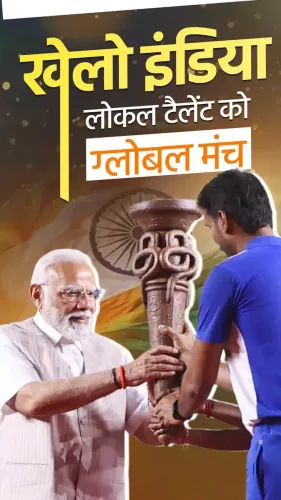
The Khelo India scheme (launched 2017 ) creates employment in coaching, event management, and sports science at the grassroots level.
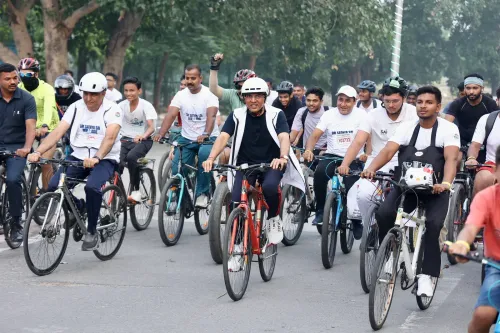
The Fit India Movement (launched August 2019 ) mainstreams physical fitness across schools, workplaces, and communities.
Mandaviya's combined charge of the Sports and Labour ministries enables direct policy linkage between sports participation and formal employment generation.
Revised Khelo India guidelines and the next Union Budget will be key markers of how far the government scales this vision.
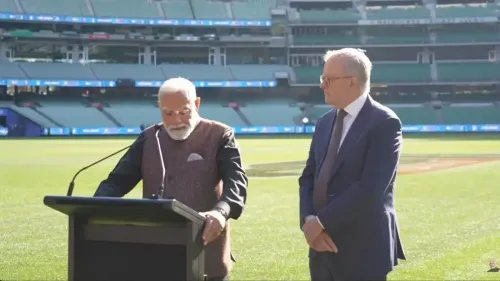
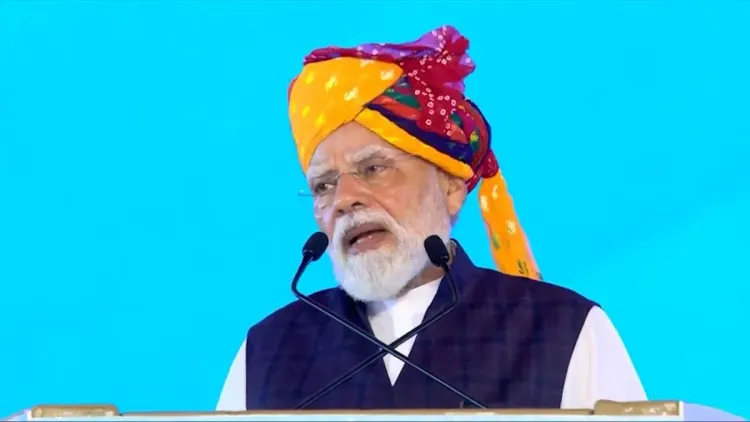
Union Labour and Sports Minister Mansukh Mandaviya on Friday, 17 July 2026, shared a statement on X attributing to Prime Minister Narendra Modi the vision that sports is being transformed into a major vehicle for fitness and employment across India.
The post, in Hindi, quotes the Prime Minister directly: 'भारत में Sports को Fitness और रोजगार का बड़ा माध्यम बनाया जा रहा है' — translated as 'In India, sports is being made a major medium for fitness and employment.' The minister attributed the statement to PM Modi with the honorific ji, signalling an endorsement of the broader government sports policy direction.
Context
The statement reflects a consistent framing by the BJP-led central government since 2014 — positioning sports not merely as recreation or elite competition, but as a dual-purpose instrument for public health and economic opportunity. Minister Mandaviya, who holds charge of both the Ministry of Youth Affairs and Sports and the Ministry of Labour and Employment, is uniquely placed to operationalise this convergence.
The overlap between his two portfolios means sports policy can be directly linked to formal employment generation, skill certification, and labour-market integration — an unusual administrative alignment that gives the government leverage to pursue the stated goal.
Policy Backdrop
Two flagship schemes underpin the government's approach. The Khelo India scheme, launched in 2017, was designed to build grassroots sports infrastructure, identify talent from non-traditional backgrounds, and create employment pathways in coaching, event management, and sports science. It has since expanded to include university-level competitions and state-level academies.
The Fit India Movement, inaugurated in August 2019, sought to mainstream daily physical activity across schools, workplaces, and communities — linking individual fitness habits to broader public health goals. Together, these two programmes form the policy spine on which the PM's quoted statement rests.
The government has also worked to integrate sports with the Skill India and Start-up India frameworks, treating fitness entrepreneurship and sports-tech ventures as legitimate labour-market categories. This approach mirrors strategies adopted by other large youth-population nations seeking to convert demographic strength into measurable economic output.
Stakeholders and Impact
The primary beneficiaries of this policy orientation are India's youth — both aspiring athletes seeking professional pathways and young people in non-sporting roles such as coaching, physiotherapy, sports journalism, and event logistics. Fitness startups and sports-technology companies also stand to gain from government recognition of the sector as an employment generator.
For rural and semi-urban youth in particular, Khelo India infrastructure investments have created access points that did not previously exist. The framing of sports as employment — rather than extracurricular activity — has practical implications for how state governments allocate funds and how schools structure curricula.
What's Next
Observers will watch for revised Khelo India guidelines and the rollout of state-level sports employment missions that could give operational shape to the PM's stated vision. Performance-linked funding allocations in the next Union Budget will be a key indicator of how seriously the government intends to scale this convergence of fitness and formal employment. Minister Mandaviya's dual portfolio makes him the central figure in translating the political messaging into measurable programme outcomes.
Point of View
Rather than announce a scheme or milestone, suggests the communication goal is narrative consolidation ahead of potential policy or budget moves. The convergence of the Sports and Labour portfolios in a single minister's hands is a structural signal that the government wants sports treated as an economic sector, not a welfare programme. If that framing is backed by measurable employment data and budget allocations, it could represent a genuine shift in how India accounts for the sports economy.
NationPress
17 Jul 2026
Frequently Asked Questions
What did PM Modi say about sports and employment in India?
PM Modi stated that sports is being made a major medium for fitness and employment in India, a quote shared by Union Minister Mansukh Mandaviya on 17 July 2026.
What is the Khelo India scheme?
Khelo India is a central government scheme launched in 2017 to build grassroots sports infrastructure, identify talent, and create employment opportunities in areas like coaching, event management, and sports science.
How is the Fit India Movement connected to employment?
The Fit India Movement, launched in August 2019, promotes daily physical activity in schools and workplaces; the government links it to a broader vision where a fit population and sports participation generate economic activity and jobs.
Why does Mansukh Mandaviya hold both Sports and Labour portfolios?
Mandaviya holds charge of both the Ministry of Youth Affairs and Sports and the Ministry of Labour and Employment, an overlap that allows sports policy to be directly linked to formal employment generation and skill certification.
What should we watch for next in India's sports employment policy?
Key indicators include revised Khelo India guidelines, state-level sports employment missions, and performance-linked sports funding in the next Union Budget.