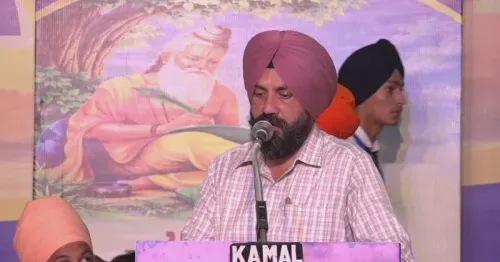
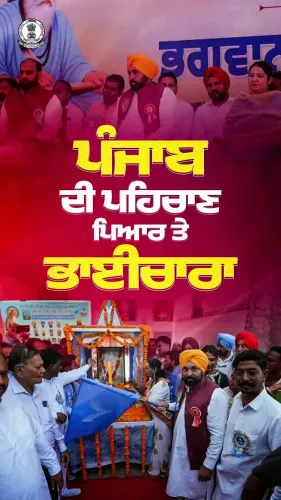
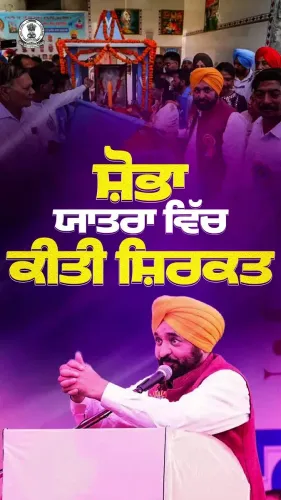
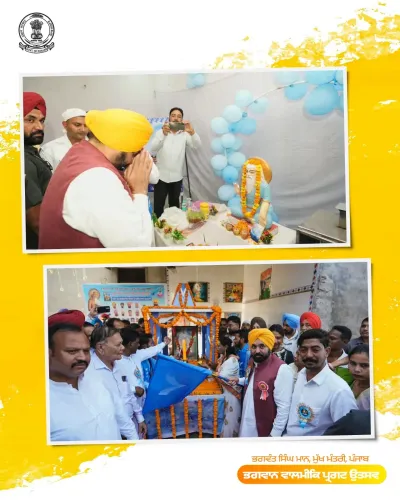
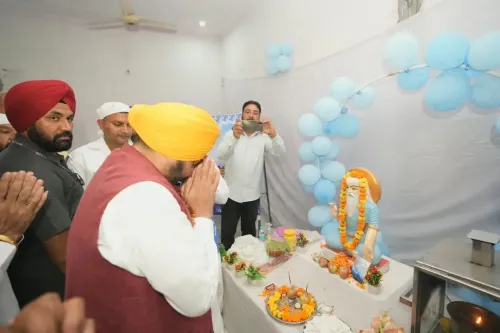
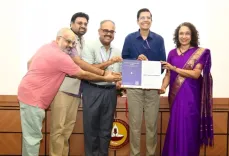
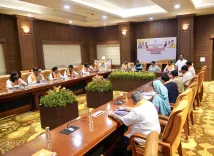
CM Bhagwant Mann at Valmiki Jayanti state event in Amritsar
Synopsis
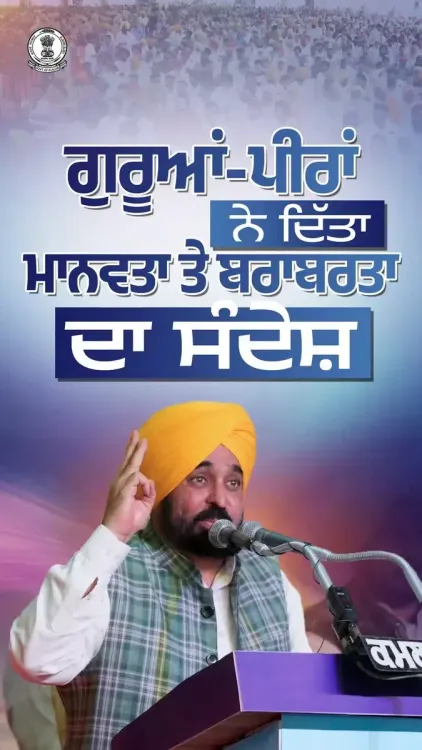
Chief Minister Bhagwant Mann attended a state-level Maharishi Valmiki Pragate Diwas event in Amritsar on 26 October 2026, greeting devotees and invoking Punjab's heritage of equality, brotherhood, and unity drawn from its sages, Gurus, and saints.
Key Takeaways
Chief Minister Bhagwant Mann attended the state-level Maharishi Valmiki Pragate Diwas event in Amritsar Sahib on 26 October 2026 .
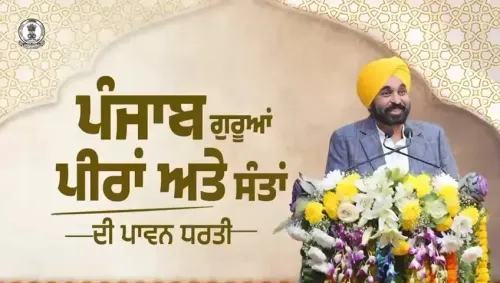
Mann described Punjab as 'the land of sages, Gurus, Pirs, warriors, and martyrs,' underlining the state's plural spiritual identity.
He conveyed that the teachings of Guru Sahibans and saints carry a message of humanity, equality, brotherhood, and unity .
Maharishi Valmiki is revered as the author of the Ramayana and holds particular significance for the Valmiki community , a Scheduled Caste group prominent across Punjab.
The AAP government , in power since March 2022 , continues the long-standing practice of state-level participation in multi-community religious commemorations.
On the auspicious occasion of Maharishi Valmiki Pragate Diwas, Chief Minister Bhagwant Mann joined devotees at a state-level gathering in Amritsar Sahib on Monday, 26 October 2026, reaffirming Punjab's deeply plural spiritual identity before a congregation gathered to honour the ancient sage credited with composing the Ramayana.
What CM Mann told the congregation in Amritsar
Addressing the faithful, Chief Minister Mann extended greetings on the sacred occasion and described Punjab as 'ਰਿਸ਼ੀਆਂ-ਮੁਨੀਆਂ, ਗੁਰੂਆਂ-ਪੀਰਾਂ, ਯੋਧਿਆਂ ਅਤੇ ਸ਼ਹੀਦਾਂ ਦੀ ਧਰਤੀ' — 'the land of sages and seers, Gurus and Pirs, warriors and martyrs.' The framing was deliberate: a state that holds Sikh shrines, Hindu traditions, and Sufi dargahs within a single identity.
He invoked the teachings of Guru Sahibans and saints, saying they have given Punjab a message of humanity, equality, mutual brotherhood, and unity. In a room of Valmiki devotees, it was a pointed reminder that the sage's own legacy — one of social inclusion and the power of transformation — sits comfortably within Punjab's composite moral inheritance.
Maharishi Valmiki and the communities who revere him
Maharishi Valmiki, the ancient sage universally credited with authoring the Sanskrit epic the Ramayana, holds special significance for the Valmiki community — a Scheduled Caste group with a strong presence across Punjab and the broader North Indian heartland. His Pragate Diwas (appearance day) is observed each year on the full-moon night of the Hindu month of Ashwin, and in Punjab it draws large congregations that cut across caste and social lines.
The choice of Amritsar as the venue for the state-level function carries its own symbolic weight. The city is not just Punjab's spiritual capital by virtue of the Golden Temple — it is a living crossroads of devotional traditions, making it a natural stage for a government seeking to project an inclusive, multi-community identity.
A longstanding practice — and what it signals today
Punjab chief ministers have for decades attended festivals honouring saints, Gurus, and sages from every tradition the state calls its own. CM Mann and the Aam Aadmi Party government, in power since March 2022, have continued this practice — appearing at Sikh, Hindu, and other devotional commemorations throughout the year. The consistency matters: in a state where caste arithmetic and communal sensitivities shape politics as much as governance, public participation in events like Valmiki Jayanti is both a cultural gesture and a political signal to a significant constituency.
The message Mann chose to centre — equality, brotherhood, unity — echoes the Valmiki community's own aspirations for social dignity, lending the occasion a resonance that travels well beyond the ceremonial.
Point of View
Making its absence more politically costly than its presence.
NationPress
27 Oct 2026
Frequently Asked Questions
What is Maharishi Valmiki Pragate Diwas?
Maharishi Valmiki Pragate Diwas, also called Valmiki Jayanti, marks the birth anniversary of the ancient sage Maharishi Valmiki, author of the Ramayana. It is observed on the full-moon night of the Hindu month of Ashwin and is especially significant for the Valmiki community across North India.
Why did CM Bhagwant Mann attend the Valmiki Jayanti event in Amritsar?
Chief Minister Bhagwant Mann attended the state-level Valmiki Pragate Diwas celebration in Amritsar on 26 October 2026 to greet devotees and reaffirm Punjab's plural spiritual heritage. Punjab chief ministers routinely participate in such state-organised religious commemorations.
What did Bhagwant Mann say at the Valmiki Jayanti event?
Mann described Punjab as the land of sages, Gurus, Pirs, warriors, and martyrs. He said that the teachings of Guru Sahibans and saints have given Punjab a message of humanity, equality, mutual brotherhood, and unity.
Who are the Valmiki community in Punjab?
The Valmiki community is a Scheduled Caste group that reveres Maharishi Valmiki as their spiritual progenitor. They have a significant presence in Punjab and across North India, and Valmiki Jayanti is one of their most important annual observances.
Where was the Punjab state-level Valmiki Jayanti 2026 event held?
The state-level Maharishi Valmiki Pragate Diwas event in 2026 was held in Amritsar Sahib, Punjab's major religious and cultural city.