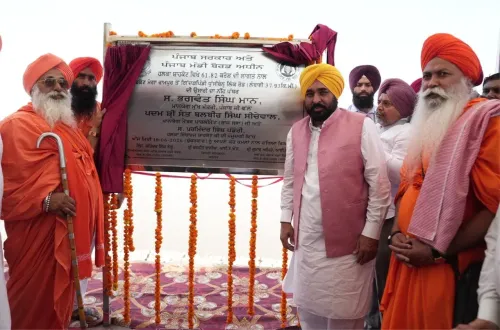
CM Mann lays foundation of Rs 61.82 cr flood-link road in Shahkot

Synopsis
Chief Minister Bhagwant Singh Mann laid the foundation stone of a Rs 61.82 crore, 37.93 km link road in Shahkot connecting the Shahkot-Moga-Rampur Road to the Gidderpindi Dhussi Bund, aiming to bolster Sutlej flood protection and improve connectivity in the Shahkot-Lohian area.
Key Takeaways
Chief Minister Bhagwant Singh Mann laid the foundation stone of the project on 20 June 2026 in the Shahkot constituency , Jalandhar district.
The link road will run 37.93 kilometres from the Shahkot–Moga–Rampur Road to the Gidderpindi Dhussi Bund along the Sutlej River.
The estimated project cost is Rs 61.82 crore .
Objectives include flood protection infrastructure reinforcement, regional connectivity improvement, and economic development in the Shahkot–Lohian area.
Primary beneficiaries are flood-affected villagers, farmers, and commuters in the Sutlej riverine belt of Punjab.
No formal completion timeline or executing agency has been announced yet.
The Chief Minister's Office of Punjab announced on Saturday, 20 June 2026 that Chief Minister Bhagwant Singh Mann laid the foundation stone of a new link road in the Shahkot constituency of Jalandhar district, aimed at protecting Sutlej riverine communities from floods and improving all-weather connectivity in the region.
What was announced
The project involves construction of a 37.93-kilometre link road connecting the Shahkot–Moga–Rampur Road to the Gidderpindi Dhussi Bund, at an estimated cost of Rs 61.82 crore. The CMO stated the road is designed to 'reinforce flood protection infrastructure, enhance regional connectivity, and stimulate economic development in the Shahkot–Lohian area.'
The Dhussi Bund is a long-standing embankment along the Sutlej River, maintained by the state irrigation department to shield adjacent villages and farmland from monsoon inundation. The new link road will run alongside and connect to this embankment, providing emergency access during flood events.
Context
The Sutlej, one of Punjab's major transboundary rivers, has historically caused severe flooding in the districts it traverses during heavy monsoon seasons. Villages in the Shahkot–Lohian belt, situated on the Malwa-Doaba fringe, have faced recurring isolation when monsoon waters breach or overtop embankments, cutting off road access and damaging crops.
Punjab state governments have periodically combined embankment reinforcement with rural road construction after major flood seasons, treating connectivity and flood protection as twin priorities. The current initiative continues that established pattern.
Policy backdrop
Bhagwant Singh Mann, who has led the Aam Aadmi Party government in Punjab since March 2022, has positioned infrastructure investment — particularly in flood-prone and rural areas — as a core governance priority. Pairing embankment access roads with disaster-mitigation works allows the state to claim both development and safety dividends from a single project outlay.
The Moga district, connected via the Shahkot–Moga–Rampur corridor, has an agricultural economy that depends heavily on rural road access for produce movement. An all-weather road to the Dhussi Bund is expected to reduce post-flood market disruption for farmers in the area.
Stakeholders and impact
The primary beneficiaries are flood-affected villagers and farming communities along the Sutlej in the Shahkot and Lohian areas, as well as daily commuters who currently lose road access during high-water events. Improved connectivity to the Dhussi Bund will also enable faster movement of flood-relief machinery and personnel during emergencies.
Local farmers stand to gain from more reliable market linkages, as the new road would provide an alternative route even when primary roads are inundated. The broader economic case rests on reducing annual productivity losses caused by monsoon isolation in the Sutlej belt.
What's next
The state government is yet to announce a formal completion timeline for the 37.93 km stretch or details of the executing agency. Observers will watch whether linked embankment upgrades along the Gidderpindi Dhussi Bund are tendered alongside the road contract, and whether similar flood-road packages feature in the next state budget or irrigation department works programme.
Point of View
The Rs 61.82 crore outlay in the Shahkot constituency — a seat the AAP won — serves both a genuine infrastructure need and a political dividend in a Jalandhar-belt constituency that has historically suffered Sutlej flooding. The dual framing of disaster resilience and rural economic development is deliberate, allowing the project to be claimed as both safety and growth spending. Whether the road is completed before the next monsoon cycle will be the real test of delivery credibility.
NationPress
18 Sept 2026
Frequently Asked Questions
What is the Shahkot link road project announced by CM Mann?
It is a 37.93 km road connecting the Shahkot–Moga–Rampur Road to the Gidderpindi Dhussi Bund along the Sutlej River, with a budget of Rs 61.82 crore , aimed at flood protection and regional connectivity in Shahkot and Lohian areas of Punjab.
What is the Dhussi Bund and why is it important?
The Dhussi Bund is a long-standing flood protection embankment along the Sutlej River in Punjab, maintained by the state irrigation department to shield adjacent villages and farmland from monsoon flooding.
Which constituency does this project cover?
The project is located in the Shahkot constituency in Jalandhar district , Punjab, and is intended to benefit the broader Shahkot–Lohian area.
How will this road help flood-affected communities?
The link road will provide all-weather access to the embankment, enable faster movement of flood-relief machinery, reduce monsoon isolation for villagers, and improve market connectivity for farmers in the Sutlej riverine belt.
When was the foundation stone laid for this project?
Chief Minister Bhagwant Singh Mann laid the foundation stone on 20 June 2026 .