Mayawati slams SP manifesto as ‘money-minded’ empty rhetoric
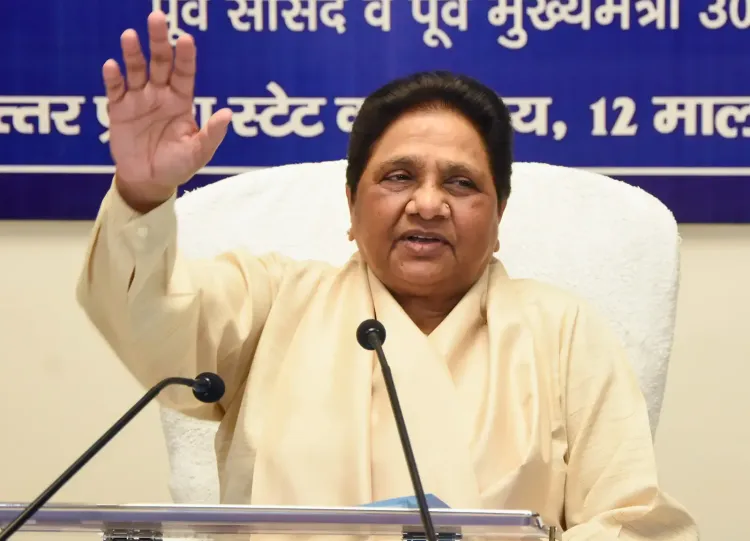
Synopsis
Mayawati has turned the SP's own PDA slogan against it. She branded its new ‘Manifesto of the People’s Will’ a ‘money-minded’ charter and cited the party's Rajya Sabha pick of a ‘big-money tycoon’ as proof. Her pitch: the SP's social-justice talk does not match its choices.
Key Takeaways
Mayawati on 27 November 2026 called the SP's ‘Manifesto of the People’s Will’ “little more than empty rhetoric” and a “money-minded manifesto”.
In a post on X, she likened the charter to the SP's PDA initiative, calling it “all show and no substance”.
She accused the SP of preferring a “big-money tycoon” in the recent Rajya Sabha biennial election from Uttar Pradesh .
She claimed the BSP upheld “work for every hand” and “the rule of law through the law” across its four governments in the state.
She alleged the SP opposed SC, ST and OBC reservations and contributed to caste hatred and riots, and called its promises “electoral deception and trickery”.
Bahujan Samaj Party (BSP) national president Mayawati on Friday, 27 November 2026, launched a blistering attack on the Samajwadi Party (SP) over its newly released ‘Manifesto of the People’s Will’ in Uttar Pradesh. She called the document “little more than empty rhetoric” and a “money-minded manifesto” rather than a genuine commitment to public welfare. The broadside, issued from Lucknow, sharpens the contest for the state's Dalit, backward-class and minority vote.
Key Allegations Against the SP
In a post on X, Mayawati said the SP's charter resembled its PDA (Pichhda, Dalit, Alpsankhyak) initiative. She said it merely proved the saying “all show and no substance”.
The BSP chief alleged that the SP had consistently shown a “narrow-minded, casteist and pro-big-money” approach. According to her, this approach worked against the interests, welfare, dignity and safety of the poor, Dalits, backward classes, Muslims and other sections of society.
She pointed to the recent biennial election for a Rajya Sabha seat from Uttar Pradesh. Mayawati accused the SP of preferring a “big-money tycoon” over backing its own PDA plank.
“Can such policies and activities ever resolve the state’s serious problems of widespread poverty, unemployment, backwardness and migration? Never,” she said.
Questions Over Candidate Selection
Mayawati also questioned how the SP picks its candidates. She alleged that the party would keep fielding wealthy people, strongmen and others in elections instead of individuals genuinely concerned about society and the public interest.
She argued that the ‘Manifesto of the People’s Will’ was in fact a “money-minded manifesto”. She claimed that the people the party selects stay immersed in personal gain and self-interest rather than working for the country and society.
BSP Pitches Its Own Record
Defending her party's approach, Mayawati said “work for every hand” and “the rule of law through the law” were exclusively the BSP's policies and principles. She claimed the party had implemented them with complete honesty and dedication during all four of its governments in Uttar Pradesh.
According to Mayawati, the BSP has consistently pursued an agenda that benefits all communities and sections of society. She claimed that rival parties, particularly the SP, the Indian National Congress (Congress) and the Bharatiya Janata Party (BJP), lacked the strength to deliver such an agenda.
Reservation and Riots Raised
In another swipe, Mayawati asked how people could forget the alleged stains on the SP's political record. She singled out its alleged opposition to reservations for Scheduled Castes (SCs), Scheduled Tribes (STs) and Other Backward Classes (OBCs).
She also accused the SP of contributing to an atmosphere of caste hatred and riots in Uttar Pradesh. She raised other issues of public interest and welfare as well.
Political Significance
Notably, the attack targets the core of the SP's outreach. The PDA formula is built to consolidate backward-class, Dalit and minority voters, the same social base the BSP has historically drawn on.
By linking the manifesto to the SP's Rajya Sabha choice, Mayawati is trying to cast doubt on whether the party's social-justice messaging matches its actual decisions.
Mayawati ended by describing the SP's words, promises, claims and declarations as “electoral deception and trickery”. She urged people to stay alert to what she called the party's misleading political promises. Any response from the SP leadership is likely to shape the next phase of a rivalry that is heating up well ahead of the state's next electoral test.
Point of View
Dalits and minorities directly erodes the BSP's historical base. Seizing on the Rajya Sabha nomination is shrewd because it puts SP's own decisions against its slogans. The weakness in her argument is that she criticises the SP's candidate choices while offering no fresh programme of her own. Instead she leans on the record of governments that ended more than a decade ago, and that may not be enough to win back voters who have drifted away.
NationPress
27 Nov 2026
Frequently Asked Questions
What did Mayawati say about the SP manifesto?
Mayawati called the SP's ‘Manifesto of the People’s Will’ “little more than empty rhetoric” and a “money-minded manifesto” rather than a genuine commitment to public welfare. She made the remarks in a post on X on 27 November 2026.
What is the PDA initiative Mayawati referred to?
PDA stands for Pichhda, Dalit, Alpsankhyak (backward classes, Dalits and minorities), the SP's social outreach plank in Uttar Pradesh. Mayawati said the new manifesto was similar to it and was “all show and no substance”.
Why did Mayawati mention the Rajya Sabha election?
She cited the recent biennial Rajya Sabha election from Uttar Pradesh to accuse the SP of preferring a “big-money tycoon” over supporting the PDA. She used it to argue that the party's actions contradict its social-justice claims.
What did Mayawati claim about the BSP's record?
She said “work for every hand” and “the rule of law through the law” are exclusively BSP principles. She claimed the party implemented them honestly during all four of its governments in Uttar Pradesh.
What other allegations did Mayawati make against the SP?
She alleged the SP opposed reservations for SCs, STs and OBCs and contributed to caste hatred and riots in Uttar Pradesh. She described its promises as “electoral deception and trickery”.