Nasha Mukt Punjab Yatra a social reform drive, not politics: Meghwal in Fazilka
Synopsis
The BJP's third Nasha Mukt Punjab Yatra was flagged off from Fazilka by Union Law Minister Arjun Meghwal, who invoked Sikh scripture and Guru Nanak's Shabads to make the anti-drug case — a deliberate spiritual appeal in a state the BJP is looking to reclaim. The event also doubled as a platform to attack the AAP government over 79,000 drug arrests and alleged suppression of anti-drug voices.
Key Takeaways
Union Law Minister Arjun Meghwal flagged off the third Nasha Mukt Punjab Yatra from Fazilka's Old Vegetable Market on 20 September 2026 .
Meghwal described the BJP campaign as a movement for social reform , not politics, citing parallels with PM Modi's Beti Bachao, Beti Padhao initiative.
He invoked the Sri Guru Granth Sahib , sang a Shabad of Guru Nanak Dev , and referenced Bhagat Kabir Das and Guru Ravidas to connect anti-drug messaging with spiritual values.
Punjab BJP president Kewal Singh Dhillon alleged the AAP government was suppressing anti-drug voices, referencing incidents in Sangrur and unrest in Faridkot .
Former state president Sunil Jakhar cited 79,000 drug arrests under AAP as evidence of the depth of Punjab's drug crisis, not government success.
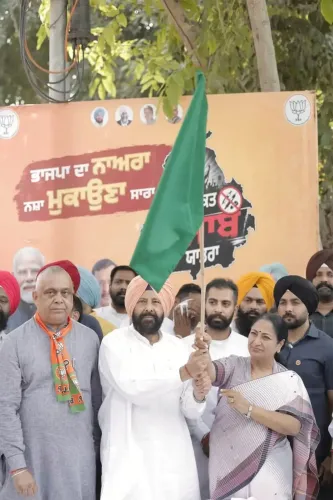
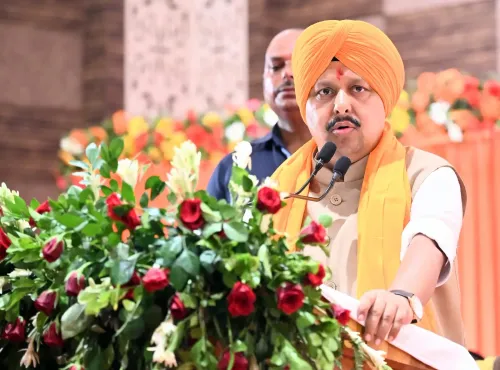
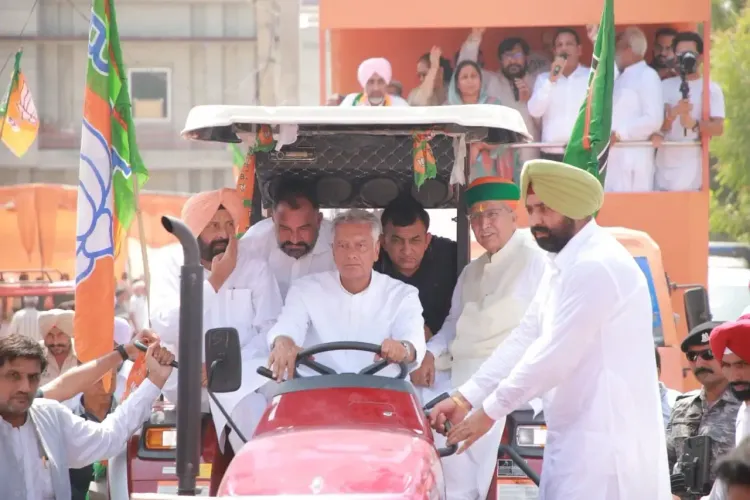
Union Law Minister Arjun Meghwal on Sunday, 20 September 2026, described the Bharatiya Janata Party's Nasha Mukt Punjab Yatra as a movement for social reform, firmly pushing back against criticism that the campaign was politically motivated. Speaking at a public gathering in Fazilka, Punjab, Meghwal flagged off the third leg of the yatra from the town's Old Vegetable Market.
What Meghwal Said
The Union Minister said the campaign's core objective was to protect generations of Punjabis from the scourge of drugs and steer the state toward becoming a developed economy. He acknowledged that some observers were viewing the yatra through a political lens, but rejected that framing categorically.
'This is not a political campaign — it is an initiative for social reform,' Meghwal said, drawing a parallel with Prime Minister Narendra Modi's broader social drives such as Beti Bachao, Beti Padhao and Ek Ped Maa Ke Naam.
In an unusual rhetorical flourish, the minister invoked the Sri Guru Granth Sahib, citing the Bani of Guru Amar Das to urge people to avoid intoxicants that impair the human mind and sense of discretion. He also referenced the importance of Naam Simran in the Bani of Guru Nanak Dev, arguing that a clear mind was a prerequisite for spiritual practice. Meghwal went further and sang a Shabad of Guru Nanak Dev before the gathering, drawing an appreciative response. He also linked the anti-drug message to teachings of Bhagat Kabir Das and Guru Ravidas.
BJP Leaders Sharpen Attack on AAP Government
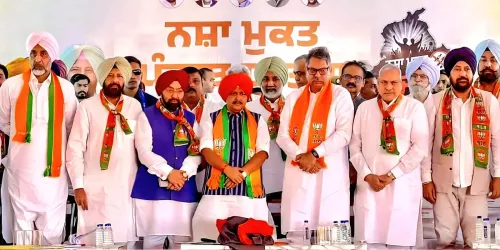
Also present at the event were BJP national General Secretary and Punjab in-charge Satish Poonia, state president Kewal Singh Dhillon, former state president Sunil Jakhar, and former minister Surjit Kumar Jiani. Before addressing the gathering, Meghwal visited the Asafwala Shaheedi Memorial, where he paid floral tributes to soldiers who died for the nation.
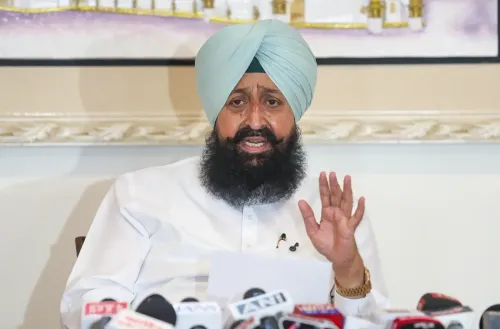
Punjab BJP president Dhillon alleged that the yatra had rattled those responsible for the drug crisis in the state. 'Those who had spread the scourge of drugs have been rattled by the BJP's Nasha Mukt Punjab Yatra. The yatra has put the Chief Minister on the back foot,' Dhillon said. He referred to recent incidents involving Mohanjeet Sheron and Gulzar Singh in Sangrur, alleging that the ruling Aam Aadmi Party (AAP) government was suppressing voices speaking out against drugs. Dhillon also claimed that residents in Faridkot were putting up 'house for sale' boards out of frustration over the drug menace.
Drawing comparisons with BJP-governed states, Dhillon argued that if the party could eliminate gangsterism in Uttar Pradesh, Naxalism in Jharkhand, and violence in Kashmir after the abrogation of Article 370, it had the credentials to address Punjab's drug problem as well.
Jakhar Targets Kejriwal on Arrests
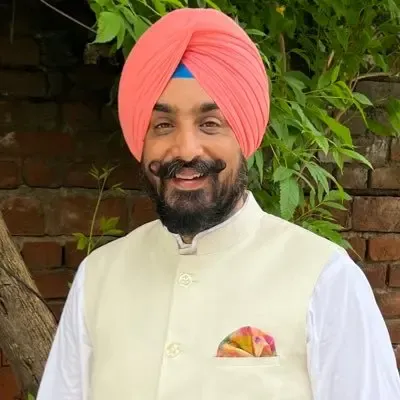
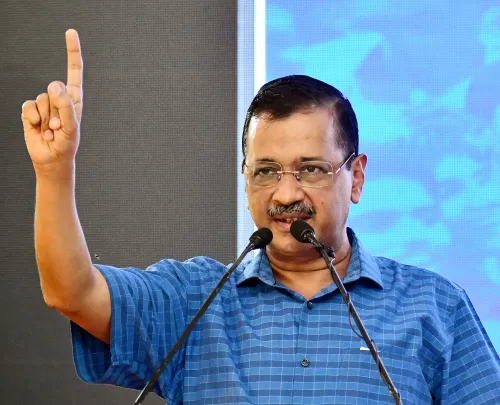
Former state BJP president Jakhar mounted a sharp attack on AAP national convener Arvind Kejriwal, contending that 79,000 arrests under the AAP government were not proof of decisive action but evidence of how deeply the younger generation had been pushed into the drug crisis. He alleged that people raising their voices against drugs were now being killed by drug smugglers or driven to suicide.
Context and Political Background
The Nasha Mukt Punjab Yatra has become one of the BJP's primary vehicles for political mobilisation in a state it lost heavily in the 2022 Punjab Assembly elections. Punjab has long grappled with a drug epidemic — according to reports, the state accounts for a disproportionately high share of heroin seizures nationally. The BJP's decision to lead the campaign with religious and spiritual messaging, rather than purely administrative arguments, reflects a calculated appeal to Punjab's dominant Sikh sensibility. Critics argue the yatra is as much about rebuilding the BJP's grassroots base ahead of the next state election as it is about social welfare.
With the third leg now flagged off from Fazilka, the BJP appears intent on sustaining the campaign's momentum through border districts where drug trafficking is reported to be acutest.
Point of View
Rather than policy numbers or enforcement data, is a calculated political choice in a state where religious sentiment runs deep and where the party has struggled to find traction. Framing a pre-election campaign as a 'social reform movement' is not new in Indian politics — but the invocation of the Guru Granth Sahib gives it a credibility layer that purely administrative messaging would not. The real accountability question is one neither side has answered: Punjab's drug crisis is structural, rooted in porous borders and entrenched trafficking networks, and no yatra alone changes that geometry. The '79,000 arrests' figure, weaponised by the BJP, could equally be read as evidence of aggressive law enforcement — the framing dispute itself shows how thin the line between political attack and policy critique has become.
NationPress
20 Sept 2026
Frequently Asked Questions
What is the Nasha Mukt Punjab Yatra?
The Nasha Mukt Punjab Yatra is a BJP-led campaign aimed at raising awareness against drug abuse in Punjab and mobilising communities for a drug-free state. The third leg of the yatra was flagged off from Fazilka on 20 September 2026 by Union Law Minister Arjun Meghwal.
Who attended the Fazilka event of the Nasha Mukt Punjab Yatra?
The event was attended by Union Law Minister Arjun Meghwal, BJP national General Secretary and Punjab in-charge Satish Poonia, Punjab BJP state president Kewal Singh Dhillon, former state president Sunil Jakhar, and former minister Surjit Kumar Jiani.
Why did Meghwal invoke Sikh scripture at the Nasha Mukt Punjab Yatra?
Meghwal cited the Bani of Guru Amar Das and Guru Nanak Dev from the Sri Guru Granth Sahib to argue that avoiding intoxicants is consistent with Sikh spiritual teachings. He also referenced Bhagat Kabir Das and Guru Ravidas, framing the anti-drug message as rooted in shared religious and cultural values rather than politics.
What did BJP leaders allege about the AAP government's drug record?
Punjab BJP president Kewal Singh Dhillon alleged that the AAP government was suppressing voices speaking out against drugs, citing incidents in Sangrur. Former state president Sunil Jakhar argued that 79,000 drug arrests under AAP were evidence of the depth of the crisis, not a sign of effective governance.
Is the Nasha Mukt Punjab Yatra seen as a political campaign?
BJP leaders, including Union Minister Arjun Meghwal, have categorically rejected the political characterisation, calling it a social reform initiative. However, critics and political observers note that the campaign is also a vehicle for BJP to rebuild grassroots presence in Punjab ahead of the next state assembly election.