Is Menstrual Hygiene Essential for Life and Education?
Synopsis
In a landmark ruling, the Supreme Court has recognized menstrual hygiene as a fundamental right for girls, linking it directly to their dignity, health, and educational opportunities. The court has mandated that all schools provide free sanitary products, proper facilities, and education on menstruation to combat stigma. This pivotal decision aims to empower young girls across India.
Key Takeaways
Menstrual hygiene is a fundamental right for girls in India.
The Supreme Court mandates free sanitary products in schools.
Functional, gender-segregated toilets are essential.
Education on menstrual health is crucial to combat stigma.
Regular monitoring and compliance are mandated.
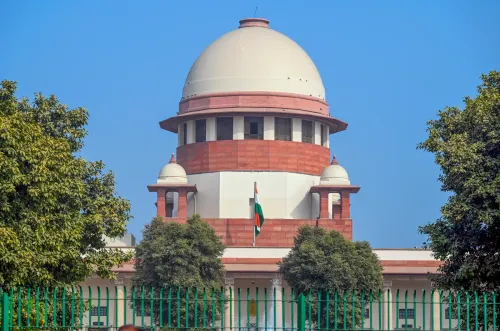
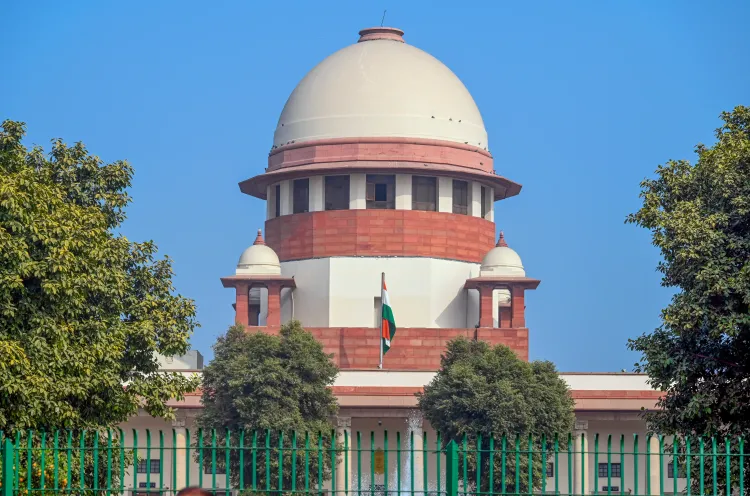
New Delhi, Jan 30 (NationPress) The Supreme Court stated on Friday that access to menstrual hygiene is a critical component of a girl child's right to life, dignity, health, and education. The court issued a detailed set of obligatory directives to all states and union territories (UTs) to guarantee free sanitary napkins, operational gender-segregated toilets, and menstrual health awareness programs in every school nationwide.
A bench led by Justices J.B. Pardiwala and R. Mahadevan remarked, “A period should conclude a sentence - not a girl’s education,” emphasizing that the government has a positive duty under Article 21 of the Constitution to safeguard the right to health, especially concerning the menstrual health of girls.
In their comprehensive 127-page ruling, the Pardiwala-led bench noted that insufficient access to menstrual hygiene management (MHM) products forces girls to use unhygienic alternatives such as rags or prolonged use of menstrual absorbents, which can significantly harm their health.
“The lack of access to menstrual hygiene management measures compromises a girl child's dignity, as dignity is expressed in conditions that allow individuals to live free from humiliation, exclusion, or unnecessary suffering,” the apex court stated.
Addressing the educational impact, the Supreme Court highlighted that the unavailability of clean washrooms, menstrual absorbents, and safe disposal systems forces girls to either skip school or drop out entirely.
“Being part of education is not solely about being physically present in the classroom; it includes the ability to attend school, focus during lessons, and engage in academic and co-curricular activities equally with peers,” it added.
Issuing several directives, the Pardiwala-led bench mandated that all schools, both government-operated and private, must feature functional, gender-segregated toilets with accessible water, handwashing facilities with soap, and infrastructure accommodating children with disabilities.
Regarding the availability of menstrual absorbents, the top court instructed states and UTs to ensure that every school provides oxo-biodegradable sanitary napkins free of charge, ideally through vending machines installed within toilet areas.
Additionally, it mandated the creation of Menstrual Hygiene Management corners stocked with spare uniforms, innerwear, and other essential items.
The Pardiwala-led bench further directed that schools must have safe, hygienic, and environmentally friendly systems for disposing of sanitary waste in compliance with the Solid Waste Management Rules.
“Each toilet should be equipped with a covered waste bin for collecting sanitary products, and cleanliness and regular maintenance of these bins must be ensured at all times,” the apex court stated.
It instructed the NCERT and State Councils of Educational Research and Training to develop gender-responsive curricula addressing menstruation, puberty, and related health issues to combat stigma and taboos.
The Pardiwala-led bench also mandated that all educators, regardless of gender, receive appropriate training and awareness on menstrual hygiene.
The District Education Officer has been assigned the duty of carrying out annual inspections of school facilities and must collect anonymous feedback from students through specially designed surveys.
The National Commission for Protection of Child Rights and State Commissions are tasked with supervising compliance and taking action against non-adherence.
Issuing a continuing mandamus, the apex court called on the Centre and all states and UTs to strictly comply with the directives within three months, stating it will monitor progress through compliance reports.
In conclusion, the Pardiwala-led bench made a poignant appeal, declaring: “This ruling is not only for legal stakeholders but also for classrooms where girls hesitate to seek assistance, for teachers wanting to help but constrained by a lack of resources, for parents unaware of the impact of their silence, and for society to demonstrate that progress is gauged by how we protect the most vulnerable.”
The matter has been scheduled for further compliance monitoring in three months.
Point of View
This landmark ruling by the Supreme Court is a significant step towards recognizing the importance of menstrual hygiene in ensuring that every girl has the opportunity to pursue her education with dignity. It emphasizes the responsibility of the government and educational institutions to create a supportive environment that fosters learning and growth.
NationPress
24 Sept 2026
Frequently Asked Questions
Why is menstrual hygiene important for education?
Menstrual hygiene is crucial for education because inadequate facilities can lead to school absenteeism and dropouts among girls. Access to proper hygiene products ensures that girls can attend school without disruption.
What directives has the Supreme Court issued regarding menstrual hygiene?
The Supreme Court has mandated that all schools provide free sanitary napkins, functional gender-segregated toilets, and menstrual health education to ensure the dignity and health of girl students.
How will the implementation of these directives be monitored?
The National Commission for Protection of Child Rights and State Commissions will oversee compliance, with the District Education Officer conducting annual inspections and collecting feedback from students.
What impact does menstrual hygiene have on girls' dignity?
Lack of access to menstrual hygiene products can undermine a girl's dignity, leading to humiliation and exclusion, which is detrimental to her overall well-being and educational opportunities.
How can schools support menstrual hygiene management?
Schools can support menstrual hygiene management by providing necessary facilities, such as clean toilets, safe disposal methods, and educational resources to raise awareness and combat stigma.