Did the SC Issue a Notice Regarding Guidelines on 'Menstruation Checks'?
Synopsis
The Supreme Court is taking a stand against the humiliation of female workers forced to prove their menstruation. This case raises critical questions about women's rights in the workplace. As the nation watches, the upcoming hearing could set important precedents for gender dignity and health rights.
Key Takeaways
The Supreme Court is addressing the issue of women's rights in the workplace.
Petition highlights the humiliation faced by sanitation workers.
Upcoming hearing on December 15 could be pivotal.
Instances of period-shaming have occurred in the past.
Guidelines are being sought to protect women's dignity and health.
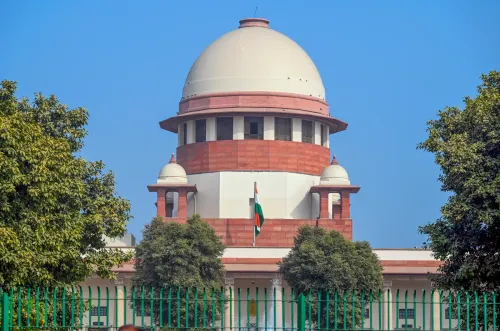
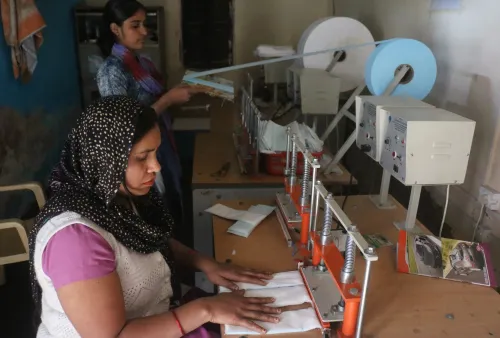
New Delhi, Nov 28 (NationPress) The Supreme Court has requested feedback from the Central government and the Haryana administration concerning a petition that brings attention to the alleged mistreatment of three female sanitation workers at Maharshi Dayanand University (MDU) in Rohtak. These workers were reportedly compelled to provide photographic evidence of their menstruation to their supervisors.
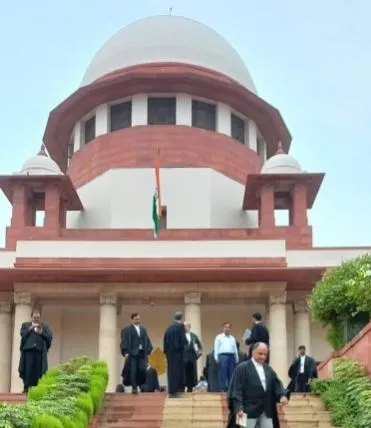
A bench consisting of Justices B.V. Nagarathna and R. Mahadevan issued a notice regarding the writ petition submitted by the Supreme Court Bar Association (SCBA) under Article 32 of the Constitution.
This matter, set for a hearing on December 15, raises significant issues about safeguarding women’s rights to health, dignity, privacy, and bodily autonomy in workplaces and educational institutions, especially during menstruation or related gynecological matters.
The petition arises from an event reported on October 26, when the three sanitation workers were called in on a Sunday due to the visit of the Haryana Governor. They were allegedly subjected to "verbal abuse, humiliation, and pressure" by supervisors employed through the Haryana Kaushal Rozgar Nigam Limited.
The petition claims that the supervisors "demanded photographic proof from the workers by requesting them to send images of their sanitary pads."
During the proceedings, Justice Nagarathna-led Bench commented that this incident reflects "a mindset" that is profoundly concerning.
"In Karnataka, they are granting period leave. After reading this, I wondered — will they require proof for granting the leave?" Justice Nagarathna noted.
"This illustrates the mentality of the individuals involved. If heavy work could not be performed due to their absence, someone else could have been assigned to it," the apex court remarked, expressing hope that "something positive will emerge from this petition."
In the aftermath of the incident, MDU suspended the two supervisors and commenced an internal investigation. The Haryana State Commission for Women also took cognizance and sought reports from the university administration and Rohtak police.
The Assistant Registrar and the two supervisors were subsequently charged under various sections of the Bharatiya Nyaya Sanhita concerning assault and the outraging of a woman’s modesty.
The SCBA described the incident as "disturbing" in its petition, asserting that such actions breach women's fundamental rights to life, dignity, privacy, and bodily integrity under Article 21.
The petition also referenced similar past occurrences of "period-shaming" and invasive checks in educational and professional settings, including a 2017 incident where 70 girls in Uttar Pradesh were allegedly stripped to check for menstrual blood, and a 2020 case in Gujarat where 68 college students were asked to remove their underwear for inspection.
Filed by advocate Pragya Baghel, the petition seeks directions from the Central and Haryana governments for a thorough investigation into the Rohtak incident and the formulation of nationwide guidelines "to guarantee that the rights to health, dignity, bodily autonomy, and privacy of women and girls are upheld during menstruation and related gynecological concerns in workplaces and educational settings."
Frequently Asked Questions
What was the incident involving the female sanitation workers?
Three female sanitation workers at Maharshi Dayanand University were allegedly forced to provide photographic proof of their menstruation to their supervisors, leading to claims of humiliation.
What actions have been taken by the Supreme Court?
The Supreme Court has issued a notice for responses from the Centre and Haryana government and scheduled a hearing for December 15.
What are the broader implications of this case?
This case could set significant precedents for women's rights, health, and dignity in workplaces and educational institutions across India.