Why Did the Karnataka HC Stay the Congress Govt's Order on Menstrual Leave?
Synopsis
In a significant legal move, the Karnataka High Court has temporarily suspended a government order mandating menstrual leave for women. This decision arises from a petition by local associations, raising questions about the government's authority and consultation process. What does this mean for women's rights in the workplace?
Key Takeaways
The Karnataka High Court has temporarily halted the government's menstrual leave order.
The petitioners raised concerns about the lack of consultation with stakeholders.
Existing labor laws provide limited leave without specifying menstrual leave.
The case will be revisited after the winter vacation.
The ruling emphasizes the need for proper legal frameworks in workplace policies.
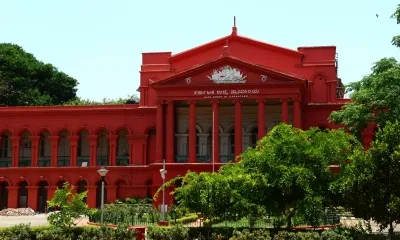
Bengaluru, Dec 9 (NationPress) The Karnataka High Court issued an interim order on Tuesday suspending the government notification that mandated registered industrial establishments to grant one-day menstrual leave for women employees.
The bench, led by Justice M. Jyothi, directed the government to respond to the objections raised against the notification.
This ruling came about as the Bangalore Hotels Association and Avirata AFL Connectivity Systems Limited challenged the government order. The case will be rescheduled after the winter recess, with the bench permitting petitioners to seek modifications to the ruling later.
The bench questioned whether the government consulted with management before issuing the notification, to which the counsel replied negatively. Following this, the court issued the interim order.
The government’s notification, dated November 20, required industrial establishments to allow paid menstrual leave for women employees.
The counsel for the petitioners argued that the government had unilaterally issued an executive order mandating menstrual leave.
It was pointed out that existing labor laws already provide comprehensive leave policies, and these do not include provisions for menstrual leave.
The petition challenging the government order stated that establishments are registered under various labor laws, including the Factories Act, the Karnataka Shops and Commercial Establishments Act, and others, which permit only 12 days of leave annually.
According to these laws, there is no requirement for employers to provide menstrual leave. Thus, the government lacks the authority to enforce such a mandate through an executive order, the petition asserted.
Furthermore, the petition claims that the government order is unconstitutional and violates Article 14 of the Constitution of India.
Karnataka had recently introduced a policy allowing one-day menstrual leave for women aged 18 to 52 years, permitting them to take one day of paid leave each month.
This policy was intended to provide women with a paid day off during menstruation, applicable to permanent, contractual, and outsourced employees.
The government issued the order on November 12, directing employers to provide 12 days of paid leave.
Point of View
We recognize the complexity of the issue surrounding menstrual leave. This court ruling highlights the ongoing debate between government mandates and the rights of employers. It’s crucial to balance women's health needs with industry regulations, ensuring that policies are developed through proper consultation and legal frameworks.
NationPress
7 Oct 2026
Frequently Asked Questions
What was the Karnataka government's order regarding menstrual leave?
The Karnataka government issued a notification mandating registered industrial establishments to provide one-day menstrual leave for women employees.
Why did the Karnataka High Court stay the government's order?
The Karnataka High Court stayed the government order due to concerns regarding the lack of consultation with management before the notification was issued.
What laws govern the leave policy for industrial establishments in Karnataka?
The leave policy for industrial establishments in Karnataka is governed by various laws, including the Factories Act and the Karnataka Shops and Commercial Establishments Act, which provide for a limited number of leave days.
Who challenged the government's menstrual leave order?
The government's menstrual leave order was challenged by the Bangalore Hotels Association and Management of Avirata AFL Connectivity Systems Limited.
What does the petition against the government's order claim?
The petition claims that the government's order is unconstitutional, violates Article 14 of the Constitution, and that the executive order lacks authority since existing laws do not mandate menstrual leave.