PM Modi Congratulates Ethiopia's Abiy Ahmed on Election Win

Synopsis
Prime Minister Narendra Modi congratulated Ethiopian PM Abiy Ahmed Ali and the Prosperity Party on their decisive parliamentary election win on June 23, 2026, underscoring India's historic and multifaceted ties with Ethiopia and signalling continued high-level bilateral engagement.
Key Takeaways
PM Narendra Modi congratulated Ethiopian PM Abiy Ahmed Ali and the Prosperity Party on their decisive parliamentary election victory on June 23, 2026 .
India and Ethiopia have maintained diplomatic relations since 1948 , spanning trade, capacity building, and institutional cooperation.
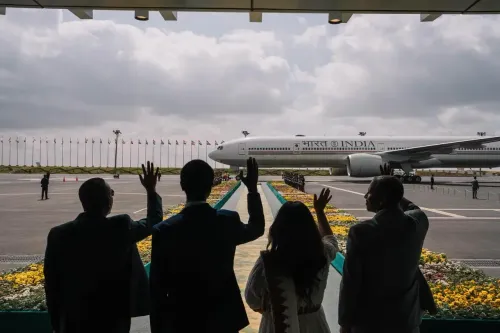
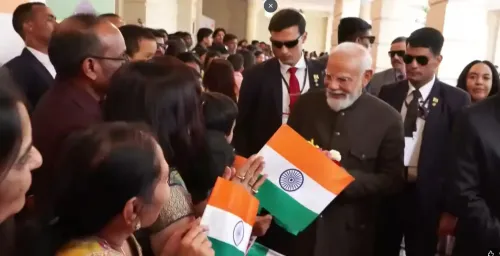
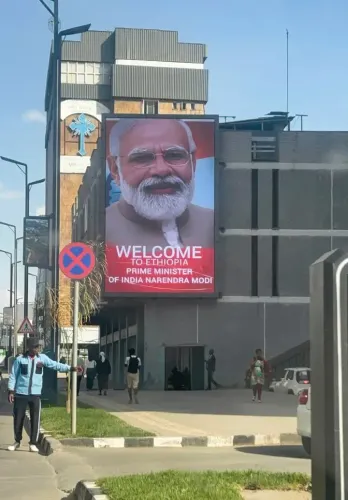
Modi visited Ethiopia in July 2015 , addressing the African Union — the first such visit by an Indian Prime Minister in decades.
Abiy Ahmed Ali has led Ethiopia since 2018 and was awarded the Nobel Peace Prize in 2019 for regional peace efforts.
The message reflects India's broader Africa strategy of sustaining personal diplomacy and institutional engagement across the continent.
Observers will watch for follow-up bilateral meetings and new commitments at the next India-Africa Forum Summit .
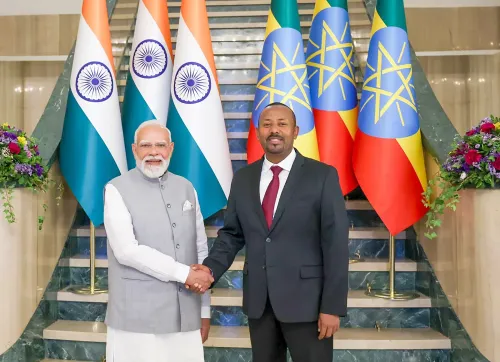
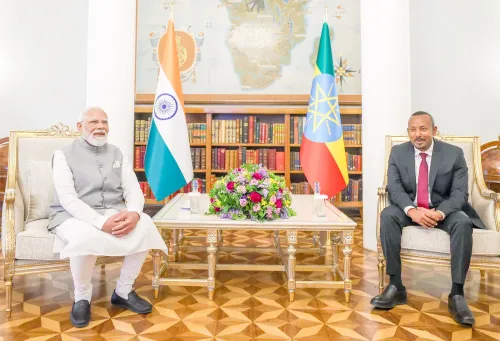
Prime Minister Narendra Modi on Tuesday, June 23, 2026, extended congratulations to Ethiopian Prime Minister Abiy Ahmed Ali and the Prosperity Party on their decisive victory in Ethiopia's parliamentary elections, reaffirming India's deep-rooted ties with the East African nation.
Context
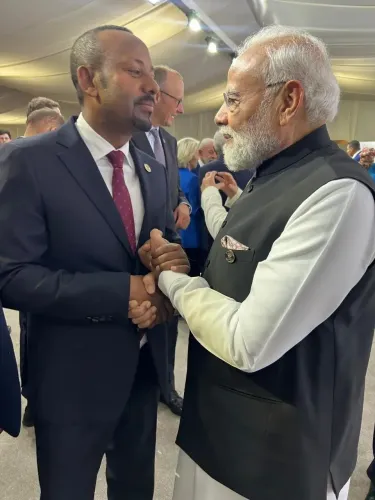
In his post on X, Modi described Abiy Ahmed Ali as a personal friend and praised the election outcome as a decisive victory. He noted that India 'greatly cherishes its historic, multifaceted and deep-rooted ties with Ethiopia,' invoking the warmth of bilateral relations that stretch back decades. The message signals New Delhi's intent to maintain continuity in its engagement with Addis Ababa under the re-elected leadership.
Policy Backdrop
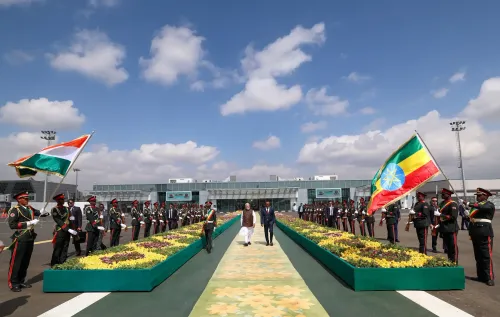
India and Ethiopia have maintained diplomatic relations since 1948, with ties deepening significantly through high-level visits and institutional frameworks. Modi visited Ethiopia in July 2015, addressing the African Union and signing agreements covering trade and capacity building — the first visit by an Indian Prime Minister to the country in decades. India has also committed lines of credit and training slots to African partner nations through successive India-Africa Forum Summits, the first of which was held in 2008.
Abiy Ahmed Ali, who has led Ethiopia since 2018, was awarded the Nobel Peace Prize in 2019 for his efforts toward regional peace, including a landmark peace agreement with neighbouring Eritrea. His Prosperity Party was formed in 2019 through a merger of regional parties, including the former ruling coalition, the EPRDF.
Stakeholders and Impact
Ethiopia is a focal point of India's Africa policy owing to its strategic location in the Horn of Africa, its peacekeeping contributions, and its status as a growing market for Indian goods and investment. A significant Indian business community is present in Ethiopia, with interests spanning manufacturing, pharmaceuticals, and agribusiness. Re-elected leadership under Abiy Ahmed provides continuity for Indian businesses and diplomatic channels already in place.
For New Delhi, messages of this kind serve a dual purpose: they affirm personal diplomacy at the highest level and signal to partner governments that bilateral ties are insulated from electoral cycles. India has consistently pursued this model of engagement across Africa, using elections in partner countries as occasions to publicly reaffirm commitment.
What's Next
Attention will now turn to whether the congratulatory message translates into concrete diplomatic follow-up, including a possible bilateral meeting on the sidelines of a multilateral forum or the scheduling of a state visit. The next India-Africa Forum Summit — a key institutional platform for India's continental engagement — will be closely watched for any upgraded commitments to Ethiopia. Analysts will also track whether new trade or development cooperation agreements are signed in the months ahead, building on the framework established during Modi's 2015 visit.
Point of View
Positioning India as a partner invested in Ethiopian leadership continuity. This fits a broader pattern in which New Delhi has sought to deepen its footprint in the Horn of Africa as a counterbalance to Chinese infrastructure influence on the continent. The real test will be whether this diplomatic warmth translates into substantive deliverables — trade agreements, lines of credit, or a high-level bilateral meeting — in the near term.
NationPress
22 Sept 2026
Frequently Asked Questions
Why did PM Modi congratulate Abiy Ahmed on the Ethiopian election?
PM Modi congratulated Abiy Ahmed Ali on the Prosperity Party's decisive victory in Ethiopia's parliamentary elections to reaffirm India's historic and deep-rooted ties with Ethiopia and signal continued bilateral engagement under the re-elected leadership.
What is India's relationship with Ethiopia?
India and Ethiopia have maintained diplomatic relations since 1948 . Ties cover trade, capacity building, and development cooperation, and were significantly deepened during PM Modi's visit to Ethiopia in July 2015 , when he addressed the African Union and signed bilateral agreements.
Who is Abiy Ahmed Ali?
Abiy Ahmed Ali has been Prime Minister of Ethiopia since 2018 . He was awarded the Nobel Peace Prize in 2019 for his peace efforts, including a landmark agreement with Eritrea . He leads the Prosperity Party , formed in 2019 through a merger of regional parties.
When did Modi visit Ethiopia?
PM Modi visited Ethiopia in July 2015 , making him one of the few Indian Prime Ministers to do so. During the visit, he addressed the African Union and signed agreements on trade and capacity building.
What is the Prosperity Party in Ethiopia?
The Prosperity Party is Ethiopia's ruling political party , founded in 2019 through a merger of regional parties including the former ruling coalition, the EPRDF . It is led by Prime Minister Abiy Ahmed Ali .