Modi on AI vs roots: Nalanda, Sanskrit University lead the way

Synopsis
In his 135th Mann Ki Baat, Modi didn't just talk about AI — he pointed to two institutions quietly redefining what Indian higher education could look like: Nalanda reviving thousand-year-old debate traditions at convocation, and Central Sanskrit University preparing to train AI engineers who can also read ancient manuscripts.
Key Takeaways
PM Modi addressed the nation during the 135th episode of 'Mann Ki Baat' on 28 June , focusing on AI and civilisational heritage.
Nalanda University has incorporated Shaastraarth — structured intellectual debate — into its convocation ceremony; nearly half the participants were international students.
Central Sanskrit University in Delhi is launching a B.Tech in Artificial Intelligence and Data Science aimed at developing AI tools for Indian languages and digitising ancient manuscripts.
Modi urged universities across India to consider adopting Shaastraarth-style discourse initiatives.
The announcements align with a broader national push to integrate AI into higher education while preserving India's knowledge traditions.
Prime Minister Narendra Modi on Sunday, 28 June called for a deliberate balance between embracing artificial intelligence and preserving India's civilisational heritage, using his 135th episode of the monthly radio programme 'Mann Ki Baat' to spotlight two institutions he said were already modelling that balance. The remarks come as AI adoption accelerates across Indian higher education, raising questions about cultural continuity alongside technological progress.
The Core Question Modi Raised
'This is the age of technology. New research is taking place every day. Ever new AI innovations are coming up. In such times, a crucial question arises: how can we preserve people's creativity? How do we remain connected to our roots while advancing with new technology?' Modi said during the broadcast.
The Prime Minister framed this not as a tension to be resolved by choosing one side, but as a design challenge — one that universities and policymakers must consciously engineer into curricula and institutional culture.
Nalanda University: Reviving Shaastraarth for the AI Era
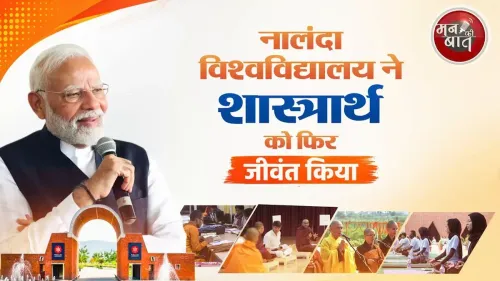
Nalanda University, whose new campus Modi dedicated to the nation two years ago, has incorporated the ancient tradition of Shaastraarth — structured intellectual discourse combining debate, logic, and deep contemplation — into its convocation ceremony. Modi described Shaastraarth as 'a disciplined process of dialogue, debate, and deep contemplation' that demands both mastery of one's own position and the patience to genuinely hear opposing views.
Notably, nearly half of the students who participated in the Shaastraarth at Nalanda's convocation came from other countries, underscoring the university's emergence as an international hub for knowledge exchange rooted in India's academic traditions. Modi urged other universities across India to consider adopting similar initiatives.
Central Sanskrit University to Launch B.Tech in AI and Data Science
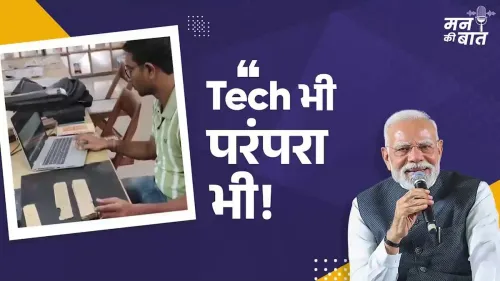
The second institution Modi highlighted was the Central Sanskrit University in Delhi, which is set to launch a B.Tech programme in Artificial Intelligence and Data Science. Modi described this as 'a crucial step towards integrating modern technology with India's traditional knowledge.'
According to the Prime Minister, the programme is expected to serve two specific purposes: developing new AI tools for Indian languages, and accelerating the digitisation and preservation of ancient texts and manuscripts. This positions the university at a rare intersection — applying frontier technology to safeguard knowledge systems that predate modern academia by millennia.
Broader Significance for India's Education Policy
This comes amid a wider national push to embed AI literacy across Indian higher education, including recent University Grants Commission (UGC) directives encouraging AI integration in curricula. What distinguishes the two examples Modi cited is their explicit anchoring in India's knowledge heritage — Sanskrit, classical discourse traditions, and manuscript preservation — rather than purely vocational or industrial AI training.
Critics and education watchers will likely scrutinise whether such programmes receive adequate faculty, infrastructure, and industry linkage to translate intent into outcomes. The Central Sanskrit University's B.Tech launch, in particular, will be watched as a test case for whether traditional institutions can credibly compete in the AI skilling space.
What Comes Next
No specific timeline for the Central Sanskrit University B.Tech programme's first intake was announced during the broadcast. Modi's call for other universities to adopt Shaastraarth-style discourse is advisory rather than policy-binding, but it signals a broader cultural direction the Centre appears to favour in higher education reform. Observers will watch whether the National Education Policy framework formalises such integrations in the next revision cycle.
Point of View
But unlikely to shift the structural gap between India's classical knowledge systems and its AI talent pipeline. The Central Sanskrit University B.Tech is the more consequential announcement: if it attracts qualified faculty and industry partnerships, it could become a genuine model; if it remains underfunded, it risks being a headline without a curriculum. The deeper question mainstream coverage misses is whether 'rooted in heritage' AI training produces meaningfully different engineers, or whether it is rebranding for political optics. That answer will only come from outcomes data — placement records, research output, language-tool deployments — none of which exist yet.
NationPress
26 Sept 2026
Frequently Asked Questions
What did PM Modi say about AI in his Mann Ki Baat on 28 June?
PM Modi said the rapid rise of AI makes it essential to balance technological progress with the preservation of human creativity and India's civilisational roots. He cited Nalanda University and Central Sanskrit University as institutions already modelling this balance.
What is the Shaastraarth tradition that Modi praised at Nalanda University?
Shaastraarth is an ancient Indian tradition of structured intellectual discourse involving debate, logic, and deep contemplation. Nalanda University has incorporated it into its convocation ceremony, with nearly half the participating students coming from other countries.
What is the B.Tech programme announced by Central Sanskrit University?
Central Sanskrit University in Delhi is launching a B.Tech in Artificial Intelligence and Data Science. The programme aims to develop AI tools for Indian languages and accelerate the digitisation and preservation of ancient texts and manuscripts.
Why did Modi urge other universities to follow Nalanda's example?
Modi said Nalanda's revival of Shaastraarth is a commendable effort to bridge an ancient tradition with contemporary times, and he urged other universities to consider adopting similar initiatives to keep students connected to India's intellectual heritage.
How does this fit into India's broader AI education push?
The announcements align with wider University Grants Commission directives encouraging AI integration in curricula. What distinguishes these examples is their explicit grounding in India's classical knowledge systems — Sanskrit, manuscript preservation, and traditional discourse — rather than purely vocational AI training.