Dr. Jitendra Singh Shares PM Modi's Words on Astronomy Inspiring Youth
Synopsis
Union Science and Technology Minister Dr. Jitendra Singh amplified Prime Minister Narendra Modi's Mann Ki Baat remarks on 31 May 2026, highlighting astronomy's role in inspiring a new generation of Indians and connecting ancient sky-watching traditions to modern space ambitions.
Key Takeaways
Jitendra Singh shared PM Modi's remarks on astronomy inspiring Indian youth via X on 31 May 2026 .
The post was tagged #MannKiBaat , the Prime Minister's monthly public radio address.
India's space heritage traces back to the Aryabhata satellite launch in 1975 , named after a classical Indian astronomer.
The Chandrayaan-3 lunar south pole landing in 2023 has been repeatedly cited as a generational inspiration for young scientists.
The messaging aligns with the government's Atmanirbhar Bharat push to build a domestic STEM talent pipeline through space outreach.
Upcoming milestones to watch include national telescope projects and the Gaganyaan human spaceflight programme timeline.
Union Science and Technology Minister Dr. Jitendra Singh on Sunday, 31 May 2026 shared remarks by Prime Minister Narendra Modi on the enduring power of astronomy to ignite curiosity among Indians, citing the Prime Minister's observation that a new generation is now carrying forward that same spirit of exploration. The post, made on X, was tagged under #MannKiBaat, the Prime Minister's monthly radio programme.
Context
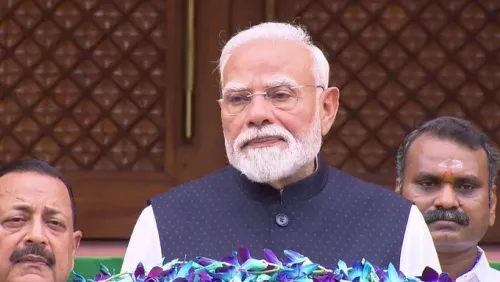
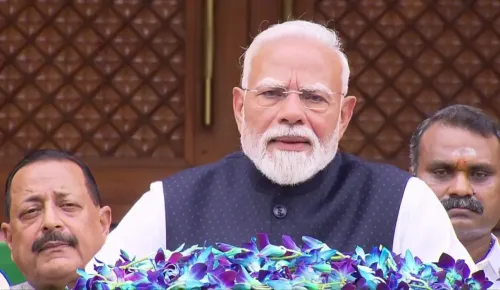
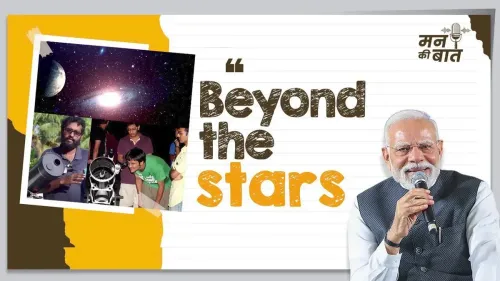
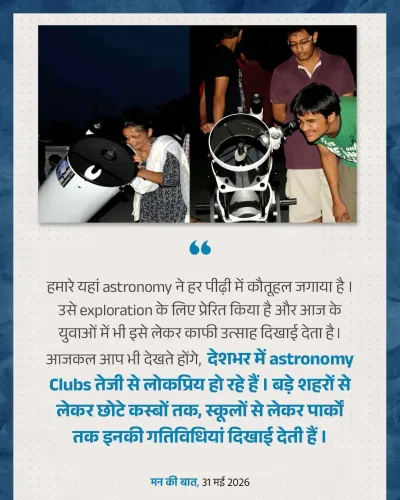
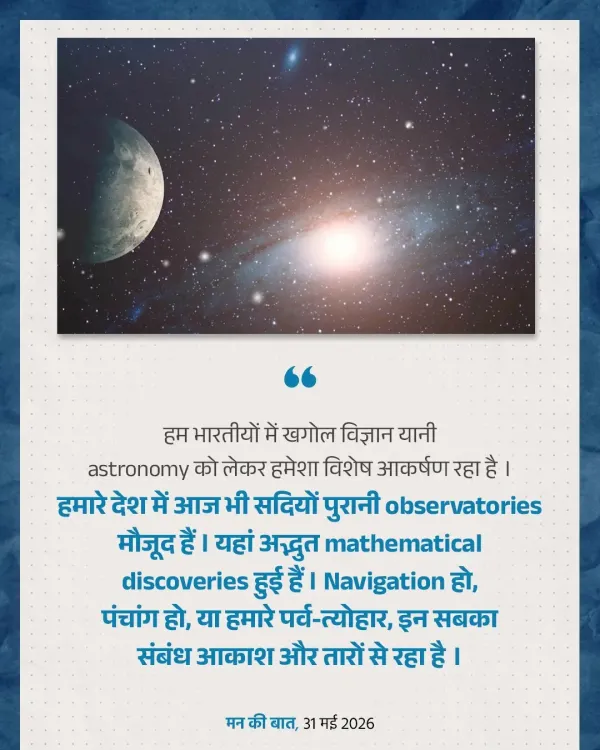
The quoted words — 'Astronomy has fascinated generations of Indians, sparking curiosity and a spirit of exploration. Today, that same enthusiasm is inspiring a new generation' — were attributed by Dr. Jitendra Singh to Prime Minister Narendra Modi. The post carries the #MannKiBaat hashtag, which corresponds to the Prime Minister's long-running monthly radio address where citizen-centric themes, including science and space, are regularly discussed. The minister shared two images alongside the post, reinforcing the visual dimension of the message.
Astronomy holds a deep cultural resonance in India, with indigenous traditions of sky-watching dating back millennia. The framing of modern scientific enthusiasm as a continuation of that heritage is a recurring motif in official communication around India's space programme.
Policy Backdrop
India's engagement with modern astronomy and space science has a documented institutional lineage. The country launched its first satellite, Aryabhata, in 1975, named after the ancient Indian mathematician-astronomer, signalling the deliberate link between classical knowledge and contemporary capability. Decades later, the successful soft-landing of Chandrayaan-3 on the lunar south pole in 2023 was widely cited by the Prime Minister as a milestone meant to inspire young Indians toward careers in science and space.
ISRO, the Indian Space Research Organisation, has been central to this arc, overseeing lunar, planetary and astronomy-related missions that have raised India's profile in global space science. The current administration has consistently positioned these achievements within the broader Atmanirbhar Bharat framework — using indigenous space success as a tool for technological self-reliance and as a pipeline for STEM talent.
Stakeholders and Impact
The primary audience for messaging of this kind is Indian students and young researchers, particularly those in secondary and tertiary education who are at the threshold of choosing scientific careers. Mann Ki Baat, broadcast monthly across radio and digital platforms, reaches tens of millions of listeners across urban and rural India, making it a significant vehicle for public science communication.
When senior ministers amplify the Prime Minister's remarks on platforms such as X, the message extends further into policy and academic circles, reinforcing institutional support for astronomy outreach. Educators, science communicators and university departments engaged in astrophysics and space sciences are among those who benefit from sustained high-level attention to the field.
What's Next
The broader policy environment points to several developments that will test whether this enthusiasm translates into infrastructure. Planned national large optical and radio telescope projects are under discussion, and parliamentary updates on the Gaganyaan human spaceflight programme remain closely watched by the scientific community. If the government follows through on these investments, the public messaging around astronomy's inspirational value will have a concrete institutional counterpart to point to.
Sustained ministerial amplification of the Prime Minister's science-focused remarks suggests that astronomy and space outreach will continue to feature prominently in official communication, with the twin goals of building public engagement and expanding the long-term talent pool in allied fields.
Point of View
Layered communication strategy that uses senior ministerial voices to extend the reach of the PM's public science messaging. The choice of astronomy — a field with both ancient Indian roots and cutting-edge contemporary relevance — is not incidental; it allows the government to simultaneously invoke civilisational pride and forward-looking technological ambition. This pattern of linking classical heritage to modern STEM capability has intensified since the Chandrayaan-3 mission and is increasingly central to how the administration frames its science policy narrative. The sustained emphasis signals that space and astronomy outreach will remain a political as well as a policy priority in the run-up to upcoming milestones like Gaganyaan.
NationPress
16 Oct 2026
Frequently Asked Questions
What did PM Modi say about astronomy in Mann Ki Baat?
PM Modi observed that astronomy has fascinated generations of Indians, sparking curiosity and a spirit of exploration, and that the same enthusiasm is now inspiring a new generation, as shared by Minister Dr. Jitendra Singh on 31 May 2026.
Why did Dr. Jitendra Singh post about astronomy on X?
Dr. Jitendra Singh, as Union Science and Technology Minister, shared the Prime Minister's Mann Ki Baat remarks to amplify the message about astronomy inspiring Indian youth, consistent with the government's STEM outreach efforts.
What is Mann Ki Baat and how does it relate to science?
Mann Ki Baat is Prime Minister Narendra Modi's monthly radio programme that addresses citizen-centric themes; science, space achievements and youth inspiration are recurring topics on the show.
How has India connected its ancient astronomy traditions to modern space science?
India named its first satellite Aryabhata in 1975 after the classical mathematician-astronomer, and successive governments have used missions like Chandrayaan-3 to frame modern space science as a continuation of that heritage.
What are India's upcoming astronomy and space milestones?
Key milestones to watch include the rollout of planned national large optical and radio telescope projects and parliamentary updates on the Gaganyaan human spaceflight programme.