PM Modi Hails Astronomy Clubs Boosting Youth Interest Across India
Synopsis
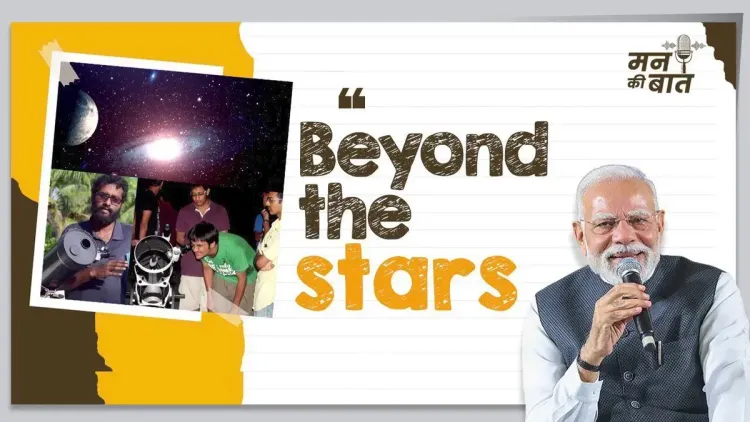
Prime Minister Narendra Modi used his Mann Ki Baat platform on 31 May 2026 to salute astronomy clubs and societies working to kindle scientific curiosity among India's youth, reinforcing a policy arc that runs from ISRO's space missions through the National Education Policy 2020.
Key Takeaways
Prime Minister Narendra Modi praised astronomy clubs and societies across India on 31 May 2026 via his Mann Ki Baat programme.
The Prime Minister said he is 'proud of every such effort' to make astronomy popular among young people.
Mann Ki Baat , running since 2014 , has repeatedly highlighted science popularisation and ISRO achievements as themes.
The National Education Policy 2020 explicitly encourages school-level science clubs and astronomy modules as part of experiential learning.
State science-curriculum revisions aligned with NEP 2020 are expected during the 2025-26 academic year , potentially formalising such clubs.
Upcoming Gaganyaan crewed-flight milestones are expected to further amplify student astronomy outreach programmes.
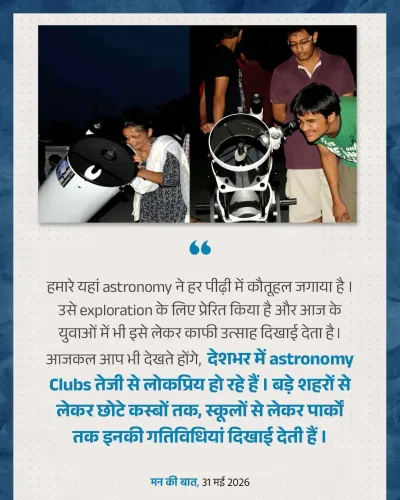
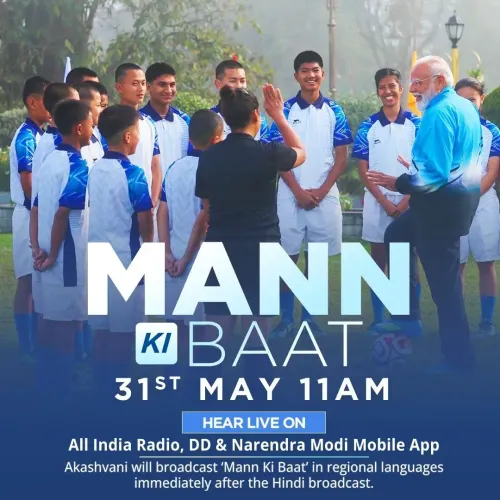
Prime Minister Narendra Modi on Sunday, 31 May 2026, praised the growing network of astronomy clubs and societies across India, expressing pride in every effort to make the subject accessible to young people. The remarks came as part of his monthly radio address, Mann Ki Baat.
Context
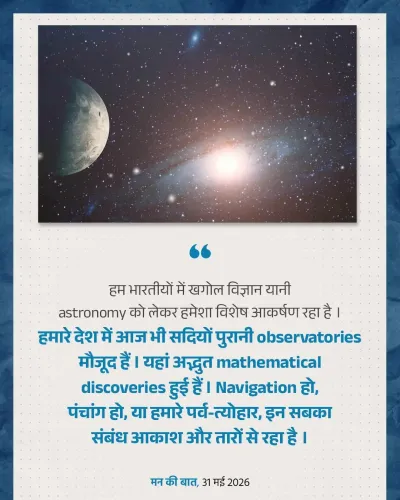
In his post, Prime Minister Modi wrote: 'All across India, there are numerous clubs and societies making astronomy popular among the youth. I am proud of every such effort.' The message was shared under the #MannKiBaat hashtag, situating it within his long-running public-communication programme that has consistently spotlighted citizen-led science initiatives.
Mann Ki Baat, launched in 2014, is a monthly radio broadcast in which the Prime Minister addresses the nation on social, cultural, and scientific themes. Over the years, astronomy outreach, space science education, and the achievements of ISRO have featured repeatedly in the programme as examples of grassroots scientific temperament.
Policy Backdrop
The government's focus on astronomy at the school and community level has a clear policy lineage. The launch of Chandrayaan-1 in 2008 marked the beginning of sustained official messaging that linked ISRO's achievements to inspiring young learners, a strategy that has grown more deliberate since 2014.
The National Education Policy 2020 formalised this approach by mandating experiential and multidisciplinary science learning and explicitly encouraging the formation of school-level science clubs and societies. Astronomy modules were incorporated as part of the policy's broader push to move beyond rote learning toward curiosity-driven education.
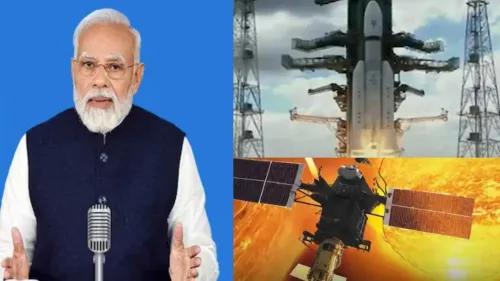
ISRO's high-profile missions — including the Chandrayaan and Mangalyaan programmes — have been repeatedly cited by the government as catalysts that translate national space achievement into local enthusiasm among students and amateur stargazers alike.
Stakeholders and Impact
The primary beneficiaries of this ecosystem are school students and members of amateur astronomy societies spread across urban and rural India. These clubs typically operate at low cost, using telescopes, community spaces, and digital tools to conduct sky-watching sessions, workshops, and science fairs.
By publicly acknowledging these groups, Prime Minister Modi signals continued central-government endorsement — an impetus that can encourage state governments, school managements, and private donors to extend support to such initiatives. The shout-out in a high-visibility platform like Mann Ki Baat functions as an informal policy signal even in the absence of a new scheme announcement.
What's Next
State-level revisions to science curricula aligned with NEP 2020 are expected to roll out through the 2025-26 academic year, which could embed astronomy clubs more formally within school structures. Separately, student outreach programmes linked to India's Gaganyaan crewed spaceflight mission are anticipated to expand the reach of astronomy education further.
The Prime Minister's remarks reinforce a pattern in which visible space milestones are used to sustain public enthusiasm for science — suggesting that as Gaganyaan approaches, community-level astronomy activity is likely to receive additional official attention.
Point of View
The highest-reach informal communication channel available to the executive, he effectively confers soft-policy legitimacy on these societies without committing budgetary resources. The timing, as NEP 2020 curriculum rollouts proceed and Gaganyaan approaches, suggests the government is priming public sentiment for a broader science-outreach push. The pattern indicates that astronomy clubs may soon find themselves formally integrated into state education frameworks rather than remaining purely voluntary endeavours.
NationPress
23 Sept 2026
Frequently Asked Questions
What did PM Modi say about astronomy clubs in Mann Ki Baat?
Prime Minister Modi said that numerous clubs and societies across India are making astronomy popular among the youth and that he is proud of every such effort, sharing the message as part of his Mann Ki Baat programme on 31 May 2026.
What is Mann Ki Baat?
Mann Ki Baat is a monthly radio programme launched by Prime Minister Narendra Modi in 2014 in which he addresses citizens on social, cultural, and scientific topics; it reaches a large national audience and has frequently highlighted science education and ISRO achievements.
How does NEP 2020 support astronomy clubs in schools?
The National Education Policy 2020 mandates experiential and multidisciplinary science learning and explicitly encourages the formation of school-level science clubs, including astronomy societies, as part of its shift away from rote learning toward curiosity-driven education.
What role has ISRO played in promoting astronomy among Indian youth?
ISRO's high-profile missions such as Chandrayaan and Mangalyaan have been repeatedly cited by the government as catalysts that inspire school students and amateur astronomy societies, forming the backbone of official science-popularisation messaging since 2008.
What upcoming developments could boost astronomy education in India?
State-level science-curriculum revisions aligned with NEP 2020 are expected in the 2025-26 academic year, and student outreach programmes tied to India's Gaganyaan crewed spaceflight mission are anticipated to expand astronomy education further.