Dr. Jitendra Singh Highlights 400 Space Startups Under Modi Govt

Synopsis
Union Minister Dr. Jitendra Singh marked 12 years of the Modi government by highlighting India's booming innovation ecosystem, citing the rise of space startups to 400 — a direct outcome of 2020 space sector reforms and the creation of IN-SPACe.
Key Takeaways
Jitendra Singh shared a report on June 8, 2026 citing 400 space startups in India under the Modi government.
The post was tagged #12YearsOfModiGovernment , marking a dozen years since PM Narendra Modi took office in May 2014.
India's space sector was opened to private players through landmark reforms in 2020 , enabling the startup surge.
IN-SPACe (Indian National Space Promotion and Authorisation Centre) was established as a single-window body to authorise and support private space activity.
The growth aligns with the government's Atmanirbhar Bharat push to build indigenous capability in strategic technologies.
Further IN-SPACe authorisations and possible new foreign investment rules in the space sector are expected to shape the ecosystem's next phase.
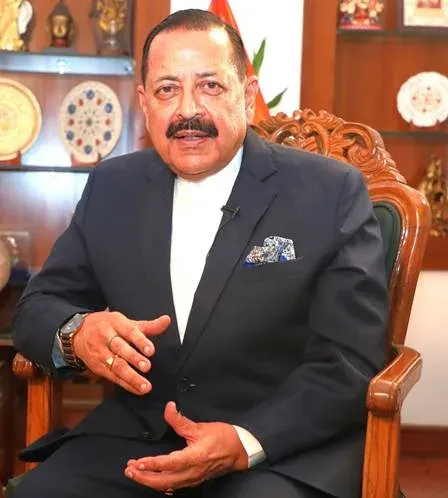
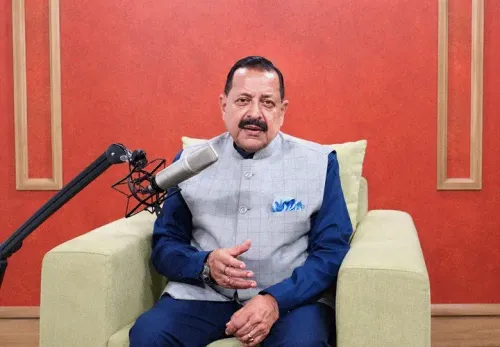
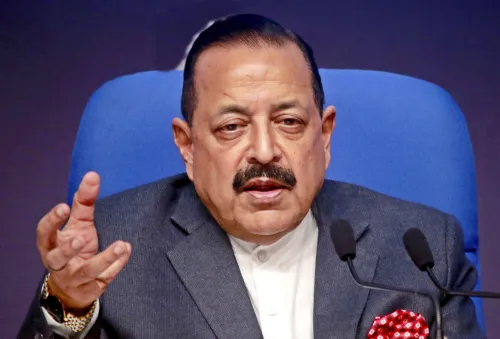
Union Science and Technology Minister Dr. Jitendra Singh on Monday, June 8, 2026, shared a report highlighting India's rapidly growing innovation ecosystem, specifically pointing to the rise of space startups to 400 under the 12-year tenure of the Modi government.
Context
The minister's post, tagged #12YearsOfModiGovernment, cited coverage noting that 'भारत में तेजी से बढ़ रहा इनोवेशन इकोसिस्टम, अंतरिक्ष स्टार्टअप्स की संख्या बढ़कर 400' — translated as: 'India's innovation ecosystem is growing rapidly, the number of space startups has risen to 400.' The post is part of a broader government communications effort marking a dozen years of the Narendra Modi-led administration, which came to power in May 2014.
Dr. Jitendra Singh, who holds independent charge of the Ministries of Science and Technology and Earth Sciences and is also Minister of State in the Prime Minister's Office, has consistently championed India's push into deep technology and space commerce as flagship achievements of the current government.
Policy Backdrop
The expansion of space startups is directly linked to landmark reforms announced in 2020, when the government opened satellite launches, remote sensing, and allied space activities to private players for the first time. Alongside this, IN-SPACe — the Indian National Space Promotion and Authorisation Centre — was established as a single-window agency to authorise and support private sector participation in space activities.
Before these reforms, India's space programme was almost exclusively the domain of the state-run Indian Space Research Organisation (ISRO). The policy shift was framed as part of the broader Atmanirbhar Bharat (self-reliant India) initiative, designed to build an indigenous industrial base in strategic technologies including launch vehicles, satellites, and space-based data services.
The government has since moved to further ease regulatory and investment conditions, with IN-SPACe serving as the nodal body for all private space authorisations. This institutional architecture has been credited with enabling the rapid growth in the number of registered space startups across the country.
Stakeholders and Impact
The primary beneficiaries of this policy trajectory are private aerospace firms and space startups that now have a defined regulatory pathway to design, build, and launch space assets from Indian soil. A thriving startup ecosystem also generates downstream employment in engineering, data analytics, and manufacturing.
For ISRO, private sector growth means potential industrial partners for future missions, reducing the burden on the national agency and allowing it to focus on frontier science and strategic programmes. Investors in deep-tech and venture capital have also taken note, with space technology emerging as one of India's more active startup verticals.
What's Next
Observers will watch for further authorisations issued by IN-SPACe, any new rules easing foreign direct investment or technology transfer in the space sector, and the pace at which startups move from incorporation to operational missions. The government's willingness to extend reforms — including potential legislative updates to the space activities framework — will determine whether the startup count continues its upward trajectory.
As India positions itself as a competitive destination for the global commercial space economy, the policy choices made in the next legislative cycle are expected to be consequential for both domestic entrepreneurs and international partners eyeing the Indian market.
Point of View
Using the '12 years of Modi government' milestone to anchor a concrete, sector-specific achievement rather than a generic claim. The choice of space startups as a data point is deliberate — it is a domain where the policy-to-outcome chain is traceable, lending credibility to the broader innovation narrative. This fits a pattern where the Science Ministry has increasingly positioned India's deep-tech startup growth as evidence of structural reform rather than incidental market activity. The implicit message to investors and international partners is that India's space economy is institutionally mature enough to sustain long-term commercial engagement.
NationPress
26 Oct 2026
Frequently Asked Questions
How many space startups are there in India in 2026?
According to a report shared by Union Minister Dr. Jitendra Singh on June 8, 2026, the number of space startups in India has risen to 400 under the 12-year tenure of the Modi government.
What is IN-SPACe and what does it do?
IN-SPACe, the Indian National Space Promotion and Authorisation Centre, was established in 2020 as a single-window agency to authorise and support private sector participation in India's space activities, replacing a process that was previously restricted to ISRO.
When did India open its space sector to private companies?
India announced reforms in 2020 that opened satellite launches, remote sensing, and other space activities to private players for the first time, catalysing the growth of the space startup ecosystem.
What is Dr. Jitendra Singh's role in the government?
Dr. Jitendra Singh holds independent charge of the Ministries of Science and Technology and Earth Sciences, and is also Minister of State in the Prime Minister's Office.
How does India's space startup growth connect to Atmanirbhar Bharat?
The expansion of private space startups is a direct outcome of Atmanirbhar Bharat policy, which encourages indigenous capability in strategic technologies including launch vehicles, satellites, and space-based data services, reducing dependence on foreign suppliers.