PM Modi Wishes Dharmendra Pradhan, Hails NEP Work
Synopsis
Prime Minister Narendra Modi on June 26 wished Union Minister Dharmendra Pradhan on his birthday, highlighting his commendable work on the National Education Policy and its goal of making India a global centre for knowledge and innovation.
Key Takeaways
Prime Minister Narendra Modi publicly wished Union Minister Dharmendra Pradhan on his birthday on June 26, 2026 .
Modi praised Pradhan's efforts in implementing the National Education Policy (NEP) .
The NEP was approved by the Union Cabinet in July 2020 , replacing the 1986 policy.
Key NEP provisions include the 5+3+3+4 schooling structure, multiple entry-exit in higher education, and mother-tongue instruction.
State-level adoption timelines remain the critical variable in determining the pace of NEP's nationwide rollout.
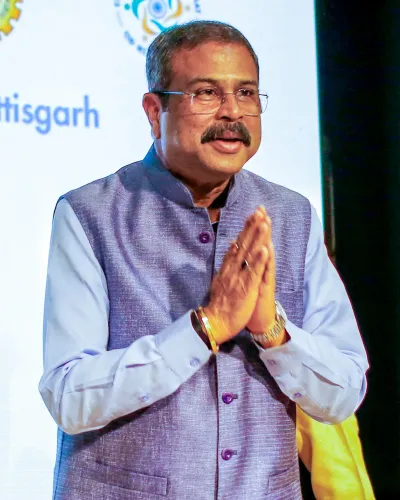
Prime Minister Narendra Modi on Friday, June 26, 2026, extended birthday greetings to Union Minister Dharmendra Pradhan, praising his efforts in implementing the National Education Policy (NEP) and describing the reform as central to making India a global hub for knowledge and innovation.
Context
In his post on X, Prime Minister Modi wrote: 'Birthday wishes to Union Minister Shri Dharmendra Pradhan Ji. He is making commendable efforts towards the implementation of the National Education Policy, which seeks to make India a hub for knowledge, learning and innovation. Praying for his long and healthy life.' The message publicly affirmed the Prime Minister's confidence in the minister's stewardship of the education portfolio.
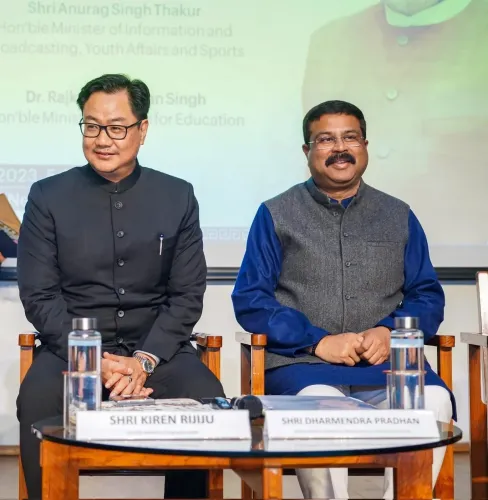
Dharmendra Pradhan holds the Union Education portfolio and has been the principal face of the government's push to roll out the NEP at both school and higher-education levels. Before education, he served as Minister of Petroleum and Natural Gas.
Policy Backdrop
The National Education Policy was approved by the Union Cabinet in July 2020, replacing the earlier National Policy on Education of 1986 — marking the first wholesale restructuring of India's education framework in over three decades. Its core provisions include a 5+3+3+4 school structure, multiple entry-exit options in higher education, and an emphasis on mother-tongue instruction in early years.
Successive Union Budgets have channelled resources toward curriculum modernisation, digital infrastructure, and vocational integration under the NEP umbrella. The government has framed the policy as foundational to its broader ambition of positioning India as a knowledge economy and a preferred destination for global students and researchers.
Stakeholders and Impact
The NEP's reach spans millions of students, hundreds of thousands of teachers, and thousands of higher-education institutions across the country. State governments are responsible for adoption timelines, making Pradhan's role as a coordinator between the Centre and states critical to uniform implementation.
Curriculum redesign, the introduction of regional languages as mediums of instruction, and the integration of vocational training from an early stage are among the changes most directly felt by students and educational institutions. Civil-society groups and educators have broadly welcomed the structural ambition of the policy, while flagging the pace and consistency of rollout across states as a continuing challenge.
What's Next
Attention will now turn to state-level NEP adoption timelines and the next parliamentary review of implementation progress. How uniformly the policy is absorbed across India's diverse state education systems will determine whether the Centre's vision of a knowledge-economy transformation translates into measurable outcomes for learners and institutions alike.
Point of View
Modi signals that education transformation remains a priority in the current term, not merely a legacy announcement from 2020. The shout-out also reinforces Pradhan's standing within the cabinet at a moment when state-level NEP adoption is uneven. It is consistent with a broader pattern in which the Prime Minister uses social media to simultaneously honour colleagues and keep flagship schemes in public focus.
NationPress
24 Sept 2026
Frequently Asked Questions
What did PM Modi say about Dharmendra Pradhan?
PM Modi wished Dharmendra Pradhan on his birthday and praised his 'commendable efforts' in implementing the National Education Policy, calling it a step toward making India a hub for knowledge and innovation.
What is the National Education Policy 2020?
The National Education Policy 2020 was approved by the Union Cabinet in July 2020, replacing the 1986 policy. It introduces a 5+3+3+4 school structure, multiple entry-exit options in higher education, and promotes mother-tongue instruction in early schooling.
What is Dharmendra Pradhan's role in education?
Dharmendra Pradhan is the Union Minister for Education and is responsible for overseeing the central government's rollout of the National Education Policy across schools and higher-education institutions.
How is NEP being implemented across Indian states?
NEP implementation is a shared responsibility between the Centre and state governments, with states setting their own adoption timelines. The pace and consistency of rollout vary across India's different state education systems.
Why is PM Modi focused on education reform?
The Modi government has framed education reform, particularly through NEP 2020, as essential to transforming India into a global knowledge economy and attracting international students and researchers.