PM Modi Launches ₹1.05 Lakh Crore Projects in Rajasthan
Synopsis
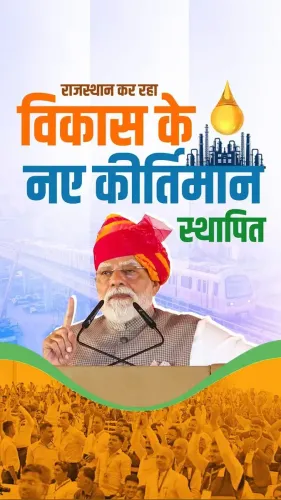
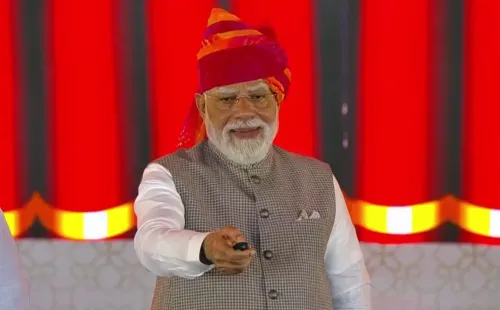
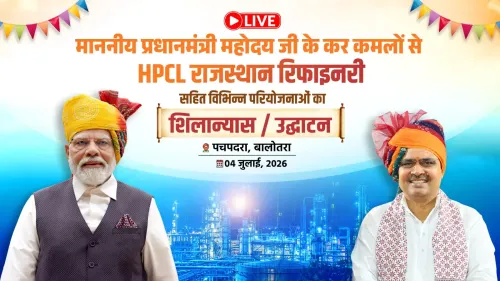
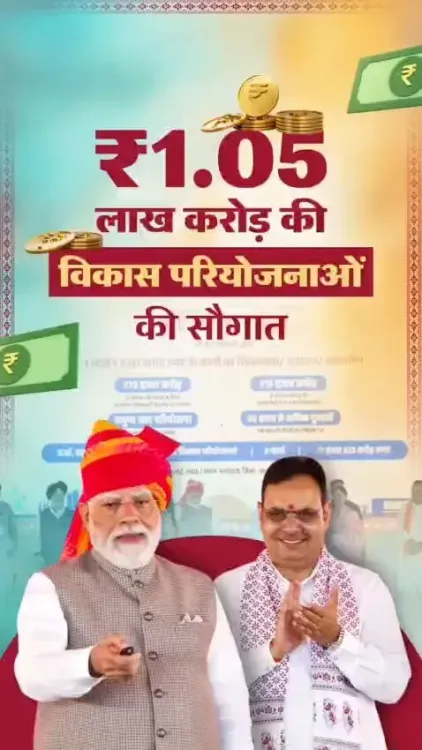
Prime Minister Modi inaugurated projects worth over ₹1.05 lakh crore at Pachpadra, Balotra on 5 July 2026, anchored by the HPCL Rajasthan Refinery. CM Bhajanlal Sharma called the refinery a milestone for industrial growth, energy self-reliance, and job creation in the state.
Key Takeaways
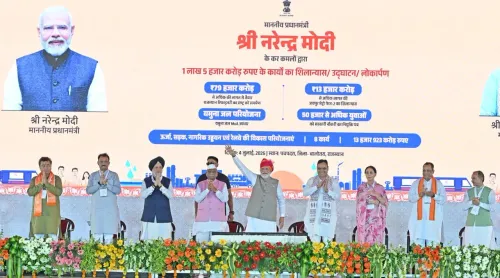
PM Narendra Modi inaugurated and laid foundation stones for projects worth over ₹1.05 lakh crore at Pachpadra, Balotra on 5 July 2026 .
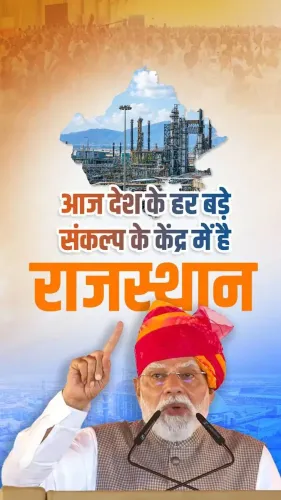
The HPCL Rajasthan Refinery — a joint venture between HPCL and the Rajasthan government — was the centrepiece of the event.
CM Bhajanlal Sharma described the refinery as a milestone for industrial development, energy self-reliance, and employment generation.
Jaipur Metro Phase-2 was among the other major projects inaugurated or foundation-stoned at the event.
The Union Cabinet had originally approved the HPCL Rajasthan Refinery in 2018 to expand domestic refining capacity.
The event represents one of the largest single-occasion investment announcements in Rajasthan's recent history.
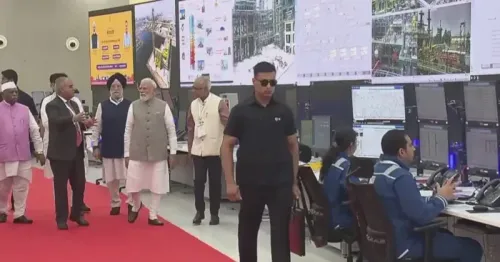
Prime Minister Narendra Modi on Sunday, 5 July 2026, inaugurated and laid the foundation stones for development projects worth over ₹1.05 lakh crore at a ceremony in Pachpadra, Balotra, western Rajasthan. The centrepiece of the event was the HPCL Rajasthan Refinery, a major joint-venture petroleum refining facility that has been years in the making. The Chief Minister's Office of Rajasthan announced the event and shared Chief Minister Bhajanlal Sharma's remarks on the occasion.
Context
The ceremony at Pachpadra brought together a sweeping package of infrastructure investments across the state. Alongside the refinery, the event saw the inauguration and foundation-laying of multiple projects including Jaipur Metro Phase-2, which aims to extend the capital's urban rail network. Chief Minister Bhajanlal Sharma described the Rajasthan Refinery as a 'milestone in the direction of the state's industrial development, energy self-reliance, and employment generation' — ('औद्योगिक विकास, ऊर्जा आत्मनिर्भरता और रोजगार सृजन की दिशा में मील का पत्थर').
He added that various infrastructure projects including Jaipur Metro Phase-2 would 'give new momentum to the development of the state.' The combined scale of the package — exceeding ₹1.05 lakh crore — marks one of the largest single-event investment announcements in Rajasthan's recent history.
Policy Backdrop
The HPCL Rajasthan Refinery is a joint venture involving Hindustan Petroleum Corporation Limited (HPCL) and the Government of Rajasthan, sited at Pachpadra in Balotra district. The Union Cabinet cleared the project in 2018 as part of a national push to expand domestic petroleum refining capacity and reduce dependence on imports. The project's commissioning is expected to significantly boost refining infrastructure in western India.
Jaipur Metro Phase-1 had already become operational in prior years, laying the groundwork for planning and sanctioning of Phase-2 corridors to deepen connectivity across the state capital. Both projects reflect a coordinated centre-state approach to building integrated industrial and mobility infrastructure.
Stakeholders and Impact
The refinery is expected to generate substantial direct and indirect employment for the region, with industrial workers, petrochemical sector employees, and logistics operators among the primary beneficiaries. Balotra and surrounding districts in western Rajasthan stand to gain from ancillary industrial activity that a large refinery complex typically catalyses.
Urban commuters in Jaipur are the primary stakeholders for the Metro Phase-2 extension, which is aimed at easing congestion and improving last-mile connectivity in the rapidly growing capital. Broader benefits are expected for the state's energy sector through improved domestic fuel availability and reduced logistics costs.
What's Next
Attention will now turn to the commissioning timeline for the HPCL Rajasthan Refinery and official figures on employment generation as construction progresses. For Jaipur Metro Phase-2, sanction orders, funding releases, and civil work timelines for individual corridors will be closely tracked by urban planners and commuters alike.
The scale of the ₹1.05 lakh crore package signals that Rajasthan is positioned as a focal point of centre-state infrastructure collaboration — a pattern likely to continue as India accelerates its energy security and urban mobility goals ahead of the decade's end.
Point of View
Associating his administration with a ₹1.05 lakh crore announcement strengthens his government's industrial credentials less than two years into office. The inclusion of Jaipur Metro Phase-2 alongside the refinery broadens the political appeal beyond the western Rajasthan industrial belt to the urban middle class in the capital. Cumulatively, such coordinated inaugurations serve as a visible metric of 'double-engine government' delivery — a narrative both the state and central leadership have consistently championed.
NationPress
5 Oct 2026
Frequently Asked Questions
What is the HPCL Rajasthan Refinery and where is it located?
The HPCL Rajasthan Refinery is a joint-venture petroleum refining project between Hindustan Petroleum Corporation Limited and the Government of Rajasthan, located at Pachpadra in Balotra district of western Rajasthan. It was approved by the Union Cabinet in 2018 to expand India's domestic refining capacity.
What projects did PM Modi inaugurate in Rajasthan on 5 July 2026?
PM Modi inaugurated and laid foundation stones for development projects worth over ₹1.05 lakh crore at Pachpadra, Balotra on 5 July 2026. The package included the HPCL Rajasthan Refinery and Jaipur Metro Phase-2, among other infrastructure projects.
What did CM Bhajanlal Sharma say about the Rajasthan Refinery?
CM Bhajanlal Sharma said the Rajasthan Refinery would prove to be a milestone in the direction of the state's industrial development, energy self-reliance, and employment generation. He also noted that Jaipur Metro Phase-2 and other infrastructure projects would give new momentum to the state's development.
What is Jaipur Metro Phase-2?
Jaipur Metro Phase-2 is the planned extension of the existing urban metro rail network in Jaipur, Rajasthan's capital. It aims to deepen connectivity across the city and ease commuter congestion, building on the operational Phase-1 network.
How much is the total investment announced at the Pachpadra event?
The total value of development projects inaugurated and foundation-stoned by PM Modi at the Pachpadra, Balotra event on 5 July 2026 exceeded ₹1.05 lakh crore, making it one of the largest single-event investment announcements in Rajasthan's recent history.