PM Modi addresses IIT Delhi convocation, urges graduates to stay connected to 'Insti'
Synopsis
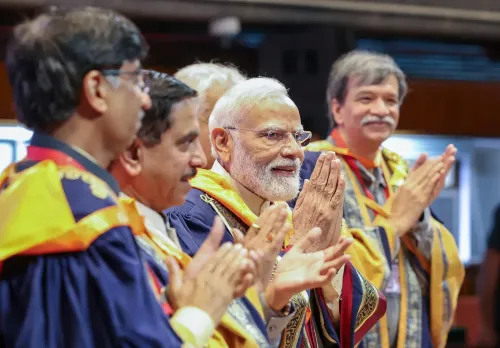
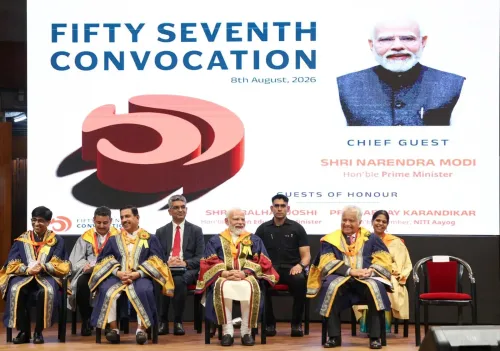
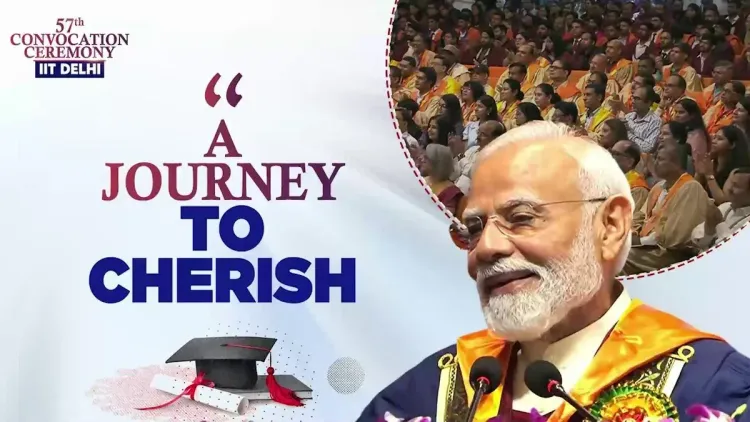
Prime Minister Narendra Modi addressed the IIT Delhi convocation on August 8, 2026, reflecting on the student journey from orientation to graduation and urging graduates to cherish their friendships, mentors, support staff and lifelong bond with their institution.
Key Takeaways
Prime Minister Narendra Modi spoke at the IIT Delhi convocation on August 8, 2026 .
He traced the student journey from orientation through hostel life to the final convocation ceremony.
Modi urged graduates to cherish friends, teachers, mentors, and support staff who shaped their time on campus.
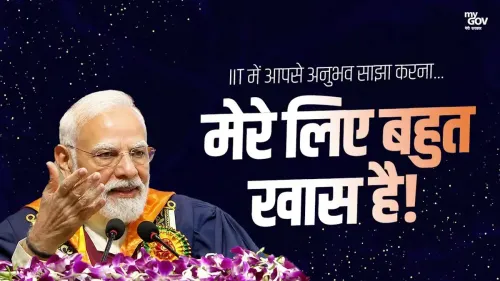
He specifically used the student term 'Insti' , asking graduates to stay connected to their institution wherever life takes them.
IIT Delhi , founded in 1961 , is one of India's most prestigious public technical universities.
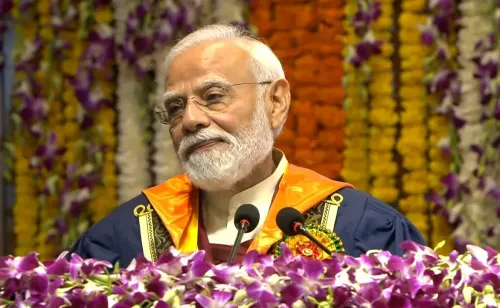
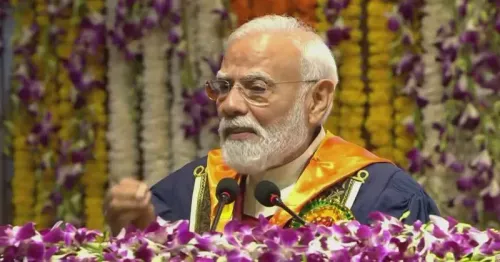
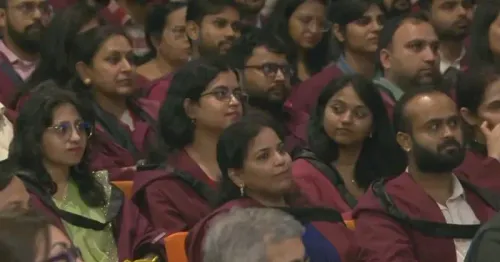
From hostel corridors to the convocation stage — Prime Minister Narendra Modi on Saturday, August 8, 2026, addressed graduates at IIT Delhi, tracing the arc of a student's journey and asking them to carry their campus bonds long after they leave the gate.
What Modi told the graduating class
Speaking at the convocation, the Prime Minister reflected on the full sweep of student life — from the first disorienting days of orientation to the pride of the final ceremony. He spoke of hostel memories, favourite campus hangout spots, and the friendships forged under pressure that tend to outlast almost everything else. 'These are experiences that will remain for a lifetime,' he said.
Modi urged the graduates to hold close everyone who made the journey possible — friends, teachers, mentors, and support staff. The explicit mention of support staff — often the invisible backbone of any institution — stood out as a deliberate, grounding note in an otherwise celebratory address.
IIT Delhi's place in India's engineering story
IIT Delhi, established in 1961 in New Delhi, is among the country's most competitive and globally recognised technical institutions. Its alumni populate boardrooms, research labs, and government bodies across the world. A convocation address here lands in front of graduates who will, by statistical probability, shape a measurable slice of India's next decade.
Indian Prime Ministers have periodically addressed convocations at IITs and central universities, using the platform to blend personal warmth with a nudge toward national purpose. Modi's address on Saturday leaned more personal than prescriptive — a choice that fit the moment.
The quiet ask: stay tethered to 'Insti'
The closing appeal was simple and specific. Wherever life takes them, Modi asked graduates to stay connected to their 'Insti' — the affectionate shorthand IIT students use for their institution. It is the kind of word only an insider uses, and its appearance in a Prime Minister's address signalled a deliberate bid to speak the graduates' own language rather than above it. The ask was not about nation-building in the abstract. It was about not forgetting where you came from.
Point of View
Personal register — rather than a policy-heavy one — fits a broader pattern of the Prime Minister positioning himself as a mentor figure to India's technical elite. The deliberate shout-out to support staff alongside faculty and friends is a small but telling signal, softening what could have been a purely aspirational address. For a government that has staked significant political capital on institutions like IITs as engines of 'Viksit Bharat,' keeping graduates emotionally tethered to their alma maters also serves a longer-term nation-building narrative.
NationPress
23 Sept 2026
Frequently Asked Questions
What did PM Modi say at IIT Delhi convocation 2026?
PM Modi spoke about the journey from orientation to convocation, urged graduates to cherish friends, teachers, mentors and support staff, and asked them to stay connected to their 'Insti' wherever life takes them.
When did PM Modi visit IIT Delhi in 2026?
Prime Minister Modi addressed the IIT Delhi convocation on Saturday, August 8, 2026.
What is 'Insti' that Modi mentioned at IIT Delhi?
'Insti' is the affectionate shorthand IIT students use to refer to their institution. Modi used the term to connect with graduates in their own language and urge them to stay bonded to IIT Delhi.
When was IIT Delhi established?
IIT Delhi was established in 1961 and is one of India's premier public technical universities, located in New Delhi.
Does PM Modi regularly address IIT convocations?
Indian Prime Ministers have periodically addressed convocations at IITs and central universities. Such addresses typically focus on personal development, institutional loyalty and graduates' role in national progress.