PM Modi Meets UK's Starmer in Evian, Pushes India-UK Ties
Synopsis
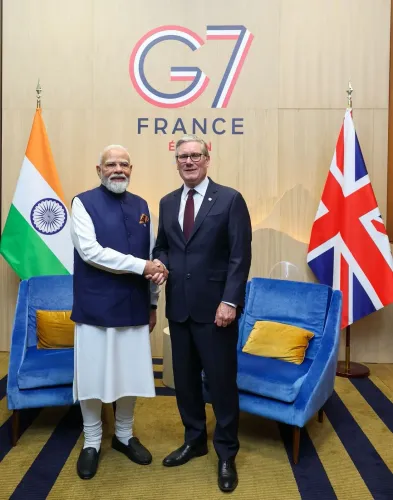
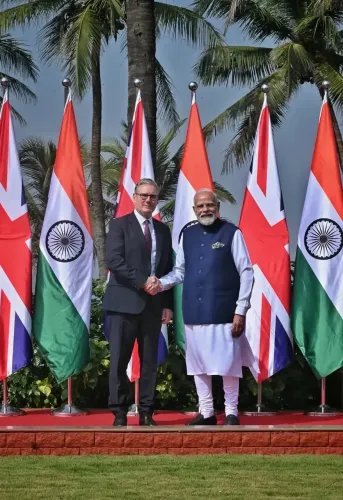
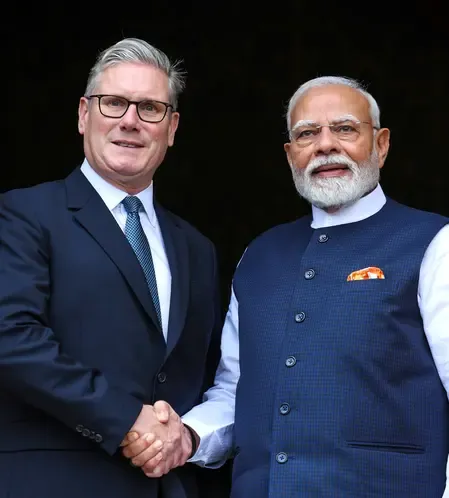
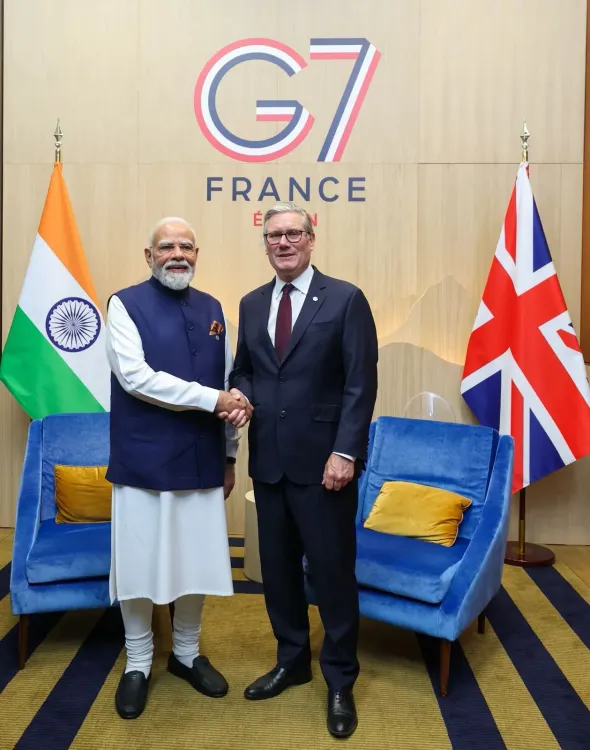
Prime Minister Narendra Modi met UK Prime Minister Keir Starmer in Evian on June 16, 2026, calling the past year outstanding for bilateral ties. The leaders focused on building further momentum following the India-UK trade deal, which Modi said has opened significant avenues for economic cooperation between the two nations.
Key Takeaways
PM Modi and UK PM Keir Starmer held a bilateral meeting in Evian, France on June 16, 2026 .
Modi described the past year as 'outstanding' for India-UK relations , crediting the bilateral trade deal for opening new economic avenues.
The India-UK Free Trade Agreement negotiations were relaunched in January 2022 , targeting services, textiles, whisky, and digital trade.
PM Starmer , in office since July 2024 , has prioritised India as a key partner in the UK's post-Brexit economic strategy.
The meeting is part of India's broader push to accelerate trade partnerships with major economies including Australia and the UAE .
Next steps will focus on tariff reductions, regulatory alignment, and possible follow-up engagements ahead of the Commonwealth Heads of Government Meeting .
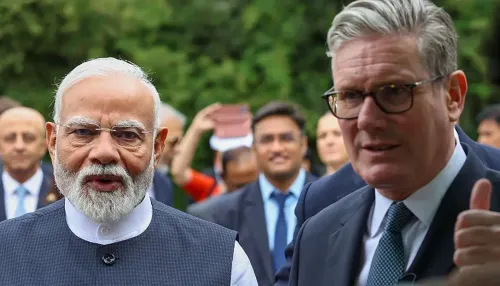
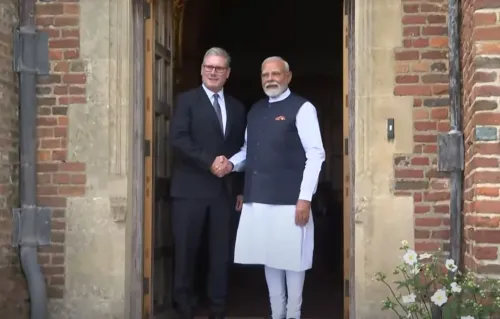
Prime Minister Narendra Modi met United Kingdom Prime Minister Keir Starmer in Evian, France on Tuesday, June 16, 2026, describing the bilateral meeting as focused on deepening momentum in India-UK relations following what he called an 'outstanding' year for ties between the two nations.
Context
Posting on X after the meeting, Prime Minister Modi wrote: 'Had a wonderful meeting with PM Keir Starmer in Evian. The last year has been outstanding as far as India-UK relations are concerned. The trade deal has opened many avenues of economic cooperation. Today's talks focused on how to add even more momentum to India-UK ties.'
Evian, the French lakeside resort town on the shores of Lake Geneva, has previously served as a venue for high-level international and European summits, lending the bilateral meeting a setting associated with serious diplomatic engagement.
Policy Backdrop
India and the UK formally relaunched Free Trade Agreement negotiations in January 2022, targeting sectors including services, textiles, whisky, and digital trade. The talks were advanced through multiple rounds across subsequent years, with Prime Minister Modi and then-UK Prime Minister Rishi Sunak also holding bilateral discussions on the margins of the G20 summit in New Delhi in September 2023.
Prime Minister Starmer, who took office in July 2024, has made resetting post-Brexit economic relationships a central plank of UK foreign policy, identifying India as a priority partner for services-led growth and supply-chain resilience. Modi's reference to the trade deal 'opening many avenues of economic cooperation' signals that the agreement has moved into an implementation phase that both sides are now seeking to build upon.
India's broader trade diplomacy has seen it conclude free trade agreements with Australia and the UAE in recent years, part of a strategic push to diversify export markets and attract investment under the Make in India initiative. The India-UK deal fits within this pattern of accelerating economic partnerships with major Western economies.
Stakeholders and Impact
The primary beneficiaries of deepened India-UK economic ties include Indian exporters in textiles, pharmaceuticals, and IT services, as well as UK financial and professional services firms seeking greater access to the Indian market. Bilateral investors on both sides stand to gain from regulatory alignment and reduced tariff barriers that the trade deal is designed to deliver.
For the UK, the partnership also carries strategic value beyond trade: successive British governments have framed the India relationship as central to post-Brexit global positioning, encompassing technology cooperation and defence supply chains. Modi's multi-alignment approach — engaging simultaneously with Western partners, the Global South, and regional groupings — means the Evian meeting is part of a consistent diplomatic pattern rather than an isolated outreach.
What's Next
Attention will now turn to the specific next steps under the India-UK Free Trade Agreement, particularly progress on tariff reductions and regulatory alignment in priority sectors. Any follow-up engagements — including the possibility of high-level visits ahead of the Commonwealth Heads of Government Meeting — will be closely watched as a measure of whether the 'momentum' both leaders spoke of translates into concrete deliverables.
The Evian meeting reinforces that the India-UK relationship has entered a phase of active implementation and expansion, with both governments keen to demonstrate tangible economic gains from the trade deal to domestic audiences.
Point of View
' which carries domestic political value in both countries. For Modi, showcasing a productive Western partnership reinforces his government's economic diplomacy credentials ahead of any electoral cycle. For Starmer, a visible win with India helps justify the Labour government's post-Brexit global engagement strategy. The framing of 'adding momentum' — rather than announcing new agreements — suggests the focus has shifted to implementation depth, a more demanding but ultimately more consequential phase of bilateral engagement.
NationPress
19 Sept 2026
Frequently Asked Questions
Why did PM Modi meet Keir Starmer in Evian?
PM Modi met UK PM Keir Starmer in Evian, France on June 16, 2026 to discuss deepening India-UK ties, with a particular focus on building further momentum following the bilateral trade deal that both sides say has opened new avenues of economic cooperation.
What is the India-UK Free Trade Agreement?
The India-UK Free Trade Agreement is a bilateral trade deal whose negotiations were formally relaunched in January 2022, covering sectors such as services, textiles, whisky, and digital trade. It is part of India's broader strategy to diversify export markets and the UK's post-Brexit push to forge new economic partnerships.
Where is Evian and why was it chosen for the meeting?
Evian is a French lakeside resort town on the shores of Lake Geneva that has previously hosted international and European-level summits, making it a recognised venue for high-level diplomatic engagements.
What did PM Modi say about India-UK relations after the Evian meeting?
PM Modi said the last year had been 'outstanding' for India-UK relations and that the trade deal had 'opened many avenues of economic cooperation,' adding that the Evian talks focused on adding 'even more momentum' to bilateral ties.
Who is Keir Starmer and what is his position on India?
Keir Starmer is the Prime Minister of the United Kingdom and leader of the Labour Party, who took office in July 2024. He has identified India as a priority partner for services-led growth and supply-chain resilience as part of the UK's post-Brexit global economic strategy.