PM Modi Meets Zelenskyy in Evian, Reviews India-Ukraine Ties
Synopsis
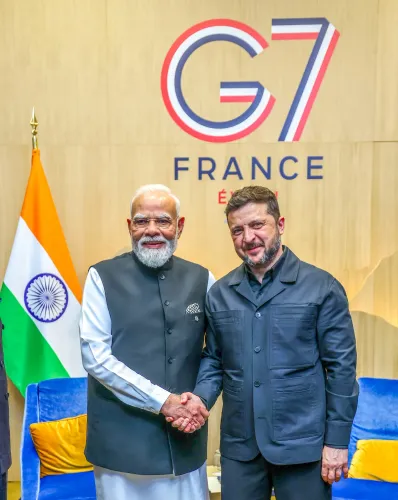
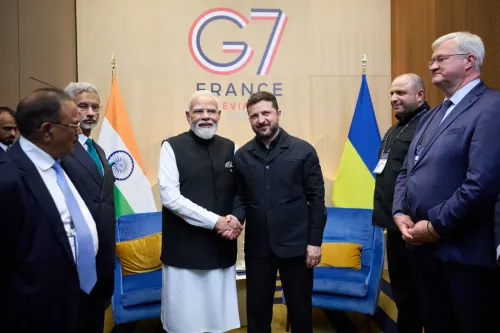
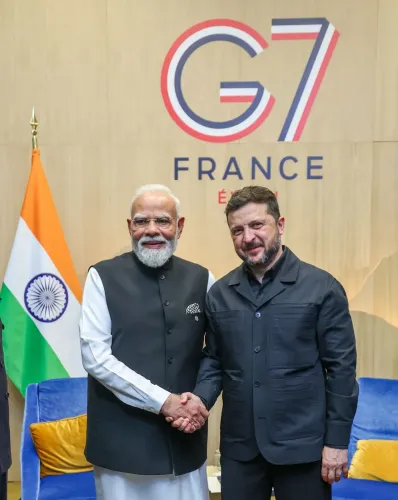
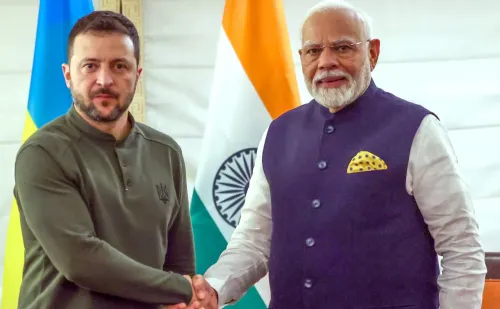
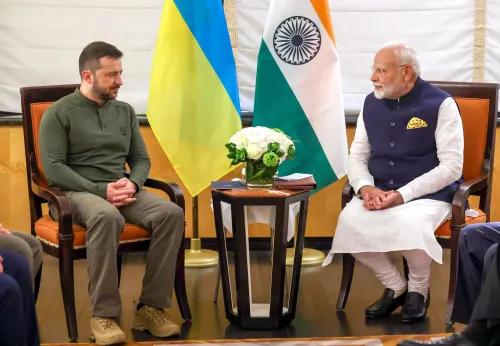
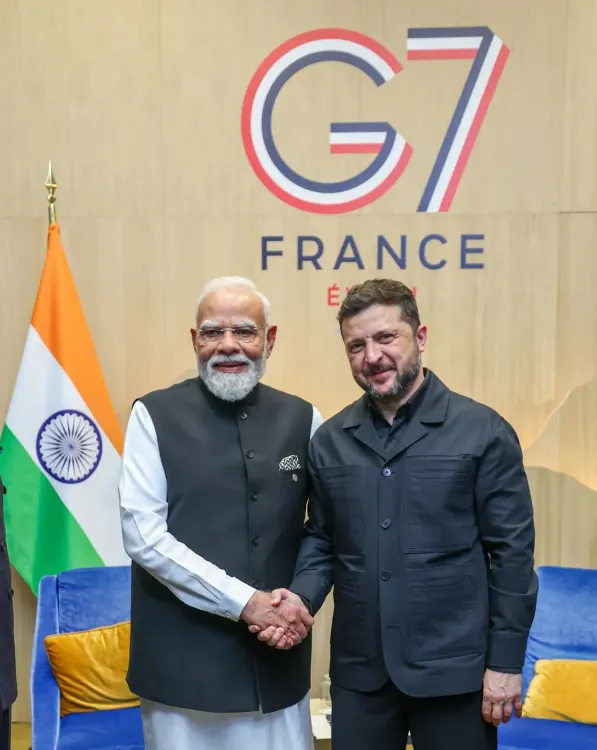
Prime Minister Narendra Modi met Ukrainian President Volodymyr Zelenskyy in Evian, France on June 17, 2026. The two leaders reviewed the full range of India-Ukraine cooperation, with both sides agreeing on the importance of expanding trade ties, reflecting India's policy of sustained engagement with Kyiv.
Key Takeaways
PM Narendra Modi and President Volodymyr Zelenskyy held bilateral talks in Evian, France on June 17, 2026 .
The talks covered a review of 'different aspects' of India-Ukraine cooperation, with trade ties a stated priority.
Both leaders agreed that trade ties between the two countries need to be strengthened.
India previously extended humanitarian aid — medicines and wheat — to Ukraine following the 2022 escalation of the Russia-Ukraine conflict.
The meeting reflects India's strategic autonomy policy, maintaining engagement with Kyiv while preserving ties with Moscow .
Follow-up on trade facilitation mechanisms and possible reciprocal ministerial visits is expected.
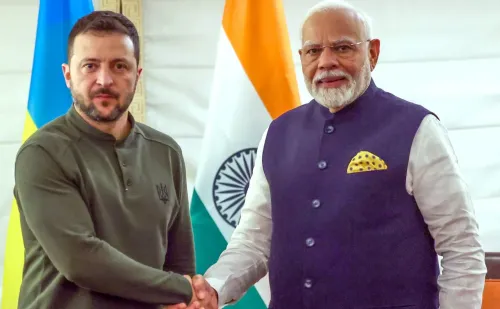
Prime Minister Narendra Modi met Ukrainian President Volodymyr Zelenskyy in Evian, France on Wednesday, June 17, 2026, holding bilateral talks that covered the full range of India-Ukraine cooperation, including trade ties.
Context
Posting on X, Prime Minister Modi said the two leaders met in Evian and that 'in recent times, India and Ukraine have been engaging extensively,' with that engagement 'reflected in different areas of our cooperation.' He added that 'our talks today were about reviewing different aspects of our cooperation' and that both sides agree on the importance of trade ties.
The meeting was held in Evian, the French lakeside town that has served as a venue for quiet international diplomacy alongside larger multilateral gatherings. It fits a pattern of bilateral engagement that India has pursued with Ukraine even as New Delhi maintains deep defence and energy ties with Moscow.
Policy Backdrop
India and Ukraine share ties dating to Soviet-era educational exchanges and technical cooperation. The two countries held a virtual bilateral summit in April 2022, where Modi and Zelenskyy discussed humanitarian assistance and economic cooperation following the escalation of the Russia-Ukraine conflict.
India extended humanitarian aid — including medicines and wheat — to Ukraine in 2022. Since then, New Delhi has followed a policy of strategic autonomy, sustaining parallel engagement with Kyiv on trade and people-to-people links while not joining Western sanctions on Russia. The Evian meeting reflects this continued balancing act.
Stakeholders and Impact
Indian exporters and defence manufacturers stand to gain from any deepening of bilateral economic ties. Ukraine has historically been a destination for Indian pharmaceutical exports, and both sides have scope to expand cooperation in agriculture and technology.
For President Zelenskyy, sustained engagement with a major non-Western democracy like India carries diplomatic value as Ukraine continues to seek broad international support. For India, the relationship reinforces its multi-alignment foreign policy posture — maintaining credible channels with both sides of the Russia-Ukraine divide.
What's Next
Observers will watch for follow-up on any trade or investment facilitation mechanisms that may have been discussed during the talks, as well as the possible scheduling of reciprocal ministerial visits between New Delhi and Kyiv. The review of cooperation across 'different areas' signals that both governments are looking to institutionalise engagement beyond crisis diplomacy into a more structured bilateral framework.
Point of View
Long-term bilateral relationship. By meeting Zelenskyy in a neutral European venue rather than in Kyiv or New Delhi, Modi keeps the optics calibrated — visible enough to reassure Western partners, quiet enough not to antagonise Moscow. The emphasis on trade ties over security language suggests New Delhi is carving out an economic lane with Ukraine that can survive the geopolitical turbulence around the conflict. This is consistent with India's broader European outreach strategy of diversifying partnerships across pharmaceuticals, agriculture, and emerging technology.
NationPress
17 Sept 2026
Frequently Asked Questions
Where did PM Modi meet Zelenskyy in June 2026?
PM Modi met President Zelenskyy in Evian , a lakeside town in France , on June 17, 2026 .
What did Modi and Zelenskyy discuss in Evian?
The two leaders reviewed different aspects of India-Ukraine cooperation, with both sides agreeing on the importance of strengthening trade ties.
What is India's position on the Russia-Ukraine conflict?
India follows a policy of strategic autonomy — it has not joined Western sanctions on Russia and maintains deep defence and energy ties with Moscow , while simultaneously sustaining trade and diplomatic engagement with Ukraine .
Has Modi met Zelenskyy before?
Modi and Zelenskyy held a virtual bilateral summit in April 2022 to discuss humanitarian assistance and economic ties after the escalation of the Russia-Ukraine conflict.
What aid did India give Ukraine during the conflict?
India provided humanitarian aid including medicines and wheat to Ukraine in 2022 following the escalation of hostilities.