Modi keen on mutually beneficial ties with Ukraine, says Zelenskyy at G7
Synopsis
On the sidelines of the G7 in Evian, PM Modi and President Zelenskyy signalled a reset — or at least a deepening — of India-Ukraine ties. With war still raging, India's willingness to explore industrial cooperation with Kyiv is a quiet but significant diplomatic move, one that tests New Delhi's carefully maintained neutrality without abandoning it.
Key Takeaways
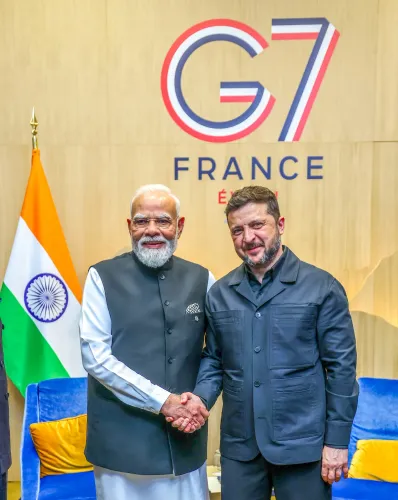
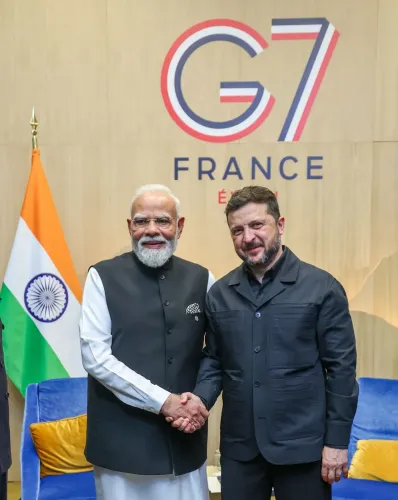
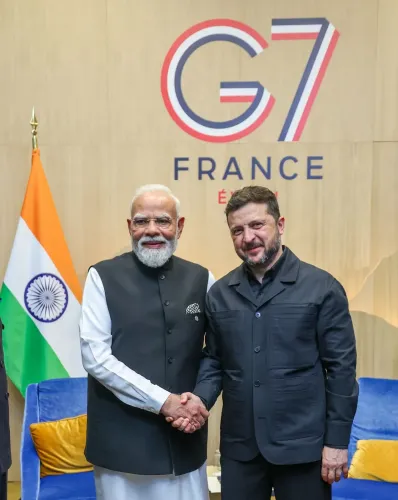
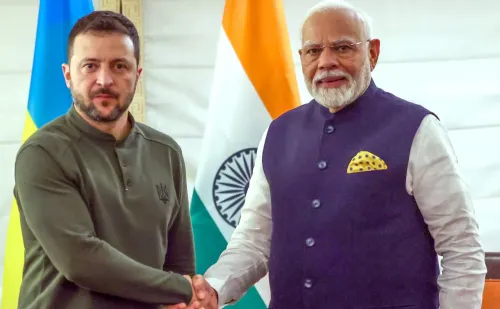
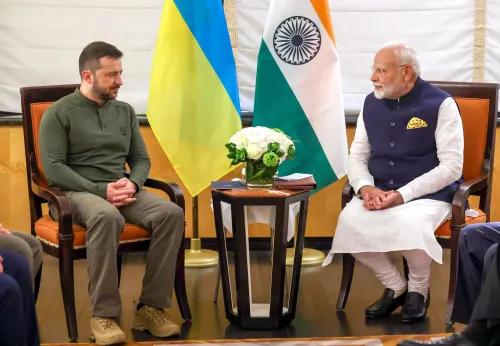
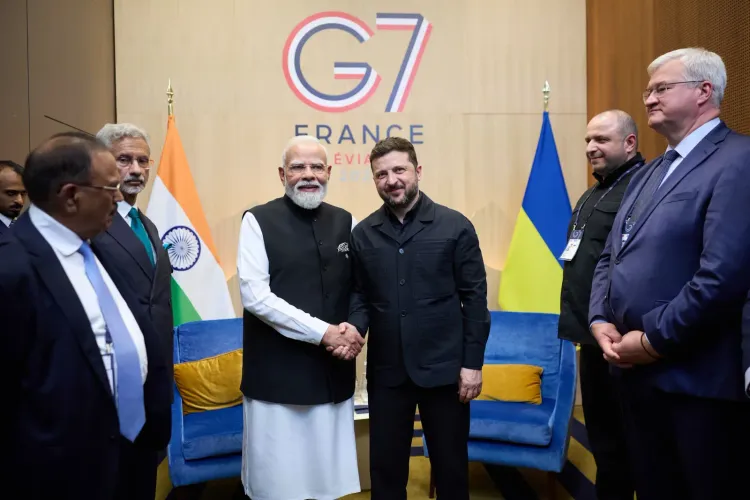
PM Modi and President Zelenskyy met on the sidelines of the G7 Summit in Evian on 17 June .
Zelenskyy said Modi expressed keen interest in developing mutually beneficial relations with Ukraine.
Both sides discussed expanding cooperation in industrial and other sectors , building on existing joint projects.
Teams from India and Ukraine are expected to work through the details of proposed initiatives.
Pre-war bilateral trade covered agriculture, pharmaceuticals, machinery, and defence — sectors disrupted by the conflict.
India has maintained a neutral stance on the Russia-Ukraine war while emphasising dialogue and diplomacy.
Ukrainian President Volodymyr Zelenskyy on Wednesday, 17 June said Prime Minister Narendra Modi had expressed keen interest in building mutually beneficial relations with Ukraine, signalling a push to deepen bilateral cooperation across multiple sectors. The two leaders met on the sidelines of the G7 Summit in Evian, with both sides indicating intent to give existing joint initiatives more substance and scope.
What Was Discussed
According to President Zelenskyy, the bilateral conversation covered ways to broaden collaboration in industrial and other areas, building on projects that the two nations are already implementing together. He confirmed that teams from India and Ukraine would work through the details to advance these initiatives.
'Importantly, the Prime Minister is interested in developing mutually beneficial relations with Ukraine and sees that this partnership can make our people stronger,' Zelenskyy said in a post on X. He added that there were 'promising industrial and other projects' that both countries could pursue together.
India's Balancing Act
The Evian meeting comes as Ukraine actively seeks to shore up economic partnerships amid the ongoing war with Russia. India has maintained a broadly neutral posture on the conflict, consistently calling for dialogue and diplomacy while exploring avenues to sustain economic ties with Kyiv. The Modi–Zelenskyy exchange underscores that balancing act — supporting humanitarian principles without abandoning economic engagement.
Historical Trade Ties and the War's Impact
Before the conflict, India and Ukraine shared robust trade relations, with cooperation spanning agriculture, pharmaceuticals, machinery, and defence. The war disrupted supply chains and significantly reduced bilateral trade volumes. Both leaders have now signalled a shared intent to revive and potentially expand that engagement, though the specifics of new initiatives are yet to be detailed publicly.
What Comes Next
Official teams from both countries are expected to begin working through the modalities of proposed joint projects. The interaction in Evian is being read as a diplomatic signal that India is willing to deepen its economic footprint in Ukraine even as the geopolitical situation remains fluid. Further clarity on sectoral priorities is awaited from both governments.
Point of View
Not transformative — at least for now. New Delhi has spent three years walking a tightrope between Moscow and the West, and a sideline meeting in Evian does not alter that geometry. What it does signal is that India sees economic opportunity in Ukraine's eventual reconstruction, and wants a seat at that table early. The emphasis on 'industrial projects' is telling: it suggests New Delhi is looking beyond grain and generics toward longer-term manufacturing or infrastructure plays. Whether teams can convert summit optics into signed agreements will be the real test — and that is where past India-Ukraine engagement has historically stalled.
NationPress
18 Sept 2026
Frequently Asked Questions
What did PM Modi and President Zelenskyy discuss at the G7 in Evian?
The two leaders met on the sidelines of the G7 Summit in Evian on 17 June and discussed ways to deepen bilateral cooperation, particularly in industrial sectors. Zelenskyy said Modi expressed keen interest in developing mutually beneficial relations with Ukraine.
What did Zelenskyy say about PM Modi's stance on Ukraine ties?
Zelenskyy said in a post on X that Modi 'is interested in developing mutually beneficial relations with Ukraine and sees that this partnership can make our people stronger.' He also noted promising industrial projects both nations could pursue together.
What is the current state of India-Ukraine trade relations?
Before Russia's invasion, India and Ukraine maintained strong trade ties in agriculture, pharmaceuticals, machinery, and defence. The conflict disrupted supply chains and reduced bilateral trade, but both sides have now signalled intent to revive and expand engagement.
How does India's neutral stance affect its ties with Ukraine?
India has consistently called for dialogue and diplomacy without taking sides in the Russia-Ukraine conflict. The Evian meeting reflects New Delhi's approach of maintaining economic and diplomatic engagement with Kyiv while avoiding a direct alignment against Moscow.
What are the next steps after the Modi-Zelenskyy meeting?
Teams from India and Ukraine are expected to work through the details of proposed joint projects across industrial and other sectors. Further clarity on specific initiatives and sectoral priorities is awaited from both governments.