PM Modi elevates Kashi-born anti-drug drive to national campaign
Synopsis
Prime Minister Narendra Modi on August 2, 2026 announced the elevation of the 'Nasha Mukt Yuva - Viksit Bharat Sankalp Abhiyan' to a national project, tracing its origin to Varanasi and linking it to India's Viksit Bharat 2047 development vision.
Key Takeaways
PM Modi declared the Nasha Mukt Yuva - Viksit Bharat Sankalp Abhiyan a national project on August 2, 2026 .
The campaign originated in Varanasi (Kashi) , Modi's parliamentary constituency, and has been scaled to a pan-India mandate.
It builds on the Nasha Mukt Bharat Abhiyan launched in August 2020 by the Ministry of Social Justice and Empowerment.
The campaign is explicitly tied to the Viksit Bharat 2047 vision of transforming India into a developed nation.
Key indicators to watch: formal government notification, budget allocation, and state-level rollout orders.
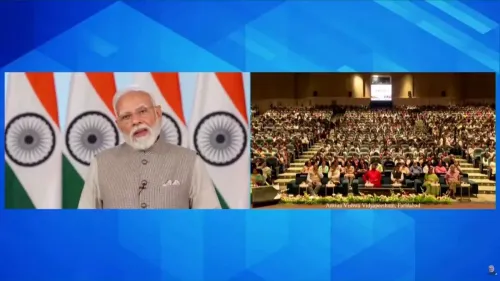
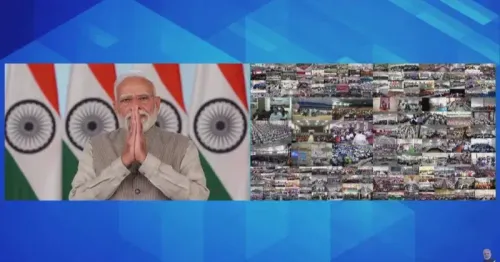
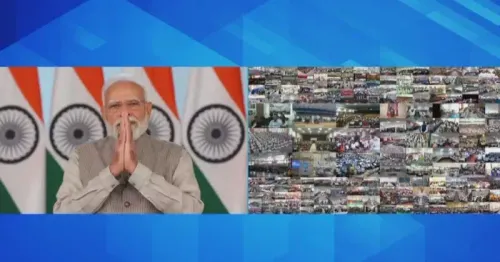
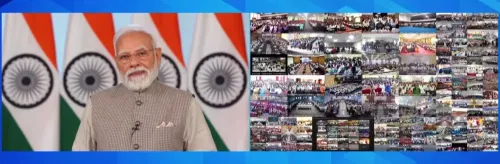
A welfare idea rooted in the sacred soil of Varanasi has just been given a national stage. Prime Minister Narendra Modi on Sunday, August 2, 2026, announced that the 'Nasha Mukt Yuva - Viksit Bharat Sankalp Abhiyan' — the 'Drug-Free Youth, Developed India Resolve Campaign' — has been elevated from a local initiative to a full-fledged national project, expressing confidence that its collective force will reach every young mind in the country.
Posting in Hindi, the Prime Minister wrote: 'Kashi ki paavan dharti se utha kalyankari vichar ab ek national project ban gaya hai' — 'A welfare thought that rose from the holy land of Kashi has now become a national project.' He added his firm belief that the campaign, driven by collective resolve, would touch every young heart.
From Kashi's soil to a pan-India mandate
The choice of Varanasi as the birthplace of this campaign is deliberate and layered. Modi's parliamentary constituency has repeatedly served as the launchpad for social reform initiatives — a pattern that fuses the city's deep spiritual authority with the government's policy ambitions. By framing the campaign's origin in Kashi, the announcement carries both symbolic weight and political geography: a message that transformative ideas can travel from India's oldest living city to every corner of the nation. The campaign's full name — Nasha Mukt Yuva - Viksit Bharat Sankalp Abhiyan — ties it directly to the government's flagship Viksit Bharat 2047 vision, the stated goal of transforming India into a developed nation by the centenary of independence. The 'Sankalp Abhiyan' branding has become a recurring device, linking individual social pledges to that larger civilisational arc.Building on five years of de-addiction policy
This is not India's first national push against substance abuse. The Ministry of Social Justice and Empowerment launched the Nasha Mukt Bharat Abhiyan in August 2020, targeting awareness and rehabilitation across districts identified as high-vulnerability zones. The new 'Yuva' variant sharpens the focus specifically on young people — students, first-time earners, those on the margins of educational institutions — and signals an intent to deepen, not merely repeat, that earlier effort. Successive governments have run periodic de-addiction drives, typically involving state administrations, schools, colleges, and non-governmental organisations. What distinguishes the current announcement is its explicit elevation to 'national project' status, which typically implies coordinated central funding, formal institutional ownership, and state-level rollout mandates. Whether those operational details follow — in the form of a formal notification or a budget line under the Ministry — will determine how far the campaign travels beyond its symbolic launch. The eyes to watch now are on state governments, school and college networks, and any formal gazette notification that gives the campaign legal and financial teeth. A resolve, however powerfully worded, becomes a movement only when the machinery moves with it.Point of View
The 'Sankalp Abhiyan' branding plugs it into the Viksit Bharat 2047 superstructure, and the youth focus keeps it politically resonant with India's largest demographic. The move continues a five-year arc of de-addiction policy that began with the 2020 Nasha Mukt Bharat Abhiyan, now sharpened to a youth-specific mandate. Whether this translates into measurable outcomes will depend on institutional follow-through — formal notification, dedicated funding, and state buy-in — none of which have been confirmed yet. The announcement is a strong signal of intent; the machinery test comes next.
NationPress
17 Sept 2026
Frequently Asked Questions
What is the Nasha Mukt Yuva Viksit Bharat Sankalp Abhiyan?
It is a national campaign announced by PM Modi to make Indian youth drug-free, framed as part of the broader Viksit Bharat 2047 vision of transforming India into a developed nation by the centenary of independence.
Where did this anti-drug campaign originate?
The campaign is said to have originated in Varanasi (Kashi), Prime Minister Modi's parliamentary constituency, before being elevated to a national project.
How is this different from the Nasha Mukt Bharat Abhiyan launched in 2020?
The 2020 Nasha Mukt Bharat Abhiyan targeted substance abuse broadly across high-vulnerability districts. The new 'Yuva' variant specifically focuses on young people and has been designated a national project with a Viksit Bharat branding.
Which ministry oversees India's drug-free campaigns?
The Ministry of Social Justice and Empowerment has historically been the nodal ministry for national de-addiction drives, including the 2020 Nasha Mukt Bharat Abhiyan.
What should we watch for next regarding this campaign?
Key developments to track include a formal government notification, budget allocation under the Ministry of Social Justice and Empowerment, and state-level rollout orders involving schools, colleges, and NGOs.