How Does PM Modi’s Visit Strengthen India-Jordan Economic Relations?

Synopsis
Explore how PM Modi’s impactful visit to Jordan is set to redefine economic ties between India and Jordan. With five key MoUs signed in critical sectors, this partnership could elevate trade to new heights. Discover the implications of this historic meeting and what it means for the future.
Key Takeaways
Five key MoUs were signed during PM Modi's visit.
The aim is to increase bilateral trade to $5 billion in five years.
Jordan is a significant supplier of fertilizers to India.
Over 17,500 Indian nationals work in Jordan.
The Indian-Jordan Center of Excellence enhances IT collaboration .
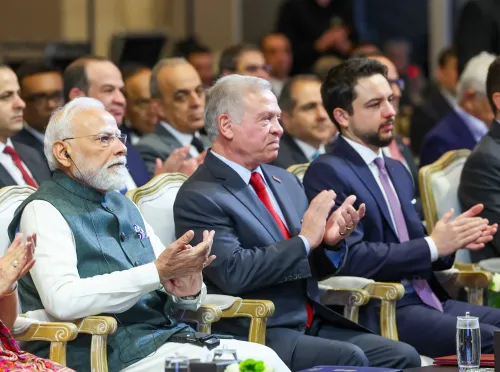
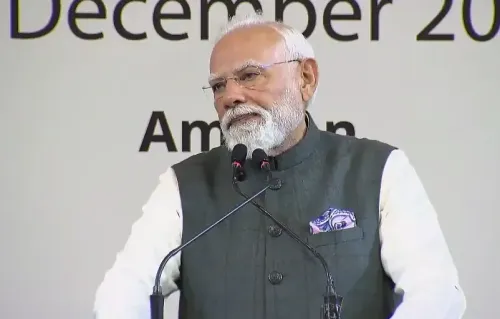
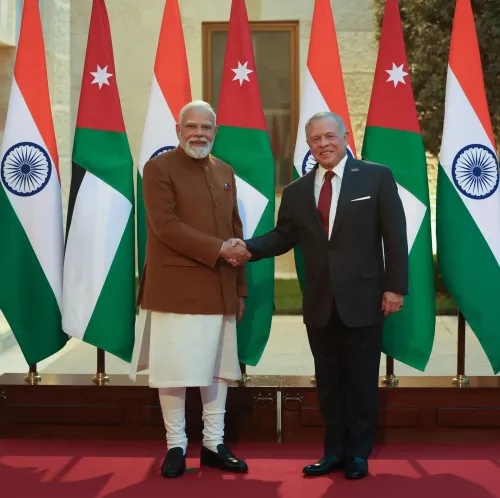
New Delhi, Dec 16 (NationPress) Prime Minister Narendra Modi’s journey to Jordan has significantly enhanced the bilateral relationship between India and this West Asian nation, culminating in the signing of five MoUs covering various sectors including renewable energy, water resource management, cultural exchange, digital solutions, and the twinning of Petra and Ellora, as outlined in an official announcement released on Tuesday.
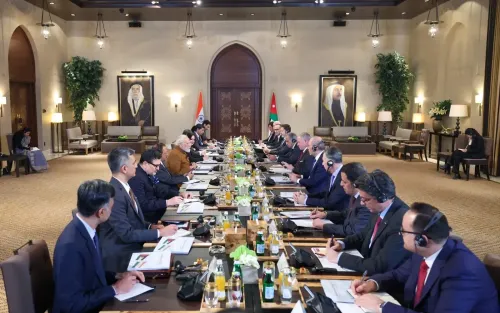
During his visit, PM Modi engaged in comprehensive talks with King Abdullah II of Jordan, focusing on strategies to further enhance bilateral cooperation in diverse areas such as trade and investment; defense and security; renewable energy; fertilizer and agriculture; innovation, IT and digital technologies; critical minerals; infrastructure; health and pharma; education and capacity building; tourism and heritage; as well as cultural exchanges and people-to-people connections, the statement indicated.
The Prime Minister suggested that both nations aim to elevate their bilateral trade to $5 billion over the next five years. He advocated for collaboration between Jordan’s digital payment framework and India’s Unified Payments Interface (UPI). Notably, Jordan supplies a substantial amount of fertilizer to India, and discussions are ongoing between companies from both countries regarding further investments in Jordan to satisfy the increasing demand for phosphatic fertilizer in India.
This visit marks PM Modi’s first extensive trip to Jordan, coinciding with the 75th anniversary of diplomatic relations between the two nations.
India stands as Jordan’s third-largest trading partner, with Jordan being a primary supplier of phosphates and potash fertilizers to India.
Currently, approximately 17,500 Indian nationals reside in Jordan, primarily engaged in textiles, construction, manufacturing, and healthcare sectors.
India exports products like cereals, frozen meat, petroleum, and animal fodder to Jordan, while importing fertilizers, particularly phosphates and potash. Initiatives such as long-term joint ventures and the establishment of Indian-owned manufacturing units in Jordan reflect a profound level of commercial integration.
A significant joint venture, the Jordan India Fertiliser Company (JIFCO), formed between Indian Farmers Fertiliser Cooperative (IFFCO) and Jordan Phosphate Mines Company (JPMC), was established to produce and export phosphoric acid to India. Originally valued at $860 million, this venture serves as a vital source of phosphoric acid for India.
Additionally, over 15 garment manufacturing companies owned by Non-Resident Indians (NRIs) operate within Jordan’s Qualified Industrial Zones (QIZs), with a total investment of around $500 million. These firms produce garments in Jordan and export the finished items to various markets under the Jordan-USA FTA framework.
Moreover, the establishment of the Indian-Jordan Center of Excellence in Information Technology, a state-of-the-art IT facility at Al-Hussein Technical University (HTU), signifies the growing technological collaboration between the two nations. Fully funded by India, this center boasts cutting-edge IT infrastructure, including the Super Computer PARAM Shavak and advanced training facilities. The Government of India also conducts master trainer courses for Jordanian specialists in emerging fields like Cyber Security, Web Development, Machine Learning, and Big Data Analytics.
Point of View
This visit by PM Modi to Jordan represents a crucial step in enhancing India’s global outreach and strengthening bilateral ties with a key Middle Eastern partner. The signed MoUs reflect a mutual commitment to foster economic growth and cultural exchange, aligning with India's broader strategic interests.
NationPress
19 Sept 2026
Frequently Asked Questions
What are the main areas covered by the MoUs signed during PM Modi’s visit to Jordan?
The MoUs signed during PM Modi’s visit cover areas such as renewable energy, water resource management, cultural exchange, digital solutions, and twinning between Petra and Ellora.
What is the goal for bilateral trade between India and Jordan?
The goal is to enhance bilateral trade to $5 billion over the next five years.
How significant is the Indian expatriate community in Jordan?
Approximately 17,500 Indian nationals currently reside in Jordan, primarily working in sectors such as textiles, construction, manufacturing, and healthcare.
What is the significance of the Jordan India Fertiliser Company?
The Jordan India Fertiliser Company (JIFCO) plays a crucial role in producing and exporting phosphoric acid to India, supporting the demand for fertilizers.
What technological collaboration exists between India and Jordan?
The Indian-Jordan Center of Excellence in Information Technology at Al-Hussein Technical University is a key facility that fosters technological collaboration between the two nations.