Mahua Moitra Targets Ex-WB Poll Chief Over Voter Deletions

Synopsis
TMC MP Mahua Moitra on 22 October 2026 publicly accused former West Bengal CEO Manoj Agarwal of overseeing the attempted deletion of 14.75 lakh court-cleared voters, citing two Election Commissioners who claimed ignorance of who filed the requests.
Key Takeaways
TMC MP Mahua Moitra directly named former West Bengal CEO Manoj Agarwal in a voter-deletion controversy on 22 October 2026 .
She alleged that 14.75 lakh valid voters , already cleared by judicial order, were sought to be removed from electoral rolls by Agarwal's office.
Two Election Commissioners, Sandhu and Joshi , are cited as having stated they did not know who filed the deletion applications.
The controversy centres on Form 7 deletion procedures and a lack of transparency about who initiated the requests.
No formal response from Manoj Agarwal or the Election Commission of India had been issued at the time of publication.
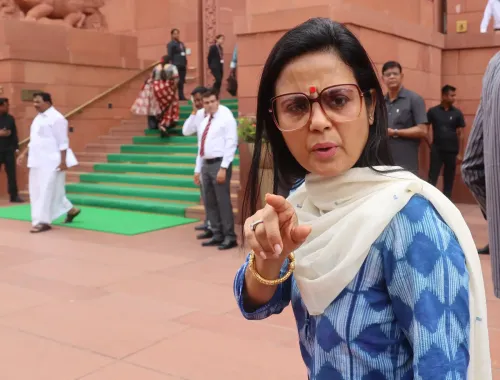
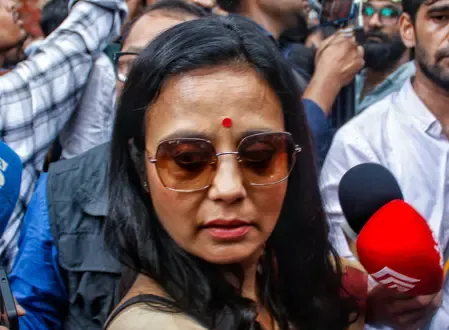
A direct, named accusation landed on Thursday, 22 October 2026 when TMC MP Mahua Moitra publicly called out Manoj Agarwal, the former Chief Electoral Officer of West Bengal, over the alleged attempted deletion of 14.75 lakh valid voters who had already been cleared by courts — and demanded to know who ordered it and why.
Moitra's post was blunt and combative. 'This happened on your watch Manoj Agarwal Vote Chor,' she wrote, using the Hindi phrase vote chor — loosely, 'vote thief' — 'you were CEO WB when 14.75 valid voters cleared by judges were sought to be removed by YOUR office.' She further cited two Election Commissioners, Sandhu and Joshi, as having stated on record that they were unaware of who filed the deletion requests — leaving, in her framing, a gaping accountability vacuum at the centre of the controversy.
The Voter Deletion Controversy in West Bengal
At the heart of the allegation is a procedural question that has dogged Indian electoral rolls for decades: who files Form 7 deletion requests, and on whose instruction? Under the Representation of the People Act, the state Chief Electoral Officer oversees periodic special summary revisions of rolls, during which applications to remove names — for duplication, death, or ineligibility — are processed. The law requires transparency about the applicant; the accusation here is that it was absent.
That two serving Election Commissioners reportedly told interlocutors they did not know who initiated the deletion of voters already upheld as valid by judicial order makes this more than a routine opposition complaint. If accurate, it points to a breakdown in the chain of accountability within the election machinery itself — the very institution charged with protecting franchise integrity.
A Recurring Pattern Across Indian States
Accusations of politically motivated voter deletions are not new to West Bengal or to Indian electoral politics more broadly. Opposition parties have, in multiple election cycles across states, alleged that local administration worked in concert with ruling dispensations to thin out voter rolls in specific communities or constituencies. The disputes rarely end in conclusive findings, partly because the paper trail for Form 7 filings has historically been opaque.
What makes Moitra's latest salvo distinctive is the specificity: a named former official, a specific figure, and a claim of judicial clearance already granted to those voters. Vague accusations are easy to deflect. Specific ones — with a name, a number, and a documented court order in the frame — are harder to wave away.
What a Response Would Have to Answer
For this to move beyond social-media combat, the Election Commission of India or Manoj Agarwal himself would need to address three questions directly: who filed the deletion applications, under what authority, and why court-cleared voters were included. The silence of the two named Election Commissioners — if their reported statements hold — only deepens the pressure for a formal accounting.
West Bengal's electoral rolls have long been a political flashpoint, and with future assembly and Lok Sabha cycles already on the horizon, the integrity of those rolls is not an abstract concern. Every name wrongly struck off is a vote that disappears before polling day.
Point of View
Escalating from generic allegations to named accountability demands. The invocation of judicial clearance as a shield for the affected voters is legally and rhetorically shrewd: it is harder to defend deleting names a court has already validated. If the Election Commission does not respond with a formal inquiry, the silence itself becomes a political story. The pattern of such disputes recurring without definitive resolution points to structural opacity in the Form 7 process that all parties have incentive to reform, but little incentive to act on first.
NationPress
22 Oct 2026
Frequently Asked Questions
Who is Manoj Agarwal and what is his role in the West Bengal voter deletion row?
Manoj Agarwal served as the Chief Electoral Officer of West Bengal, the official responsible for maintaining electoral rolls in the state. TMC MP Mahua Moitra has accused him of presiding over an attempt to delete 14.75 lakh court-cleared voters from the rolls during his tenure.
What is Form 7 in the context of Indian electoral rolls?
Form 7 is the official application used to request the deletion of a name from an electoral roll, citing reasons such as death, duplication, or ineligibility. The identity of the applicant filing Form 7 is central to the current controversy in West Bengal.
What did Election Commissioners Sandhu and Joshi say about the voter deletions?
According to Mahua Moitra's post, Commissioners Sandhu and Joshi stated they were unaware of who filed the applications to delete the voters in question, raising questions about accountability within the election machinery.
Why does it matter that the deleted voters were 'cleared by judges'?
If voters had already been upheld as valid by a judicial order, any subsequent attempt to remove them from the rolls would contradict a court ruling, making the deletion legally and procedurally far more serious than a routine administrative error.
Has the Election Commission of India responded to Mahua Moitra's allegations?
As of 22 October 2026, no formal response from the Election Commission of India or from Manoj Agarwal had been made public in response to Moitra's specific accusations.