Mahua Moitra flags alleged illegal voter deletion by ECI officials

Synopsis
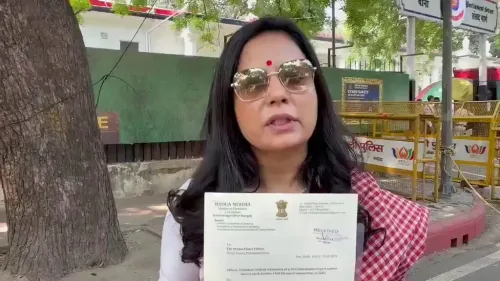
TMC MP Mahua Moitra has flagged a December 2025 letter from West Bengal's electoral officers' association to the Election Commission, alleging that senior ECI officials Gyanesh Kumar and Seema Khanna orchestrated illegal centralised back-end deletions of voters, bypassing mandated ERO and BLO processes.
Key Takeaways
TMC MP Mahua Moitra has publicly flagged a letter dated 24 December 2025 from the WBSC Association — the body controlling ERO and BLO officers in West Bengal — to the Election Commission of India .
The letter allegedly accuses senior ECI officials Gyanesh Kumar and Seema Khanna of orchestrating a centralised, back-end deletion of voters, bypassing required ERO and BLO processes.
The complaint carries unusual weight because it reportedly originates from within the ECI's own field officer structure, not from a political party.
Moitra has tagged both TMC's Abhishek Banerjee and Congress's Jairam Ramesh , signalling a bid to build cross-party opposition pressure.
The Election Commission has not publicly responded to the association's complaint as of the time of reporting.
Opposition parties in non-BJP states like West Bengal have a documented pattern of raising allegations of centralised ECI overreach over local electoral machinery ahead of polls.
A formal complaint lodged by an association of ground-level electoral officers in West Bengal is now at the centre of a sharp political flashpoint — TMC MP Mahua Moitra has gone public with what she describes as documentary evidence of centralised, back-end deletion of voters from electoral rolls, allegedly bypassing the very officers mandated to manage them.
The letter at the heart of the allegation
According to Moitra's post, on 24 December 2025, the West Bengal Supervisory Controllers (WBSC) Association — the controlling body for Electoral Registration Officers (EROs) and Booth Level Officers (BLOs) — wrote directly to the Election Commission of India (ECI), flagging what it described as an 'illegal centralised back-end deletion' of voters. The letter reportedly named Gyanesh Kumar and Seema Khanna, both senior ECI officials, as being responsible for authorising the process.
The allegation, if accurate, strikes at a foundational principle of India's electoral system: that deletions from the electoral roll must follow a legally defined process involving EROs and BLOs at the local level — not be executed centrally without their knowledge or concurrence.
Why EROs and BLOs matter to voter list integrity
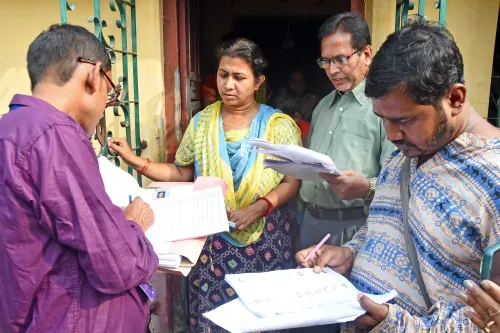
EROs and BLOs are the backbone of India's voter registration architecture. Booth Level Officers are ground-deployed officials who verify voter data door-to-door; Electoral Registration Officers are the nodal authorities who approve additions and deletions in their respective constituencies. Any deletion that circumvents this chain, critics argue, is not just procedurally irregular — it is potentially capable of disenfranchising legitimate voters at scale without recourse.
Opposition parties in states like West Bengal, governed by the Trinamool Congress, have repeatedly raised concerns about centralised data management overriding local electoral officers, particularly in the run-up to elections. Moitra's post — tagging TMC national general secretary Abhishek Banerjee and Congress leader Jairam Ramesh — signals an attempt to build cross-party opposition pressure on the issue.
What the Election Commission has not yet said
As of the time of this report, no official response from the Election Commission of India to the WBSC Association's December 2025 letter has been made public. The ECI has broad constitutional authority over electoral rolls under the Representation of the People Act, but that authority operates within defined procedural safeguards — the precise scope of which is now being contested.
The silence from Nirvachan Sadan matters. A formal complaint from an association of the ECI's own field-level officers — not a political party — carries institutional weight that a parliamentary question or press conference alone cannot match. Whether the Commission acknowledges the letter, disputes its characterisation, or initiates an internal review will shape how far this controversy travels.
The bigger pattern: voter rolls and political trust
Allegations of irregular voter list revisions are not new to Indian electoral politics — but a formal written protest originating from within the ECI's own officer ecosystem raises the stakes considerably. If the complaint is verified, it would lend credence to a broader argument that electoral roll management has become a contested terrain between the Commission's central apparatus and its state-level field staff.
The Election Commission's credibility as a neutral umpire depends on procedural transparency. Any perception that deletions are being executed centrally, invisibly, and without the involvement of EROs and BLOs — whatever the technical justification — is a reputational liability the institution can ill afford heading into future electoral cycles.
The WBSC Association's letter is dated. The Election Commission's response is overdue. Parliament and, potentially, the courts may be the next arenas where this fight is resolved.
Point of View
Not partisan. For the Election Commission, the optics of an unacknowledged internal protest letter are damaging regardless of the merits, because the perception of central overreach over local electoral machinery cuts directly at its neutrality narrative. The cross-tagging of both TMC and Congress figures by Moitra signals a deliberate attempt to forge opposition unity on electoral integrity ahead of future polls in West Bengal. The Commission's next move — denial, inquiry, or silence — will define how high this controversy climbs.
NationPress
27 Sept 2026
Frequently Asked Questions
What is Mahua Moitra alleging about the Election Commission of India?
Mahua Moitra is alleging that senior ECI officials conducted a centralised, back-end deletion of voters from electoral rolls in West Bengal, bypassing the legally mandated ERO and BLO process. She says a formal complaint to this effect was sent to the ECI by the WBSC Association on 24 December 2025.
Who are EROs and BLOs in the Indian electoral system?
Electoral Registration Officers (EROs) are the nodal authorities responsible for approving changes to the voter list in their constituencies. Booth Level Officers (BLOs) are ground-level officials who verify voter data. Together, they form the procedural backbone for any lawful addition or deletion from electoral rolls.
Who are Gyanesh Kumar and Seema Khanna?
Gyanesh Kumar and Seema Khanna are named in Mahua Moitra's post as the ECI officials allegedly responsible for the centralised back-end voter deletions. NationPress has not independently verified the specific allegations against them, which originate from the WBSC Association letter cited in the post.
What is the WBSC Association and why does its complaint matter?
The West Bengal Supervisory Controllers (WBSC) Association is the controlling body for ERO and BLO level officers in West Bengal. A formal protest from this association is significant because it comes from within the ECI's own field officer ecosystem, not from a political party, lending it greater institutional credibility.
Has the Election Commission of India responded to the WBSC Association's letter?
As of the time of this report, no public response from the Election Commission to the WBSC Association's December 2025 letter has been made available. The Commission's official position remains unknown.