Mahua Moitra calls Election Commissioner Gyanesh Kumar a 'rogue agent'

Synopsis
TMC MP Mahua Moitra publicly accused Election Commissioner Gyanesh Kumar of acting as a 'rogue agent' without collegial consent, disenfranchising genuine voters, and demanded his prosecution — arguing that acting outside official authority strips him of immunity.
Key Takeaways
TMC MP Mahua Moitra posted on 24 September 2026 calling Election Commissioner Gyanesh Kumar a 'rogue agent' who disenfranchised genuine voters.
She alleges he acted without the consent of the other two Election Commissioners, breaching the collegial decision-making framework of the Election Commission of India .
Her core legal argument: acting outside sanctioned official duties disqualifies Kumar from constitutional immunity, making him liable to prosecution.
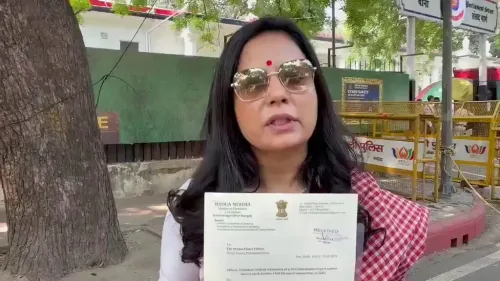
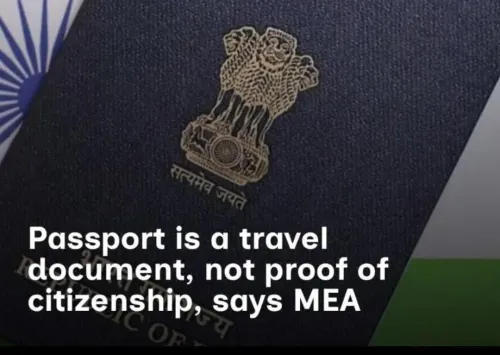
The post was accompanied by four images , suggesting documentary evidence of alleged irregularities.
The accusation sits in a broader pattern of opposition allegations about unilateral voter-roll revisions, particularly in West Bengal .
The matter could be raised in Parliament's winter session or trigger court petitions challenging specific disenfranchisement orders.
A pointed broadside against the Election Commission of India landed on Thursday, 24 September 2026, when TMC MP Mahua Moitra publicly labelled Election Commissioner Gyanesh Kumar a 'rogue agent' — accusing him of acting outside the three-member collegium's collective consent to disenfranchise genuine voters.
The charge: unilateral action, stripped immunity
Moitra's post pulls no punches. 'Gyanesh Chor Kumar is rogue agent who acted without consent of other 2 ECs,' she wrote, using the derogatory suffix 'Chor' — Hindi for 'thief' — as a deliberate provocation. Her core legal argument is equally blunt: disenfranchising genuine voters falls outside an Election Commissioner's official duties, and therefore the constitutional protection that shields public servants from personal prosecution should not apply to him.
The post was accompanied by four images, which Moitra appears to be using as documentary evidence of the alleged irregularities — a signal that the accusation is intended as more than political rhetoric.
Why the 'without consent' framing matters
The Election Commission of India is a three-member constitutional body: one Chief Election Commissioner and two Election Commissioners. Decisions of the Commission are, in principle, collegial. Moitra's specific claim — that Gyanesh Kumar acted 'without consent of the other two ECs' — goes to the heart of institutional procedure, not merely to the outcome of any single ruling.
This framing draws on a recurring line of opposition criticism: that individual commissioners have driven voter-roll revisions unilaterally, bypassing internal consensus. The accusation has surfaced before in states with strong regional parties, including West Bengal, during routine summary electoral-roll revisions — Moitra's own political backyard as the Krishnanagar MP.
The 2023 appointment law and the immunity question
The legal scaffolding here matters. The Chief Election Commissioner and other Election Commissioners (Appointment, Conditions of Service and Term of Office) Act, 2023 governs how Election Commissioners are appointed and function. Statutory and constitutional protections typically shield commissioners acting in their official capacity from personal prosecution. Moitra's argument is surgical: if the act of disenfranchisement was ultra vires — beyond sanctioned authority and without collegial backing — then the immunity shield simply does not attach. 'He cannot enjoy immunity. He needs to be prosecuted. Simple,' she posted.
What the opposition is watching — and what comes next
Opposition scrutiny of the Election Commission has intensified over successive electoral cycles, with regional parties alleging selective deletions from voter rolls ahead of assembly and Lok Sabha contests. Moitra's intervention raises the stakes by moving from political criticism to an explicit call for criminal prosecution of a sitting Election Commissioner — an extraordinary demand that will almost certainly echo in Parliament's winter session and potentially in the courts if any petition follows the post.
Whether the demand translates into legal action, a formal complaint, or a parliamentary privilege motion, the clock is now running on both sides to respond — and on the Commission itself to address the collegial-consent question head-on.
Point of View
She is building a legal theory that could survive scrutiny beyond the parliamentary floor. The intervention keeps alive a wider opposition narrative that electoral institutions are being steered by individual actors rather than collective constitutional bodies, a charge with particular resonance ahead of any forthcoming state elections in West Bengal. Whether courts or Parliament take up the thread will determine whether this remains a political salvo or becomes a genuine institutional reckoning.
NationPress
24 Sept 2026
Frequently Asked Questions
Why is Mahua Moitra calling Gyanesh Kumar a 'rogue agent'?
Moitra alleges that Election Commissioner Gyanesh Kumar took decisions to disenfranchise genuine voters without the consent of the other two Election Commissioners, acting outside his sanctioned authority and the collegial framework of the Election Commission of India.
Can an Election Commissioner of India be prosecuted?
Election Commissioners generally enjoy protection from personal prosecution for acts done in their official capacity. However, Moitra argues that if the act — disenfranchising voters — was taken without collegial consent and thus outside official duties, that immunity would not apply.
What is the Election Commission of India's collegial structure?
The Election Commission of India comprises one Chief Election Commissioner and two Election Commissioners. Decisions are intended to be taken collegially, and the 2023 appointment law governs their functioning and conditions of service.
What law governs Election Commissioner appointments in India?
The Chief Election Commissioner and other Election Commissioners (Appointment, Conditions of Service and Term of Office) Act, 2023, sets out the framework for how Election Commissioners are appointed, their terms, and how the Commission functions.
What could happen next after Moitra's accusation?
The accusation could prompt court petitions challenging specific disenfranchisement orders, a formal complaint to authorities, or a parliamentary debate during the winter session — any of which would force the Election Commission to publicly address the collegial-consent question.