Mahua Moitra Hails Gen Z Protesters, Cites Minister Resignation

Synopsis
TMC MP Mahua Moitra saluted Gen Z protesters on 20 July 2026, crediting their non-violent street agitation with securing an Education Minister's resignation and forcing government accountability — framing youth-led protest as a decisive force independent of political leadership.
Key Takeaways
TMC MP Mahua Moitra posted on X on 20 July 2026 praising Gen Z protesters for their non-violent street demonstrations.
She credited the protests with compelling an Education Minister to resign and bringing the government 'to its knees.' Moitra invoked the iconic Bollywood line 'Kitne aadmi the?' from Sholay as a tribute to the protesters' collective strength.
She explicitly stated protesters 'don't need leaders,' framing the movement as citizen-driven and decentralised.
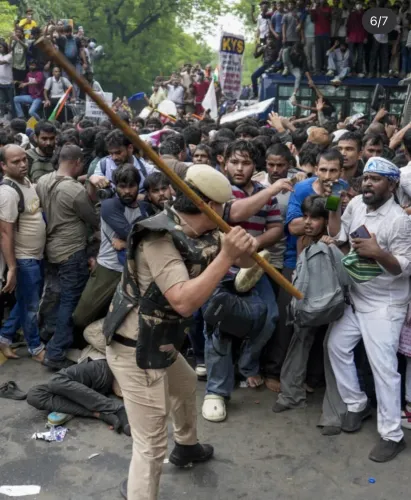
The post warned that state 'brutality will be their end,' signalling a broader critique of the government's handling of demonstrations.
Youth-led education protests have precedent in India, including the 2024 NEET exam irregularities agitation that pressured the Union Education Ministry.
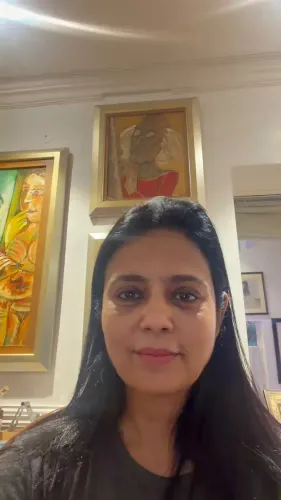
TMC MP Mahua Moitra on Monday, 20 July 2026 praised what she described as a successful youth-led street protest movement, crediting non-violent demonstrations by Gen Z with forcing an Education Minister's resignation and compelling the government to answer for its actions. Posting on X, the Krishnanagar MP invoked a line from the Bollywood classic Sholay — 'Kitne aadmi the?' (How many men were there?) — as a rhetorical salute to the protesters' power in numbers.
Context
Moitra's post, written in a mix of Hindi and English, addressed young protesters directly: 'You don't need leaders. You can bring govt to its knees, seek accountability and get Education Minister to resign simply by non violent street protest.' The Sholay reference, instantly recognisable to Indian audiences, was deployed as irony — turning a line associated with a villain's fear of a crowd into a tribute to collective civic power.
The post accompanied a video, suggesting footage of the protest was circulating on the platform. Moitra added a pointed warning to those in power: 'Their brutality will be their end.'
Policy Backdrop
Youth-led agitations over education policy and examination integrity have a documented history in India. The 2024 NEET exam irregularities controversy saw widespread student protests demanding accountability from the Union Education Ministry, drawing national attention to systemic failures in competitive examination administration.
India's constitutional framework guarantees the right to peaceful assembly under Article 19(1)(b), a provision that student movements have repeatedly invoked when challenging government policy. Broader precedents — including the 2011 anti-corruption movement — established that sustained, non-violent street pressure can shift political outcomes even without formal opposition leadership structures.
Stakeholders and Impact
Students and youth activists are the primary actors Moitra is addressing. Her framing — 'You don't need leaders' — is a deliberate signal that decentralised, citizen-driven protest can be as effective as party-organised opposition. This narrative has resonance in a political climate where established opposition parties have faced credibility questions among younger voters.
The Education Ministry and the broader Union government are implicitly in the frame. Moitra's assertion that 'brutality will be their end' suggests the post is also a response to reported state action against demonstrators, though the specific incidents referenced in the post remain unverified from available data.
What's Next
Parliamentary scrutiny of protest handling and education accountability measures is likely to intensify in upcoming sessions. Opposition MPs, including those from the Trinamool Congress, have consistently used such moments to press for independent inquiries into both examination administration and the conduct of security forces during student demonstrations.
Whether the resignation Moitra references triggers formal legislative review — or becomes a flashpoint for wider demands on education governance — will depend on how the government responds in the days ahead. The political salience of youth protest as an electoral variable is increasingly difficult for any party to ignore.
Point of View
' she paradoxically amplifies her own voice as a leader who understands and endorses leaderless movements. The Sholay reference is not incidental — it is a cultural shorthand designed to go viral among the very Gen Z audience she is addressing, bridging a generational gap through shared pop-culture memory. The post also fits a broader TMC and opposition pattern of using high-profile protest outcomes to build a counter-narrative against the Union government ahead of any electoral cycle.
NationPress
20 Oct 2026
Frequently Asked Questions
What did Mahua Moitra say about Gen Z protesters?
Mahua Moitra praised Gen Z protesters on 20 July 2026, saying they proved that non-violent street protest can bring a government to its knees and force an Education Minister to resign, without needing political leaders.
Which Education Minister resigned due to student protests in India 2026?
The specific minister referenced in Mahua Moitra's post has not been independently verified from available data. Moitra's post credits non-violent Gen Z street demonstrations with securing the resignation.
What is the 'Kitne aadmi the' reference Mahua Moitra used?
'Kitne aadmi the?' — meaning 'How many men were there?' — is an iconic dialogue from the 1975 Bollywood film Sholay. Moitra used it ironically to salute the power of the Gen Z crowd.
What is Mahua Moitra's party and constituency?
Mahua Moitra is a Lok Sabha MP from the All India Trinamool Congress, representing the Krishnanagar constituency in West Bengal.
Have student protests in India forced government accountability before?
Yes. The 2024 NEET exam irregularities protests pressured the Union Education Ministry, and the 2011 anti-corruption movement demonstrated that sustained non-violent agitation can shift political outcomes in India.