Mahua Moitra Questions RAF Over Missing Name Tags During Protest Crackdown
Synopsis
TMC MP Mahua Moitra has publicly challenged the Rapid Action Force after an RAF Assistant Commandant reportedly defended personnel not wearing name tags during protest duty by claiming the tags could fall off in crowds. Moitra's pointed Hindi rebuke has reignited debate on police identification norms and accountability under Indian law.
Key Takeaways
TMC MP Mahua Moitra posted on 21 July 2026 questioning RAF personnel operating without visible name tags while handling protesters.
RAF Assistant Commandant Sonia reportedly justified the practice by saying name tags 'can fall in the crowd, so we keep them in pockets.' The Rapid Action Force is a riot-control wing of the CRPF , raised in 1992 , and is frequently deployed at protest and law-and-order sites.
The Supreme Court's Prakash Singh v.
Union of India (2006) judgment directed police accountability reforms, including personnel identification during public-order duties.
The Ministry of Home Affairs has not issued a public response on RAF identification protocols.
The episode may prompt formal parliamentary questions or NHRC proceedings on identification norms for central paramilitary forces.
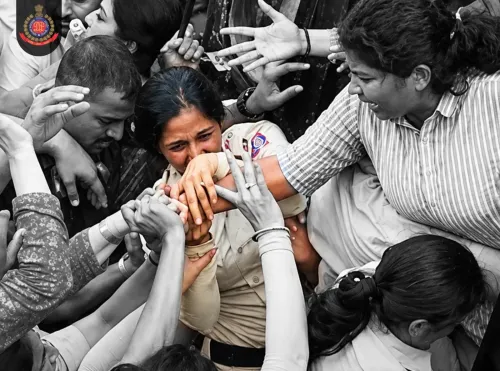
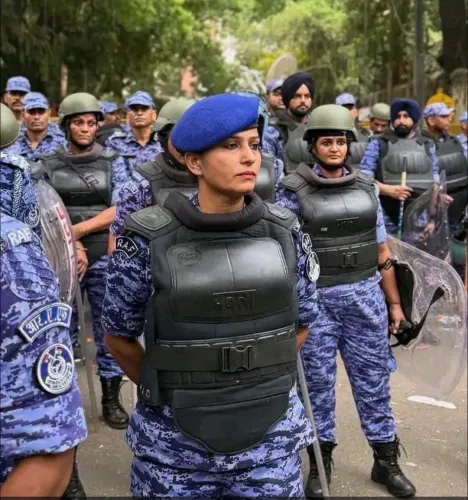
TMC MP Mahua Moitra on Tuesday, 21 July 2026, publicly questioned the Rapid Action Force (RAF) over its personnel operating without visible name tags while handling protesters, after an RAF Assistant Commandant reportedly justified the practice by saying the tags could fall off in crowds.
Context
Moitra's post on X directly quoted a statement attributed to RAF Assistant Commandant Sonia, who reportedly told questioners that name tags are kept in pockets — not worn — because they risk falling into crowds during deployments. Moitra responded with a sharp Hindi rebuke: 'Sharm bhi pocket mein hai kya?' — loosely translated as 'Is your sense of shame also tucked in your pocket?' — directing the question at the officer.
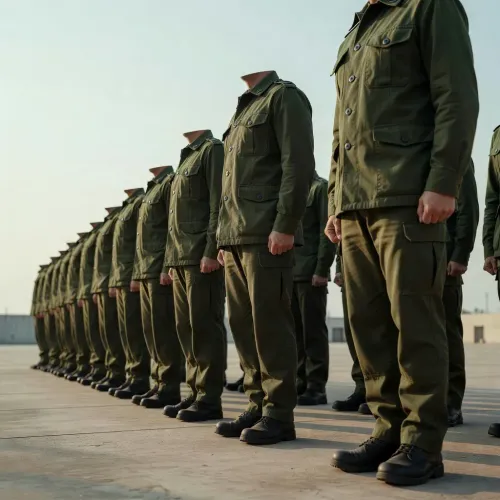
The Rapid Action Force is a specialised riot-control and crowd-management wing of the Central Reserve Police Force (CRPF), raised in 1992 and routinely deployed for internal security and law-and-order duties across India. Its personnel are among the most frequently seen central paramilitary forces at protest sites and communally sensitive areas.
Policy Backdrop
The issue of visible identification for police personnel during law-and-order duties is not new to Indian governance debates. The Supreme Court, in its landmark Prakash Singh v. Union of India (2006) judgment, directed a series of police reforms, including measures aimed at improving accountability of personnel during public-order operations.
Wearing visible name tags or service numbers is widely considered a baseline accountability norm in democratic policing frameworks. The absence of identification makes it significantly harder for citizens, oversight bodies, or courts to attribute specific actions — including alleged use of excessive force — to individual officers.
Stakeholders and Impact
Civil rights groups and legal observers have long flagged the practice of central paramilitary personnel operating without visible identification as a structural accountability gap. For protesters on the receiving end of crowd-control measures, the inability to identify individual officers can effectively foreclose any avenue for grievance redressal.
The Ministry of Home Affairs (MHA), which oversees both the CRPF and its subsidiary units including the RAF, has not issued any public clarification on identification protocols in response to such concerns. The National Human Rights Commission (NHRC) has in the past taken cognisance of complaints involving unidentified police personnel during protests.
What's Next
Moitra's post is likely to amplify calls for the MHA to issue explicit, enforceable guidelines requiring RAF and CRPF personnel to display identification at all times during deployments. Parliamentary sessions remain a key forum where such questions — on CRPF identification norms and use-of-force protocols — can be formally pressed.
Any response from the NHRC, or a formal parliamentary question in the upcoming session, could push the issue from social-media debate into the domain of institutional accountability. The episode adds to a recurring pattern of scrutiny over central paramilitary conduct during public demonstrations in India.
Point of View
She shifts the debate from abstract policy to a concrete, attributable admission. This fits a broader pattern of opposition MPs using social media to surface institutional conduct that rarely reaches parliamentary record. The real test is whether the MHA responds with enforceable identification protocols or allows the episode to fade without institutional consequence.
NationPress
20 Oct 2026
Frequently Asked Questions
Why are RAF personnel not wearing name tags during protests?
RAF Assistant Commandant Sonia reportedly stated that name tags are kept in pockets rather than worn because they risk falling off during crowd-control deployments. This explanation has drawn sharp criticism from TMC MP Mahua Moitra and civil liberties observers.
Is it mandatory for CRPF or RAF personnel to wear name tags?
The Supreme Court's 2006 Prakash Singh judgment directed police accountability reforms including visible identification, but specific enforcement of name-tag norms for central paramilitary forces during deployments has remained inconsistent and is not uniformly mandated in practice.
What is the Rapid Action Force (RAF)?
The Rapid Action Force is a specialised riot-control and crowd-management wing of the Central Reserve Police Force (CRPF), established in 1992. It is deployed across India for internal security, communal tension management, and law-and-order operations.
What did Mahua Moitra say about the RAF name tag issue?
Moitra posted on X on 21 July 2026 quoting the RAF officer's justification and responding with the Hindi phrase 'Sharm bhi pocket mein hai kya?' — meaning 'Is your sense of shame also in your pocket?' — questioning the accountability of forces beating protesters without identification.
Can citizens file complaints against unidentified police personnel?
Without visible identification such as name tags or service numbers, it becomes extremely difficult for citizens to file specific complaints against individual officers. The NHRC has previously taken cognisance of such cases, but the absence of identification remains a significant barrier to grievance redressal.