Mahua Moitra Demands RAF IG Probe July 20 Student Brutality
Synopsis
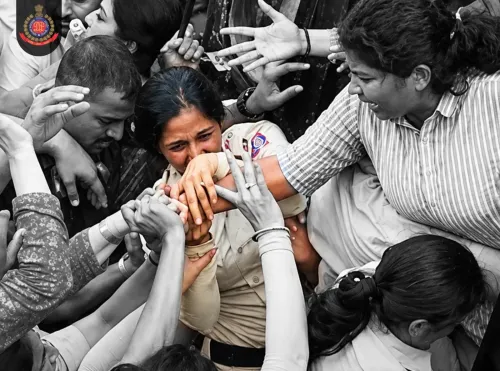
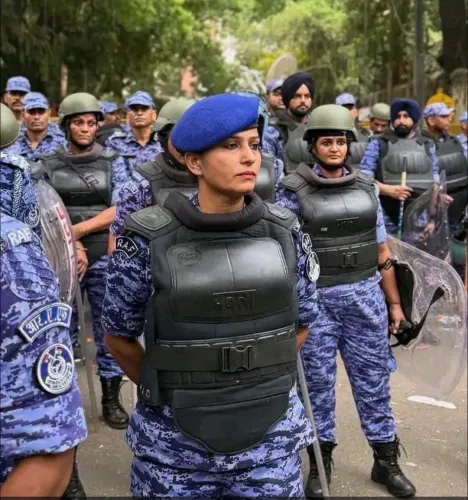
TMC MP Mahua Moitra publicly called on RAF IG Seema Dhundia — the first woman directly promoted to the rank — to hold accountable every RAF personnel who allegedly brutalised students on July 20, citing her own parliamentary record of fighting for CAPF rights.
Key Takeaways
Mahua Moitra , TMC Lok Sabha MP from Krishnanagar , on July 26, 2026 demanded accountability for RAF personnel over alleged student brutalisation on July 20 .
She addressed her demand directly to Seema Dhundia , described as the first woman officer directly promoted to Inspector General rank in the Rapid Action Force .
Moitra distinguished Dhundia as 'not a parachuted IPS officer,' referencing a long-standing CAPF grievance over lateral IPS inductions into senior paramilitary posts.
Moitra invoked her parliamentary record of opposing the CAPF bill and advocating for CAPF personnel rights as the basis for her moral authority to make this demand.
The post signals the issue may be escalated to Parliament if no internal inquiry is initiated by the RAF or CRPF leadership.
TMC MP Mahua Moitra on Sunday, July 26, 2026, publicly called on Seema Dhundia, described as the first woman officer directly promoted to the rank of Inspector General in the Rapid Action Force (RAF), to hold accountable every RAF personnel who allegedly brutalised students on July 20. The appeal, addressed directly to the RAF and the CRPF on social media, follows Moitra's stated record of raising CAPF-related issues in Parliament.
Context
In her post, Moitra reminded the force that she had 'spoken up in Parliament against the CAPF bill' and 'fought for rights of your force,' framing her demand not as an adversarial attack but as a continuation of her advocacy for Central Armed Police Forces personnel. She specifically noted that Dhundia is 'not a parachuted IPS officer' — a pointed reference to long-standing grievances within CAPF ranks over lateral inductions of Indian Police Service officers into senior positions, bypassing career personnel.
The Rapid Action Force is a specialised wing of the Central Reserve Police Force (CRPF), operating under the Ministry of Home Affairs. It was raised primarily for riot control and internal security operations, and its personnel are drawn from the CRPF cadre.
Policy Backdrop
Parliament has periodically debated service conditions, promotion parity, and rights of Central Armed Police Forces (CAPF) personnel across multiple sessions. A recurring grievance among CAPF officers has been the practice of deputing IPS officers to head paramilitary units, which career CAPF officers argue blocks their own promotional avenues. Moitra's acknowledgement of Dhundia's direct-promotion status signals that this structural concern remains live in parliamentary discourse.
Opposition MPs, including those from the All India Trinamool Congress (AITC), have used questions, adjournment motions, and bill debates to raise both personnel welfare and accountability issues related to central paramilitary deployments. Such interventions have historically intensified when crowd-control operations attract public scrutiny.
Stakeholders and Impact
The central demand concerns accountability for RAF personnel alleged to have used excessive force against students on July 20. While the specific details of the incident have not been independently confirmed, Moitra's public framing places the onus squarely on the newly appointed IG to initiate an internal inquiry. The choice to address Dhundia directly — and to highlight her historic promotion — carries a dual message: it affirms the significance of her appointment while raising expectations tied to it.
For CAPF personnel broadly, the episode intersects with ongoing debates about use-of-force protocols during crowd-control operations and the internal accountability mechanisms available within paramilitary structures. Students and civil society groups who have raised concerns about the July 20 incident are also key stakeholders watching the RAF's institutional response.
What's Next
Pressure will now mount on the RAF and the CRPF leadership to respond — either through a formal statement or the initiation of an internal departmental inquiry. Moitra's post signals that the matter is likely to be raised in the next parliamentary session through questions or a privilege motion if no official action is taken. The broader question of whether Seema Dhundia's tenure as the first directly promoted woman IG of the RAF will be marked by institutional reform on accountability remains to be seen.
Point of View
She raises the reputational stakes for the new IG, making inaction on the July 20 allegations costlier. The explicit invocation of her CAPF parliamentary record is designed to pre-empt any dismissal of her demand as partisan grandstanding. This fits a broader pattern in which opposition MPs use social media to create accountability pressure outside the parliamentary calendar, particularly when the next session is weeks away. The framing also keeps the promotion-versus-deputation fault line within CAPF in public view, a structural issue with implications for morale and governance across all central paramilitary forces.
NationPress
25 Oct 2026
Frequently Asked Questions
What did Mahua Moitra say about the RAF and July 20 incident?
Mahua Moitra on July 26, 2026 publicly demanded that RAF IG Seema Dhundia hold accountable every RAF personnel who allegedly brutalised students on July 20, citing her own record of fighting for CAPF rights in Parliament.
Who is Seema Dhundia?
Seema Dhundia is described by Moitra as the first woman officer directly promoted to the rank of Inspector General in the Rapid Action Force, distinguishing her from IPS officers laterally inducted into senior CAPF positions.
What is the Rapid Action Force (RAF)?
The Rapid Action Force is a specialised wing of the Central Reserve Police Force (CRPF), operating under the Ministry of Home Affairs, and is primarily deployed for riot control and internal security duties.
What is the CAPF bill Mahua Moitra mentioned?
Moitra referred to a bill related to Central Armed Police Forces that she says she opposed in Parliament, as part of her broader advocacy for the service conditions and rights of CAPF personnel. Specific details of the bill's current status have not been confirmed.
What happened on July 20 that Moitra is referring to?
Moitra alleged that RAF personnel brutalised students on July 20, 2026. The specific details and circumstances of the incident have not been independently verified and are the subject of her demand for an internal inquiry.