MP CM Mohan Yadav Clears Multi-Product Industrial Zone for Chhindwara-Pandhurna
Synopsis
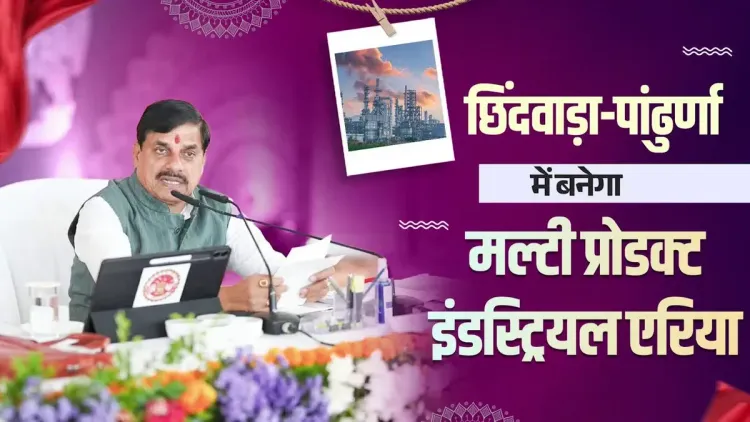
MP CM Dr. Mohan Yadav announced at the Gandhi Sagar cabinet that a multi-product industrial zone will come up in Chhindwara-Pandhurna, benefiting Betul too. An Industrial Promotion Policy amendment will fast-track investment proposals committing to 500-plus jobs through the CCIP mechanism.
Key Takeaways
The Gandhi Sagar Cabinet approved a multi-product industrial zone in the Chhindwara-Pandhurna region of Madhya Pradesh.
The zone will host agriculture-based and other industries , creating large-scale local employment.
Neighbouring Betul district and surrounding areas are also expected to benefit from the zone.
The state's Industrial Promotion Policy has been amended to route investment proposals promising more than 500 jobs through the CCIP fast-track mechanism.
The CCIP route is designed to accelerate both approval and implementation of large investment proposals.
The decision aligns with MP's strategy of spreading industrial growth beyond the Indore-Bhopal corridor into eastern and tribal districts.
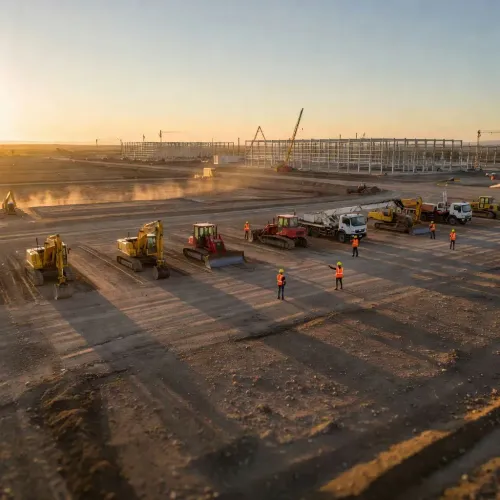
A cabinet decision taken at Gandhi Sagar is set to redraw the industrial map of eastern Madhya Pradesh. Chief Minister Dr. Mohan Yadav announced on Wednesday, 18 November 2026 that the state has approved the establishment of a multi-product industrial zone in the Chhindwara-Pandhurna region — a move that also extends benefits to the neighbouring district of Betul and surrounding areas.
What the Gandhi Sagar Cabinet approved for Chhindwara-Pandhurna
The zone is designed to host a diverse mix of industries, with agriculture-based processing units at its core. The Chief Minister stated that the establishment of these industries will create large-scale employment opportunities at the local level — a pointed signal that the state is pushing growth beyond its dominant Indore-Bhopal corridor and into districts where agrarian economies have long dominated.
The Chhindwara-Pandhurna belt has historically been agriculture-dependent, with limited formal industrial presence. Anchoring a multi-product zone here positions the region to capture value-added processing of its own farm output — linking the field to the factory floor.
CCIP fast-track: 500-plus employment proposals get a new lane
The cabinet also cleared a significant amendment to the state's Industrial Promotion Policy. Investment proposals that commit to generating more than 500 jobs will now be routed through the CCIP mechanism — a dedicated fast-track channel designed to cut approval and implementation timelines. The Chief Minister described the change as accelerating both the sanctioning and roll-out of large investment proposals.
Madhya Pradesh has pursued single-window clearance reforms across successive cabinets, but tying a specific employment threshold — 500 jobs — to a privileged clearance lane is a sharper, more incentive-driven design. It tells investors: bring jobs, move faster.
Why Betul and the tribal belt stand to gain
Betul district, which borders Chhindwara, carries a significant tribal population and an economy tightly coupled to agriculture. The spillover benefit from an industrial zone in the adjacent Chhindwara-Pandhurna area matters here — supply chains, logistics, and ancillary units tend to cluster across district boundaries. For Betul's youth, proximity to a formal industrial zone can mean the difference between seasonal farm labour and a steady factory wage.
Madhya Pradesh's broader pattern of seeding multi-product zones in eastern and tribal districts reflects a deliberate rebalancing strategy — channelling investment eastward while leveraging the region's agri-output for value addition rather than raw export.
What to watch as the zone takes shape
The real test will come in land acquisition, infrastructure rollout, and the volume of proposals that actually flow through the CCIP window in the coming months. Cabinet approvals set the direction; ground-level execution sets the pace. If the fast-track mechanism delivers on its promise, the Chhindwara-Pandhurna zone could become a template for how MP unlocks its next tier of industrial districts — far from the highway corridors, right in the heart of its agrarian hinterland.
Point of View
And visible industrial investment can shift the development narrative. Whether the CCIP mechanism delivers speed at scale will be the real test of this cabinet's industrial ambitions.
NationPress
18 Nov 2026
Frequently Asked Questions
What is the multi-product industrial zone announced for Chhindwara-Pandhurna?
It is an industrial zone approved by the Madhya Pradesh cabinet that will host a range of industries including agriculture-based units, aimed at generating large-scale local employment in the Chhindwara-Pandhurna region and benefiting neighbouring Betul district.
What change was made to MP's Industrial Promotion Policy at the Gandhi Sagar Cabinet?
The policy was amended so that investment proposals promising more than 500 jobs will now be routed through the CCIP fast-track mechanism, speeding up both approval and implementation of large projects.
How will Betul district benefit from the Chhindwara-Pandhurna industrial zone?
CM Dr. Mohan Yadav stated that Betul and surrounding areas will also gain from the zone, as industrial activity — supply chains, logistics, and ancillary units — typically spills over district boundaries.
What is the CCIP mechanism in Madhya Pradesh?
CCIP is a state-level fast-track clearance channel for investment proposals. The cabinet decision now specifically directs proposals committing to over 500 jobs through this route to accelerate sanctioning and implementation.
Why is Madhya Pradesh setting up industrial zones in Chhindwara rather than near Indore or Bhopal?
MP has pursued a deliberate strategy of seeding multi-product industrial zones in eastern and tribal districts to balance growth away from the established Indore-Bhopal corridor and to leverage agri-output for value-added processing in regions with agriculture-dependent economies.