Sandipani schools in 3 MP tribal districts: CM Mohan Yadav announces ₹85 crore plan
Synopsis
Madhya Pradesh CM Mohan Yadav used Birsa Munda's birth anniversary to announce ₹85 crore Sandipani schools across three tribal districts, medical colleges named after tribal freedom fighters, and a raft of welfare and industrial measures — signalling a deliberate BJP push to consolidate tribal support ahead of the political calendar.
Key Takeaways
CM Mohan Yadav announced Sandipani schools in Chhindwara, Balaghat and Dindori at a cost of ₹85 crore on 14 November 2024 .
Medical colleges are being constructed in Dindori and Mandla , named after tribal freedom fighters Raja Shankar Shah and Kunwar Raghunath Shah .
Under the Rani Durgavati scheme , the state is procuring kodo and kutki millets and supporting livestock owners.
Financial assistance was distributed to tribal youths at the event to promote self-employment .
Industrial development initiatives are underway in Balaghat, Mandla, Dindori and Jabalpur districts.
Yadav urged statewide programmes on 15 November to mark Birsa Munda's birth anniversary.
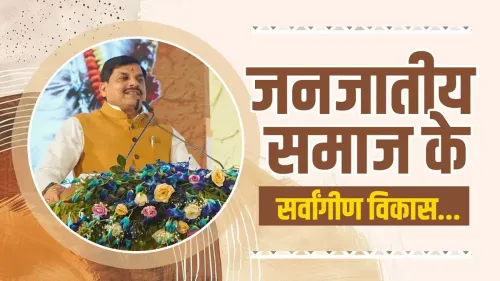
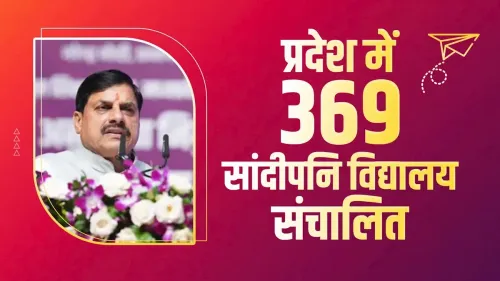
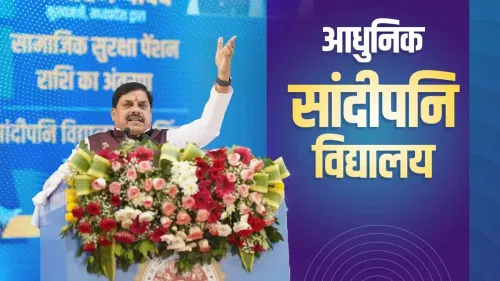
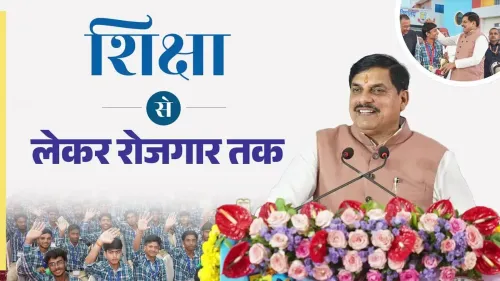
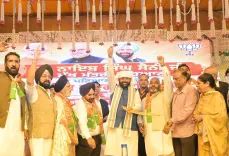
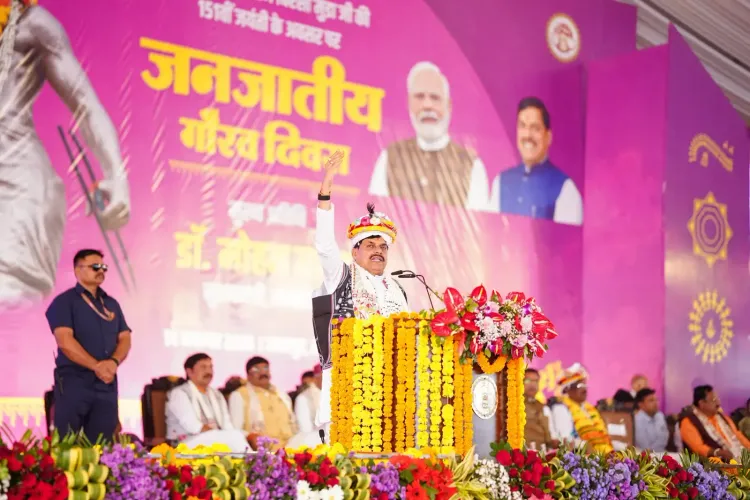
Madhya Pradesh Chief Minister Mohan Yadav on Saturday, 14 November announced that Sandipani schools would be established in three tribal-dominated districts of the state at a total outlay of ₹85 crore, as part of a broader push to expand education, healthcare and industrial development in tribal regions. The announcement was made at Garrison Ground, Jabalpur, during a 'Janjatiya Gaurav' event marking the birth anniversary of tribal icon Birsa Munda.
Which Districts Get the Schools
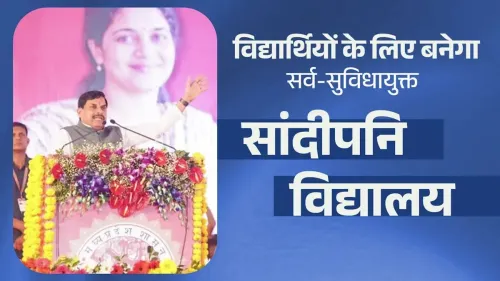
Chief Minister Yadav confirmed that the new Sandipani schools would come up in Chhindwara, Balaghat, and Dindori districts — all areas with significant tribal populations. The schools are intended to bring quality education closer to communities that have historically faced access gaps.
Beyond schooling, the state government is also constructing medical colleges in Dindori and Mandla — two of which will be named after tribal freedom fighters Raja Shankar Shah and Kunwar Raghunath Shah, following a Cabinet decision taken in Damoh. Industrial promotion initiatives are additionally underway in Balaghat, Mandla, Dindori and Jabalpur districts.
Welfare Schemes and Economic Support
Addressing the gathering, Chief Minister Yadav highlighted several ongoing welfare measures targeting tribal communities. Under the Rani Durgavati scheme, the state government is procuring kodo and kutki — traditional millets cultivated in tribal belts — while also encouraging cattle rearing and boosting milk production to support livestock-dependent households.
During the event, financial assistance was distributed to tribal youths under government welfare schemes, aimed at fostering self-employment and economic independence. The Chief Minister also honoured tribal achievers who have brought recognition to Madhya Pradesh through accomplishments in India and abroad.
Tribute to Birsa Munda
Speaking on the legacy of Birsa Munda, Chief Minister Yadav described the 19th-century tribal leader as a symbol of resistance who inspired communities to unite for the protection of water, forests and land, as well as their identity, self-respect and culture.
'At a time when the influence of British rule had spread across the world and it was said that the sun never set on their empire, tribal freedom fighter Birsa Munda raised the banner of resistance to protect his motherland, society, culture and rights,' Yadav said at the event.
He added that the Bharatiya Janata Party (BJP) government would ensure that the history, struggles and sacrifices of tribal heroes reached younger generations through programmes in every district, block, school, college and hostel across the state.
Symbolism and Cultural Connect
The Chief Minister referenced his government's decision to hold its first Cabinet meeting in Jabalpur in honour of Rani Durgavati, the Gond queen, as evidence of the administration's commitment to tribal heritage. He arrived at the event in traditional tribal attire, played a traditional drum, and was felicitated with a tribal turban and presented with a bow and arrows.
Yadav urged district administrations, social organisations and community leaders to organise similar events across Madhya Pradesh on Sunday, 15 November — Birsa Munda's birth anniversary — to honour the contributions of tribal heroes statewide.
Point of View
A city the BJP has already used as a venue for tribal-centric Cabinet meetings. The ₹85 crore figure is modest for three districts, and the real question is whether these schools will be staffed and operationalised within a credible timeline, or join a list of announced-but-delayed tribal infrastructure projects. The BJP's sustained focus on 'Janjatiya Gaurav' framing suggests tribal constituencies are seen as pivotal in Madhya Pradesh's electoral arithmetic — making delivery accountability all the more important.
NationPress
14 Nov 2026
Frequently Asked Questions
What are the Sandipani schools announced by MP CM Mohan Yadav?
Sandipani schools are new educational institutions announced by Chief Minister Mohan Yadav on 14 November 2024 for three tribal-dominated districts — Chhindwara, Balaghat and Dindori — at a combined cost of ₹85 crore. They are aimed at improving access to quality education in tribal regions of Madhya Pradesh.
Why was the announcement made on 14 November?
The announcement was made during the 'Janjatiya Gaurav' programme organised to commemorate the birth anniversary of tribal icon Birsa Munda, held at Garrison Ground in Jabalpur. The date is observed to honour the contributions of tribal communities and freedom fighters.
Which other development projects were announced for tribal districts?
Medical colleges are being constructed in Dindori and Mandla, named after tribal freedom fighters Raja Shankar Shah and Kunwar Raghunath Shah. Industrial promotion initiatives are also underway in Balaghat, Mandla, Dindori and Jabalpur districts.
What is the Rani Durgavati scheme mentioned by CM Yadav?
The Rani Durgavati scheme is a state government initiative under which Madhya Pradesh procures kodo and kutki — traditional millets grown by tribal farmers. It also supports cattle rearing and milk production to boost incomes for livestock-dependent tribal households.
Who is Birsa Munda and why is he significant?
Birsa Munda was a 19th-century tribal freedom fighter and folk hero who led resistance against British colonial rule to protect the land, forests and cultural identity of tribal communities. His birth anniversary is observed as 'Janjatiya Gaurav Diwas' across India to honour tribal heritage and contributions.