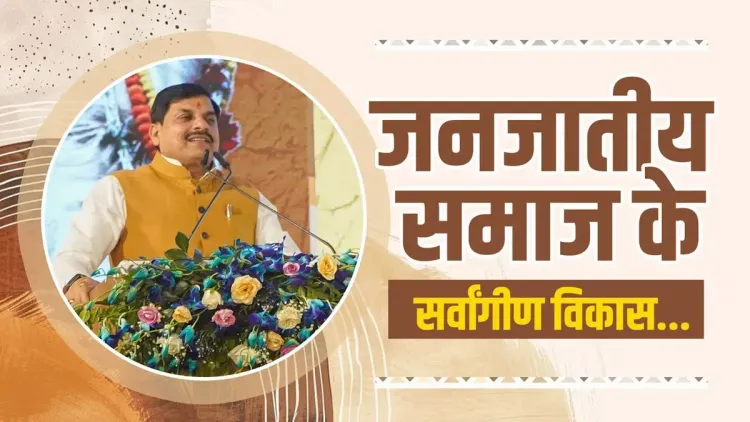
CM Mohan Yadav Vows Tribal Area Push on Education, Jobs
Synopsis
Madhya Pradesh CM Dr. Mohan Yadav has publicly committed to expanding education, health, industry and employment in the state's tribal regions, home to over 21% Scheduled Tribe population, with the next state budget seen as the key test of delivery.
Key Takeaways
Mohan Yadav declared tribal-area development — covering education, health, industry, and employment — his government's top priority on 5 November 2026 .
Madhya Pradesh has an Scheduled Tribe population exceeding 21 per cent , concentrated in districts including Jhabua , Alirajpur , and Mandla .
The state has maintained a dedicated Tribal Sub-Plan in its annual budget since the 1970s to channel ring-fenced resources to tribal areas.
Yadav has served as Chief Minister since December 2023 and has consistently framed inclusive growth as central to his administration.
The next state budget and district-level implementation reports will be the clearest measure of whether the stated priorities translate into on-ground action.
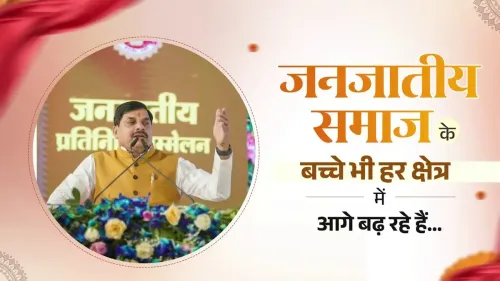
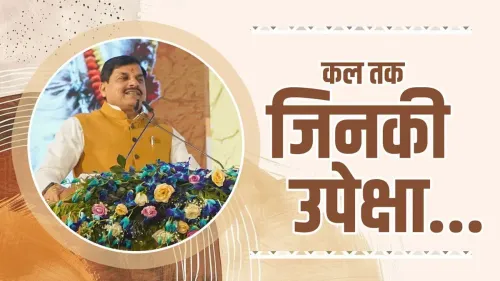
Tribal belts have long sat at the margins of India's development story — and Madhya Pradesh Chief Minister Dr. Mohan Yadav is making a pointed public commitment to change that calculus, declaring on 5 November 2026 that expanding education, health, industry, and employment in the state's tribal regions is his government's foremost priority.
Posting in Hindi, Dr. Yadav wrote: 'जनजातीय अंचलों में शिक्षा, स्वास्थ्य, उद्योग और रोजगार के अवसरों का विस्तार हमारी प्राथमिकता है।' — 'Expanding opportunities in education, health, industry, and employment in tribal regions is our priority. Our resolve is that the benefits of development reach every region and every section of the state.'
MP's Tribal Heartland: Who Is Being Addressed
Madhya Pradesh is home to one of India's largest Scheduled Tribe populations, accounting for over 21 per cent of the state's total. Districts such as Jhabua, Alirajpur, and Mandla form the core of this tribal belt — areas where access to quality schooling, healthcare facilities, and formal employment has historically lagged behind the state average.
The challenge is structural, not incidental. Terrain, connectivity deficits, and generational underfunding have compounded each other for decades. A political statement from the Chief Minister's office, then, carries weight precisely because it sets a public benchmark against which delivery will be measured.
The Budget Architecture Behind the Promise
Madhya Pradesh has maintained a dedicated Tribal Sub-Plan within its annual budget since the 1970s — a ring-fenced allocation designed to direct proportionate resources to Scheduled Tribe areas. The mechanism exists; what shifts with political cycles is the ambition and scale of its deployment.
Dr. Yadav, who has served as Chief Minister since December 2023, has repeatedly framed inclusive growth as a cornerstone of his tenure. Wednesday's post slots into that consistent messaging — but it also arrives ahead of a budget cycle, making the allocation decisions in the next state budget the clearest test of intent.
Four Pillars, One Sentence
The specificity in the CM's post is worth noting. By naming all four domains — education, health, industry, and employment — in a single breath, Dr. Yadav signals an integrated approach rather than a siloed one. Jobs without health infrastructure, or schools without industry to absorb graduates, deliver incomplete outcomes. The framing implies the government sees these as a connected chain.
Whether that vision translates into district-level implementation reports, new school buildings in Alirajpur, health sub-centres in Mandla, or industrial clusters near tribal blocks will become visible in the months ahead. The promise has been made, in public, with no ambiguity.
Point of View
But its four-pillar framing — education, health, industry, employment — reflects a deliberate pivot toward economic integration of tribal zones rather than welfare transfers alone, tracking a broader BJP governance philosophy visible across multiple states. With assembly elections a constant feature of India's political calendar, tribal constituencies in Madhya Pradesh carry significant electoral weight, and public commitments of this kind set a performance benchmark that opposition parties will cite when budget allocations fall short. The real test is not the statement but the Tribal Sub-Plan's share in the next annual budget and evidence of district-level delivery in India's most underserved scheduled-area blocks.
NationPress
6 Nov 2026
Frequently Asked Questions
What did Madhya Pradesh CM Mohan Yadav say about tribal development?
CM Dr. Mohan Yadav stated that expanding education, health, industry, and employment opportunities in tribal regions is his government's foremost priority, and that the benefits of development should reach every section of the state.
How large is Madhya Pradesh's tribal population?
Madhya Pradesh has one of India's largest Scheduled Tribe populations, making up over 21 per cent of the state's total, with high concentrations in districts such as Jhabua, Alirajpur, and Mandla.
What is the Tribal Sub-Plan in Madhya Pradesh's budget?
The Tribal Sub-Plan is a ring-fenced budgetary mechanism that Madhya Pradesh has maintained since the 1970s to direct proportionate state resources specifically toward Scheduled Tribe areas and their development needs.
When did Dr. Mohan Yadav become Chief Minister of Madhya Pradesh?
Dr. Mohan Yadav has served as Chief Minister of Madhya Pradesh since December 2023, following the BJP's victory in the state assembly elections.
How will Madhya Pradesh's tribal development commitments be measured?
Policy analysts point to the allocation in the next state budget under the Tribal Sub-Plan, as well as district-level implementation reports for education and health infrastructure in tribal blocks, as the clearest indicators of whether the stated priorities are being fulfilled.