CM Mohan Yadav Pushes Girls' Technical Education in MP
Synopsis
Madhya Pradesh Chief Minister Dr. Mohan Yadav on 12 July 2026 signalled a policy push to expand girls' access to technical and vocational education in the state, framing it as a key step toward making young women self-reliant and economically independent.
Key Takeaways
Mohan Yadav on 12 July 2026 publicly backed expanding girls' participation in technical and vocational education in Madhya Pradesh .
The initiative is framed around making young women self-reliant (aatmanirbhar) , echoing both state and national policy language.
Madhya Pradesh has existing women-centric education schemes including the Ladli Laxmi Yojana , which provides financial incentives for girls' higher education.
National frameworks including Skill India Mission , Pradhan Mantri Kaushal Vikas Yojana , and National Education Policy 2020 provide the policy backbone for such state-level drives.
Concrete impact will be measured through future state budget allocations and enrollment data from Madhya Pradesh's technical universities.
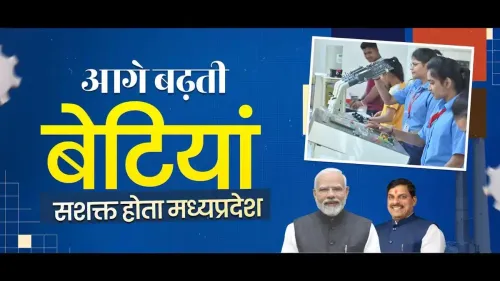
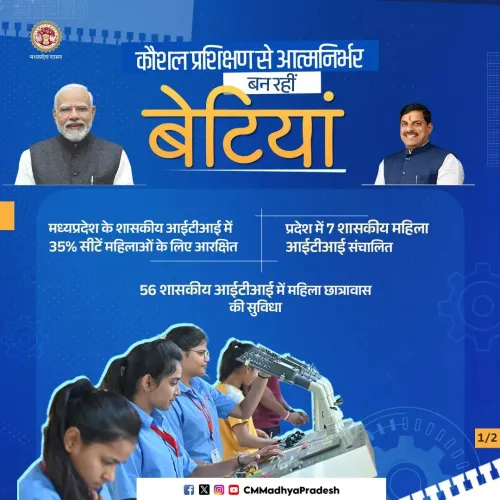
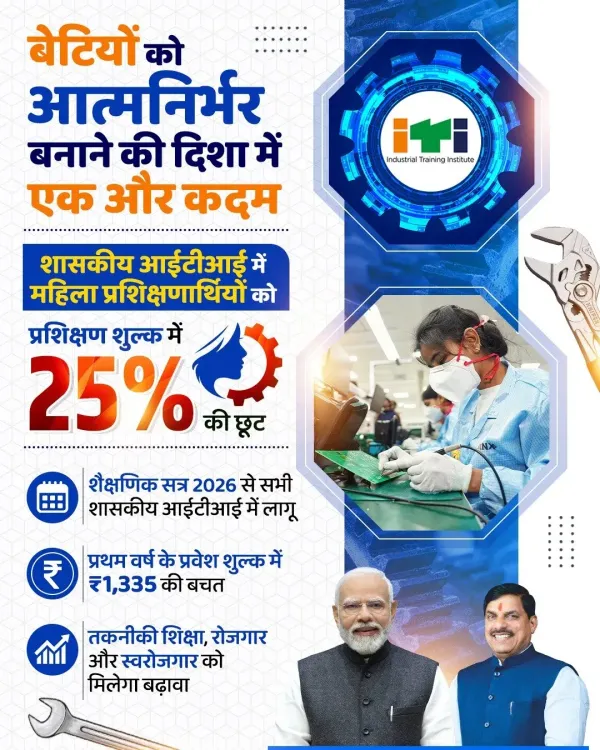
Madhya Pradesh Chief Minister Dr. Mohan Yadav on Sunday, 12 July 2026, highlighted a significant step toward increasing girls' participation in technical and vocational education and making them self-reliant, underscoring the state government's commitment to women-led development in Madhya Pradesh.
In his post, Dr. Yadav described the initiative as an important stride — 'तकनीकी एवं व्यावसायिक शिक्षा में बेटियों की भागीदारी बढ़ाने के साथ उन्हें आत्मनिर्भर बनाने की दिशा में महत्वपूर्ण कदम' ('an important step toward increasing daughters' participation in technical and vocational education and making them self-reliant'). The message signals a policy push that aligns with the state's broader agenda of empowering young women through skill-based learning.
Context
Girls' enrollment in technical and vocational streams has historically lagged behind that of boys across Indian states, including Madhya Pradesh. The state government, led by Dr. Mohan Yadav since December 2023, has positioned women's empowerment and education as central planks of its governance agenda. This latest emphasis on technical and vocational education for girls is consistent with that direction.
Madhya Pradesh has previously expanded the Ladli Laxmi Yojana — originally launched in 2007 — to provide financial support and incentives for girls' education up to higher levels, including professional courses. Such schemes have helped nudge enrollment figures upward, though gaps in technical streams remain a policy challenge.
Policy Backdrop
At the national level, the Beti Bachao Beti Padhao scheme, launched in 2015, created an institutional framework for improving the child sex ratio and promoting girls' education across states. Simultaneously, the Skill India Mission and the Pradhan Mantri Kaushal Vikas Yojana, also launched in 2015, introduced short-term vocational training with specific provisions to raise female participation in the workforce.
The National Education Policy 2020 further mandated the integration of vocational education from Class 6 onward, aiming to normalise skill-based learning for all students, including girls. Madhya Pradesh, governed by the BJP, has sought to align its state-level programmes with these national frameworks to accelerate outcomes for women in technical education.
Stakeholders and Impact
The primary beneficiaries of this policy direction are girl students and young women in Madhya Pradesh seeking pathways into technical trades, engineering, polytechnic courses, and vocational certification programmes. Greater female enrollment in these streams is directly linked to improved employability and entrepreneurship outcomes.
Families in semi-urban and rural parts of the state stand to gain as well, since vocational and technical qualifications offer quicker routes to economic independence compared with traditional academic tracks. Industry bodies and employers in sectors such as manufacturing, healthcare, and information technology also benefit from a larger, more diverse skilled workforce.
What's Next
Attention will now turn to Madhya Pradesh's state budget allocations for technical education and the annual enrollment data released by the state's technical universities, which will indicate whether the political emphasis translates into measurable gains. Observers will watch for specific scheme announcements, seat reservations, or financial incentive structures that give operational shape to the Chief Minister's stated intent.
If the state follows through with concrete programme expansions, it could serve as a model for other BJP-governed states seeking to close gender gaps in vocational and technical education — reinforcing a national pattern of using education policy to advance women's economic self-reliance.
Point of View
Particularly in a state with historically uneven female enrollment in technical streams. Whether the post precedes a concrete scheme announcement or budget line will determine its lasting policy significance.
NationPress
10 Oct 2026
Frequently Asked Questions
What did MP CM Mohan Yadav say about girls' education on 12 July 2026?
CM Dr. Mohan Yadav posted on X describing a significant step to increase girls' participation in technical and vocational education in Madhya Pradesh and make them self-reliant.
What is the Ladli Laxmi Yojana and how does it help girls in Madhya Pradesh?
The Ladli Laxmi Yojana, launched in 2007 by the Madhya Pradesh government, provides financial support and incentives for girls' education, including scholarships for higher and professional courses.
How does the Skill India Mission support women's technical education?
The Skill India Mission, launched in 2015, includes short-term vocational training programmes with specific provisions to increase female participation in technical and trade-based skills.
What does the National Education Policy 2020 say about vocational education for girls?
The NEP 2020 mandated integration of vocational education from Class 6 onward, aiming to normalise skill-based learning for all students, including girls, across India.
Which schemes support girls' technical and vocational education in India?
Key national schemes include Beti Bachao Beti Padhao, Skill India Mission, and Pradhan Mantri Kaushal Vikas Yojana, while Madhya Pradesh runs the Ladli Laxmi Yojana to support girls' education at the state level.