MP CMO highlights CM Mohan Yadav's push for girls' empowerment
Synopsis
The Madhya Pradesh Chief Minister's Office on 3 June 2026 framed girls' empowerment as a flagship agenda under CM Dr. Mohan Yadav, invoking 'strength to dreams, recognition to talent'. The post, tagging the state technical education handle and the Union women and child development ministry, signals continuity with the state's Ladli Laxmi legacy and a push toward technical-education pathways.
Key Takeaways
The Madhya Pradesh CMO posted on 3 June 2026 highlighting girls' empowerment under CM Dr.
The Hindi message promised 'strength to dreams, recognition to talent and a new direction to the future' for daughters.
The post tagged the Ministry of Women and Child Development and the state technical education handle, signalling cross-sector alignment.
Madhya Pradesh's flagship Ladli Laxmi Yojana , launched in 2007 , remains the anchor of the state's girl-child welfare architecture.
The framing complements the Centre's Beti Bachao Beti Padhao campaign launched in 2015 .
New scheme guidelines linking school support with technical education for girls are the key item to watch.
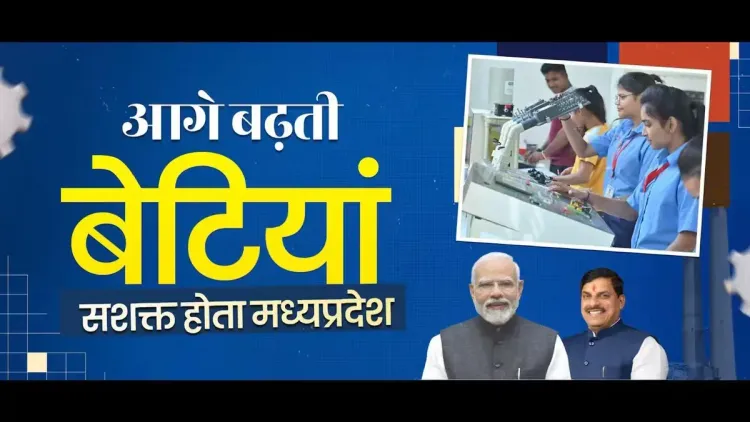
The Chief Minister's Office of Madhya Pradesh on 3 June 2026 projected the state's girl-child welfare agenda as a defining policy thrust under Chief Minister Dr. Mohan Yadav, framing it as a 'new chapter' in the empowerment of daughters. The post, accompanied by a video, tagged the Chief Minister, the state's technical education portfolio handle and the Union Ministry of Women and Child Development.
The message, originally in Hindi, read: 'Sapnon ko sambal, pratibha ko pehchan aur bhavishya ko nayi disha' ('Strength to dreams, recognition to talent and a new direction to the future') — adding that Madhya Pradesh is 'writing a new chapter in the empowerment of daughters' under the leadership of Dr. Mohan Yadav.
Context
The communication sits within a long-running narrative the state government has built around girls' education, health and economic security. By tagging both the state technical education handle and the Union women and child development ministry, the post signals a convergence between school-level welfare interventions and higher technical or skill-based pathways for female students.
The accompanying video, as referenced in the post, is positioned as a showcase of beneficiaries and outcomes, though specific programme details were not enumerated in the text itself.
Policy backdrop
Madhya Pradesh has been among the more visible states in India on girl-child welfare since the launch of the Ladli Laxmi Yojana in 2007, which provides staged financial deposits to families for daughters' education and milestone support. The scheme was designed to improve the state's sex ratio and to incentivise schooling for girls in families that might otherwise withdraw them early.
The state's interventions have run parallel to the Centre's Beti Bachao Beti Padhao campaign launched in 2015, in which Madhya Pradesh was among the initial focus geographies. Together with the central Sukanya Samriddhi savings instrument, these programmes form a layered architecture of financial and educational support that successive state administrations have retained and added to.
Under Dr. Yadav, who took charge as Chief Minister in December 2023, the welfare bouquet has continued, with periodic emphasis on linking school-stage support to higher-education and skilling outcomes.
Stakeholders and impact
The primary stakeholders are girl children and female students across Madhya Pradesh, particularly those from lower-income households for whom state deposits and tuition support can determine whether a girl completes secondary school or progresses to technical courses.
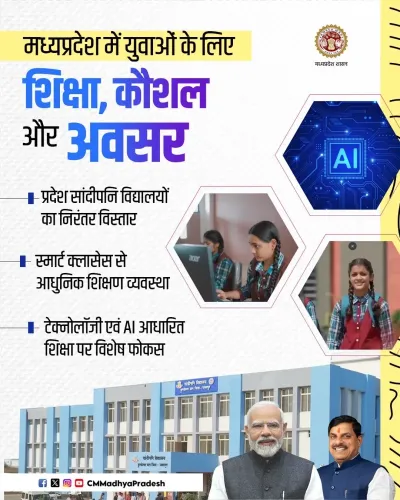
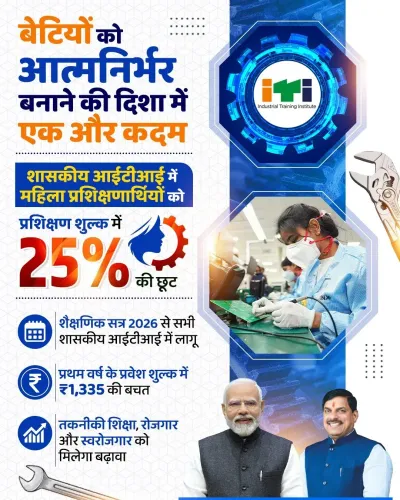
The tagging of the state technical education handle alongside the women and child development ministry suggests an intent to position girls as participants in technical and vocational streams, an area where female enrolment has historically lagged in many districts. For families, such signalling matters because it affects perceptions of post-school opportunities for daughters.
For the state administration, sustained messaging on girls' welfare also serves a political function — reinforcing continuity with predecessor governments that built the Ladli Laxmi brand, while attaching the current leadership to its next phase.
What's next
Observers will be watching for fresh guidelines or budget allocations from the state's departments of technical education and women and child development that translate this messaging into concrete entitlements — particularly any scheme features that bridge school-stage support with diploma, engineering or skilling pathways for girls.
If the state operationalises such a bridge, it could deepen the existing welfare model from cash-deposit incentives into a more outcome-linked pipeline, with implications for female workforce participation in Madhya Pradesh over the coming years.
Point of View
Slotting the Yadav administration into a girl-child welfare lineage that Madhya Pradesh has carefully cultivated since the Ladli Laxmi launch in 2007. The deliberate tagging of the technical education handle alongside the Union women and child development ministry hints at the next logical frontier — moving girls from cash-incentive beneficiaries to diploma and skilling pipelines. Politically, it lets the current government claim ownership of a popular legacy programme while signalling fresh ambition. The substance, however, will depend on whether budget lines and scheme guidelines follow the rhetoric.
NationPress
16 Sept 2026
Frequently Asked Questions
What did the Madhya Pradesh CMO say about girls' empowerment on 3 June 2026?
The Madhya Pradesh CMO said the state is writing a 'new chapter' in the empowerment of daughters under CM Dr. Mohan Yadav, promising strength to dreams, recognition to talent and a new direction to the future.
Who is the Chief Minister of Madhya Pradesh in 2026?
Dr. Mohan Yadav is the Chief Minister of Madhya Pradesh, having assumed office in December 2023.
What is the Ladli Laxmi Yojana in Madhya Pradesh?
Ladli Laxmi Yojana is a Madhya Pradesh government scheme launched in 2007 that provides staged financial deposits to families for the education and welfare of girl children, aimed at improving the sex ratio and girls' schooling.
How does Madhya Pradesh's girls' welfare push link to central schemes?
State programmes such as Ladli Laxmi operate alongside the Centre's Beti Bachao Beti Padhao campaign launched in 2015 and the Sukanya Samriddhi savings instrument, creating a layered support architecture for daughters.
What new direction is the MP government signalling for girls' education?
By tagging the state technical education portfolio along with the Union women and child development ministry, the CMO is signalling an intent to extend girls' welfare into technical and skilling pathways, beyond school-stage cash incentives.