MP CM Mohan Yadav Clears ₹855 Cr Forest Zoo in Ujjain
Synopsis
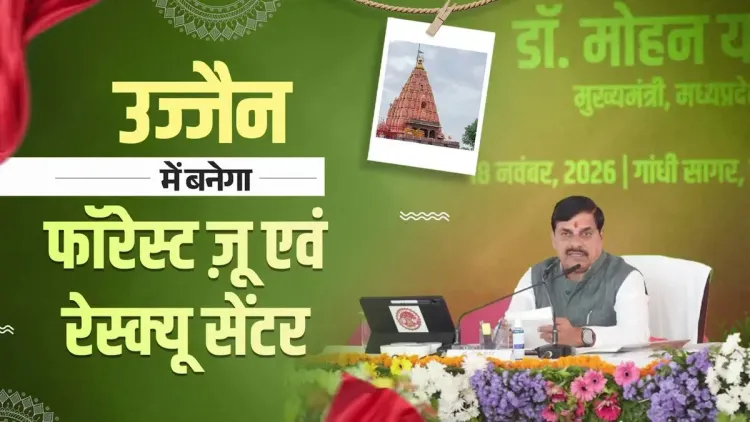
Chief Minister Dr. Mohan Yadav has approved a ₹855 crore Forest Zoo and Rescue Centre at Naulakhi Beed, Ujjain, covering 210 hectares. The facility will care for injured and aged wildlife while offering jungle safari experiences to tourists, deepening Madhya Pradesh's dual bet on conservation and eco-tourism.
Key Takeaways
The Chief Minister's Office of Madhya Pradesh announced approval of a modern Forest Zoo and Rescue Centre on 18 November 2026 .
The facility will be built at Naulakhi Beed, Ujjain , covering 210 hectares at a cost of ₹855 crore .
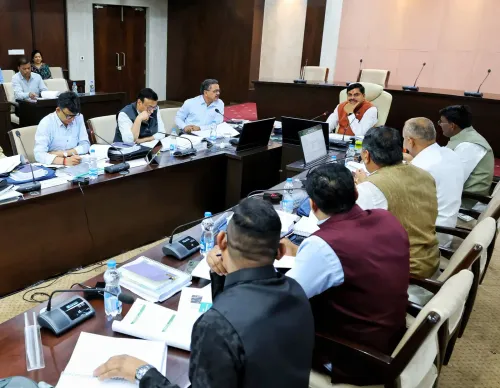
Mohan Yadav cleared the project at the Gandhi Sagar Cabinet meeting.
The centre will provide care for injured and aged wild animals alongside a jungle safari experience for tourists.
The project extends Madhya Pradesh's established pattern of pairing wildlife rescue infrastructure with visitor-revenue generation.
Environmental clearances, land consolidation, and a construction timeline are yet to be publicly announced.
A ₹855 crore modern Forest Zoo and Rescue Centre is coming to Ujjain — and it promises to reshape how central India thinks about wildlife care and eco-tourism in the same breath. The Chief Minister's Office of Madhya Pradesh announced on Wednesday, 18 November 2026 that Chief Minister Dr. Mohan Yadav has approved the ambitious facility, to be built across 210 hectares at Naulakhi Beed on the outskirts of the pilgrim city.
What Naulakhi Beed will become
The project is not a conventional zoo. At its core is a dual mandate: a dedicated rescue and rehabilitation centre for injured and aged wildlife, alongside a jungle safari corridor that lets visitors experience a forest ecosystem without entering a protected reserve. As CM Dr. Yadav's office put it, tourists will get the opportunity 'jangal safari ke madhyam se van paryavaran se rubaru hone ka avsar' — 'to acquaint themselves with the forest environment through jungle safari.'
That combination — rescue facility plus curated wilderness experience — is a deliberate design choice. It allows the state to generate visitor revenue that can cross-subsidise the more expensive, non-commercial work of caring for animals that can no longer survive in the wild.
MP's wildlife infrastructure push — and why Ujjain fits
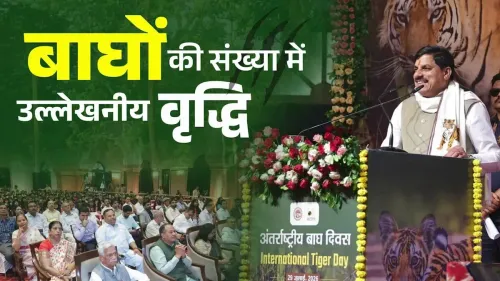
Madhya Pradesh has long held the title of India's tiger capital and has consistently expanded its protected-area network alongside visitor infrastructure. The state operates safari parks and rescue centres linked to reserves including Kanha, Bandhavgarh, and Pench. Those facilities, however, are concentrated in the forest-heavy eastern and central districts — distant from the state's western urban centres.
Ujjain, one of Hinduism's seven sacred cities, draws millions of pilgrims annually but has had little to offer the wildlife-curious traveller. A 210-hectare forest zoo within reach of that footfall changes the calculus entirely. The city sits in the Malwa plateau, and the Naulakhi Beed patch gives planners enough contiguous green cover to simulate a credible natural habitat.
The ₹855 crore question: scale and scrutiny ahead
At ₹855 crore, this is a significant capital outlay by any state-government standard. The funding was cleared at the Gandhi Sagar Cabinet meeting — a travelling cabinet session the MP government periodically holds outside Bhopal to signal regional attention, this edition named after the Gandhi Sagar reservoir area in Mandsaur-Neemuch.
What comes next will determine whether the ambition survives contact with reality. Environmental clearances for a 210-hectare site, land consolidation at Naulakhi Beed, and a construction timeline are all still to be publicly detailed. Staffing plans — veterinarians, forest rangers, safari guides — and decisions on which species will be housed are equally open questions.
Madhya Pradesh has the institutional muscle to execute large wildlife projects; it also has the track record of watching ambitious schemes stall at the clearance stage. The cabinet approval is the starting gun, not the finish line.
When the facility opens, Ujjain will offer a rare combination: ancient temple spires at dawn, and a jungle safari by afternoon. That is exactly the kind of multi-draw destination the state's tourism planners have been chasing.
Point of View
The government is consciously spreading the tourism dividend westward and deepening its pitch to pilgrimage-to-eco-tourism conversion — a segment with real growth potential. The Gandhi Sagar Cabinet format also signals the administration's intent to use travelling cabinet sessions as optics tools, anchoring big-ticket announcements to regions that feel overlooked by Bhopal. The real test is execution: Madhya Pradesh has the credibility to build it, but ₹855 crore and 210 hectares of clearances will face bureaucratic gravity regardless of political momentum.
NationPress
18 Nov 2026
Frequently Asked Questions
What is the Ujjain Forest Zoo and Rescue Centre?
It is a modern wildlife facility approved by Madhya Pradesh CM Dr. Mohan Yadav, to be built at Naulakhi Beed in Ujjain across 210 hectares at a cost of ₹855 crore. It will combine animal rescue and rehabilitation with a jungle safari experience for tourists.
Where exactly is Naulakhi Beed in Ujjain?
Naulakhi Beed is a forest patch on the outskirts of Ujjain city in western Madhya Pradesh. The state government has designated its 210-hectare expanse for the new Forest Zoo and Rescue Centre.
How much will the Ujjain Forest Zoo cost?
The project has been approved at a cost of ₹855 crore, cleared at the Gandhi Sagar Cabinet meeting of the Madhya Pradesh government.
What animals will the Ujjain rescue centre care for?
The facility is designed to care for injured and aged wild animals that can no longer survive in their natural habitat. Specific species to be housed have not yet been publicly announced.
When will the Ujjain Forest Zoo open?
A construction timeline and opening date have not yet been announced. The project is at the cabinet approval stage; environmental clearances and land consolidation are still pending.