MP CM Mohan Yadav Pushes Animal Husbandry to Boost Farmer Income
Synopsis
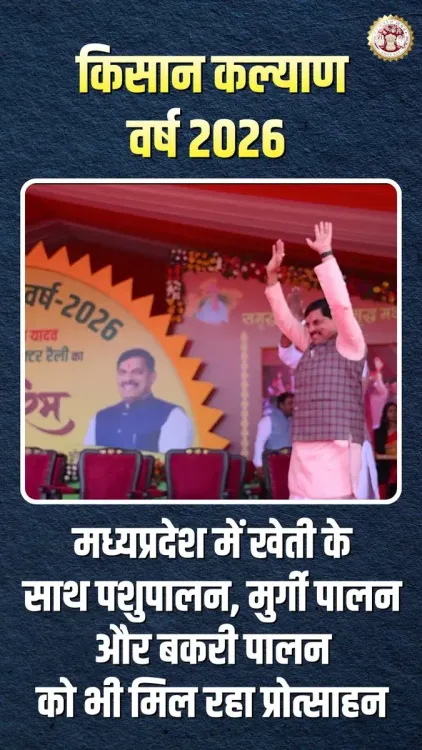
The Chief Minister's Office of Madhya Pradesh says the state is promoting animal husbandry alongside agriculture under Krishak Kalyan Varsh 2026, building additional income streams for farmers and reducing dependence on single-crop revenues.
Key Takeaways
The Chief Minister's Office of Madhya Pradesh posted on 29 September 2026 that livestock promotion is being integrated with agriculture to boost farmer incomes.
Krishak Kalyan Varsh 2026 is a state-declared year dedicated to farmer welfare, with animal husbandry as a key focus area.
Mohan Yadav , in office since December 2023 , has centred his administration on agriculture and rural development.
Madhya Pradesh has run dairy and animal husbandry programmes since the 2010s and participates in the central Rashtriya Gokul Mission launched in 2014 .
The state historically ranks among India's top milk-producing states, making livestock integration a natural fit for its rural economy.
Specific scheme targets and budget outlays under Krishak Kalyan Varsh 2026 are yet to be formally detailed in state budget or agriculture department releases.
A quiet but consequential shift is under way in Madhya Pradesh's fields: the state is weaving animal husbandry into its agricultural fabric, giving farmers a second income stream that does not wilt with every erratic monsoon. The Chief Minister's Office of Madhya Pradesh announced on Tuesday, 29 September 2026 that the state is actively promoting livestock rearing alongside conventional farming to build stronger, more resilient incomes for its rural communities.
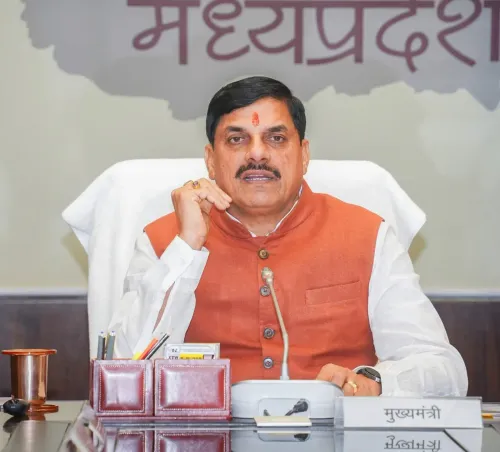
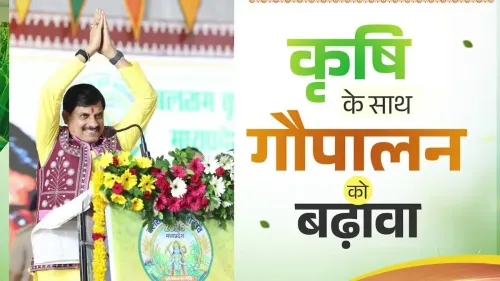
The post, shared under the hashtag #कृषक_कल्याण_वर्ष_2026 ('Krishak Kalyan Varsh 2026' — Farmer Welfare Year 2026), captures a broader state-level push being championed by Chief Minister Dr. Mohan Yadav. The message is direct: 'A strong foundation is being built for farmers' prosperity. In Madhya Pradesh, by promoting animal husbandry alongside agriculture, additional income opportunities are being created for farmers.'
Krishak Kalyan Varsh 2026 and the mixed-farming drive
The year 2026 has been designated as Krishak Kalyan Varsh — a dedicated state initiative to advance farmer welfare through a range of measures, with livestock promotion as a central pillar. The logic is straightforward: a family that earns from milk, poultry, or goats alongside its crops is far less exposed to a single bad harvest. That buffer matters enormously in a state where millions of small and marginal landholders depend almost entirely on rainfall-fed agriculture.
Madhya Pradesh is no newcomer to this model. The state has historically ranked among India's leading milk-producing states, and successive governments since the 2010s have run dairy and animal husbandry programmes to supplement crop income. The state has also participated in the central government's Rashtriya Gokul Mission, launched in 2014, which aims to conserve and develop indigenous bovine breeds and improve dairy productivity.
Why integrated farming is India's rural hedge
Madhya Pradesh's push mirrors a pattern seen across several Indian states that have turned to mixed-farming models — combining crops with dairy, poultry, or goatery — to cushion income volatility driven by monsoon uncertainty, rising input costs, and market price swings. For the state's small landholders, livestock is not just a livelihood supplement; it is a financial shock absorber.
Dr. Mohan Yadav, who took charge as Chief Minister in December 2023, has kept agriculture and rural development at the centre of his administration's priorities. The Krishak Kalyan Varsh framing signals an intent to consolidate those efforts into a single, visible year-long campaign — though the precise scheme details, budget outlays, and numerical targets for 2026 are yet to be formally announced through state budget sessions or agriculture department releases.
The announcement is a reminder that India's farm economy runs on more than just crop cycles. When a family's cattle shed earns as steadily as its fields, prosperity has a second engine — and that engine does not go quiet in a drought year.
Point of View
Budget lines, and on-ground delivery follow the announcement calendar.
NationPress
29 Sept 2026
Frequently Asked Questions
What is Krishak Kalyan Varsh 2026 in Madhya Pradesh?
Krishak Kalyan Varsh 2026 is a Madhya Pradesh state initiative that designates 2026 as a year dedicated to farmer welfare, with a focus on promoting animal husbandry alongside farming to create additional income streams for rural families.
How is Madhya Pradesh supporting farmers through animal husbandry?
The state is promoting integrated farming models that combine crops with livestock activities such as dairy, encouraging farmers to earn from cattle and other animals in addition to crop harvests, reducing dependence on a single income source.
What is the Rashtriya Gokul Mission and does MP participate in it?
Rashtriya Gokul Mission is a central government programme launched in 2014 to conserve and develop indigenous bovine breeds and improve dairy productivity. Madhya Pradesh participates in the mission as part of its broader animal husbandry push.
Who is Dr. Mohan Yadav and what is his agricultural policy focus?
Dr. Mohan Yadav is the Chief Minister of Madhya Pradesh, in office since December 2023. His administration has prioritised agriculture and rural development, including the Krishak Kalyan Varsh 2026 initiative promoting livestock alongside crop farming.
Is Madhya Pradesh a major milk-producing state in India?
Yes, Madhya Pradesh has historically ranked among India's leading milk-producing states, making animal husbandry a well-established sector that the state government is now formally integrating with its agricultural income support programmes.