CM Mohan Yadav launches PET-CT scan centre at Indore's M.Y. Hospital
Synopsis
Madhya Pradesh CM Dr. Mohan Yadav inaugurated a PET-CT scan centre at Indore's M.Y. Hospital under a PPP model with Sri Aurobindo Hospital. Similar centres are planned for Bhopal, Gwalior, Jabalpur and Rewa, while a robotic surgery unit is due at M.Y. Hospital within three months.
Key Takeaways
PET-CT scan centre inaugurated at the New Cancer Hospital Block of Mahatma Gandhi Memorial Medical College and M.Y.
Hospital, Indore on 18 October 2026 .
Centre built under a PPP model in collaboration with Sri Aurobindo Hospital , reducing state capital expenditure.
Identical advanced diagnostic centres are being set up at government medical colleges in Bhopal, Gwalior, Jabalpur, and Rewa .
A robotic surgery centre is to be established at M.Y.
Hospital with Sri Aurobindo Hospital's support within three months .
The initiative targets early detection and treatment of serious diseases for government-hospital patients across Madhya Pradesh.
The rollout follows Madhya Pradesh's phased expansion of government medical-college infrastructure since 2015 .
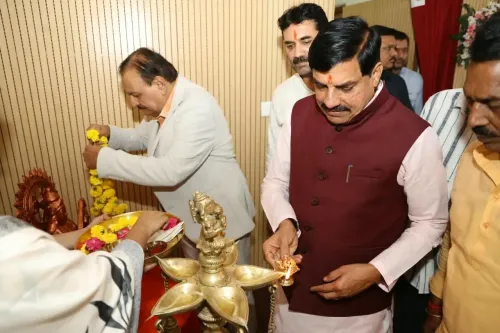
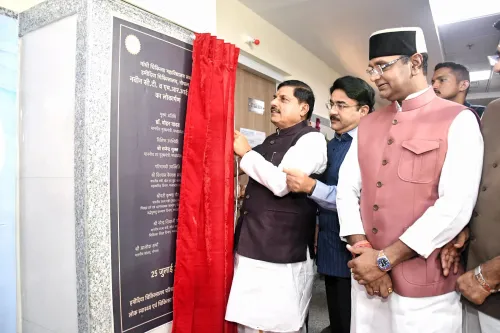
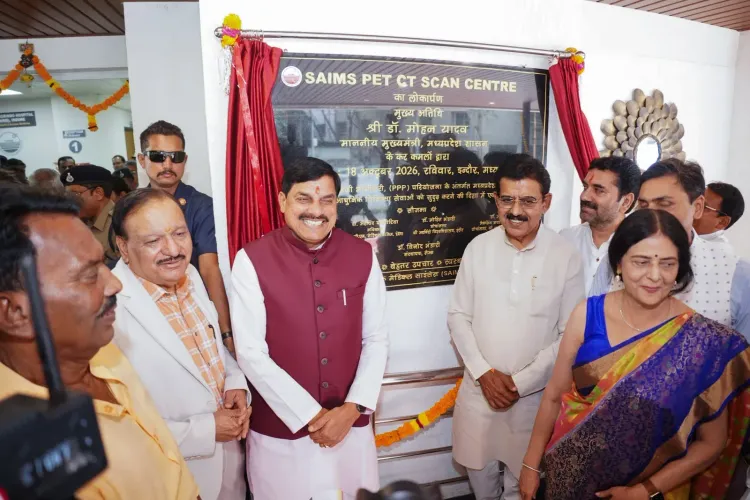
Cancer diagnosis in Madhya Pradesh's largest government hospital just got a significant upgrade. Madhya Pradesh Chief Minister Dr. Mohan Yadav on Sunday, 18 October 2026, inaugurated a PET-CT scan centre at the New Cancer Hospital Block of the Government Mahatma Gandhi Memorial Medical College and M.Y. Hospital, Indore — built under a public-private partnership (PPP) model in collaboration with Sri Aurobindo Hospital.
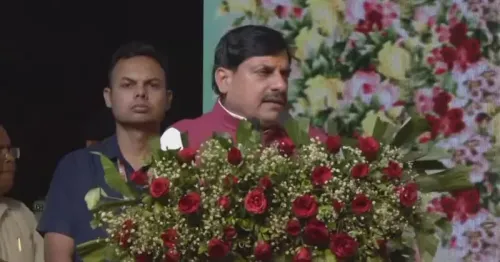
Posting on X, Chief Minister Yadav described the inauguration as part of a rapid expansion of healthcare facilities across the state: 'प्रदेश में तेज गति से हो रहा है स्वास्थ्य सुविधाओं का विस्तार' ('Health facilities are being expanded at a fast pace in the state'). He emphasised that the advanced centre would help in the timely detection and treatment of serious diseases, giving patients access to better medical care.
What a PET-CT scanner means for a government hospital's patients
A Positron Emission Tomography–Computed Tomography (PET-CT) scanner is among the most powerful diagnostic tools in oncology — combining metabolic imaging with anatomical detail to stage cancers, guide treatment decisions, and track responses. Until now, patients relying on government facilities in Madhya Pradesh largely had to seek these scans at private centres, often at prohibitive cost.
By situating the centre inside M.Y. Hospital's New Cancer Hospital Block — a tertiary-care facility serving patients from across western and central Madhya Pradesh — the state aims to close that access gap. The PPP route keeps capital expenditure off the state's books while leveraging Sri Aurobindo Hospital's technical expertise in running nuclear-medicine facilities.
Indore first, then Bhopal, Gwalior, Jabalpur and Rewa
The Indore inauguration is explicitly the first in a chain. Chief Minister Yadav announced that similar state-of-the-art PET-CT centres are being set up at government medical colleges in Bhopal, Gwalior, Jabalpur, and Rewa — effectively covering the five major government tertiary-care hubs that anchor Madhya Pradesh's public health network.
The rollout follows a pattern several Indian states have adopted since the early 2020s: deploying high-cost diagnostic equipment in public hospitals through PPP arrangements rather than waiting for full budgetary allocations, thereby accelerating access in tier-2 cities without straining state finances. Madhya Pradesh has been building out its government medical-college infrastructure in phases since 2015, and this diagnostic push aligns with a national emphasis on early detection of non-communicable diseases.
Robotic surgery at M.Y. Hospital within three months
The Chief Minister also announced that a robotic surgery centre will be established at M.Y. Hospital — again with Sri Aurobindo Hospital's collaboration — within the next three months. Robotic-assisted surgery allows greater precision in complex procedures, shorter hospital stays, and reduced post-operative complications. Its arrival at a government hospital marks a notable step: robotic surgery in India has, until recently, remained largely confined to high-end private chains in metropolitan cities.
Together, the PET-CT network and the robotic surgery centre represent a deliberate push to bring tertiary-care technologies into the public system — where the majority of Madhya Pradesh's 83 million-plus rural and semi-urban population seeks affordable treatment.
Five cities, one partnership, a three-month countdown on robotic surgery — Madhya Pradesh is betting that the PPP model can do in months what budget cycles would take years to deliver.
Point of View
Partnership-led model for advanced diagnostics. By anchoring Sri Aurobindo Hospital as a consistent implementation partner across multiple sites, the state reduces procurement and operational risk while compressing deployment timelines. The addition of robotic surgery at a government hospital — typically a private-sector preserve — could become a template other BJP-governed states watch closely. The real test, however, will be whether per-scan costs for patients remain genuinely affordable under the PPP tariff structure once the centres are fully operational.
NationPress
18 Oct 2026
Frequently Asked Questions
What is a PET-CT scan and why is it important for cancer patients?
A PET-CT scan combines metabolic and anatomical imaging to detect, stage, and monitor cancers with high precision. It helps doctors plan treatments more accurately and is now available free or subsidised at M.Y. Hospital, Indore, under the new PPP-model centre.
Which hospitals in Madhya Pradesh will get PET-CT scan centres?
PET-CT centres are being set up at government medical colleges in Indore (already inaugurated), Bhopal, Gwalior, Jabalpur, and Rewa under the same PPP arrangement with Sri Aurobindo Hospital.
What is the PPP model used for the PET-CT centre in Indore?
Under the public-private partnership (PPP) model, the government provides the space within the hospital while a private partner — here, Sri Aurobindo Hospital — installs and operates the equipment, sharing costs and expertise without requiring full government capital outlay.
When will the robotic surgery centre at M.Y. Hospital be ready?
Chief Minister Dr. Mohan Yadav announced that the robotic surgery centre at M.Y. Hospital, Indore, will be established within three months of the October 2026 announcement, in collaboration with Sri Aurobindo Hospital.
Who is Sri Aurobindo Hospital and what is its role in Madhya Pradesh?
Sri Aurobindo Hospital is a private healthcare provider based in Indore that is partnering with the Madhya Pradesh government to install and operate advanced diagnostic and surgical facilities — including PET-CT scanners and a robotic surgery centre — across multiple government medical colleges in the state.