MP CM Yadav: Worker Welfare Central to Semiconductor Push
Synopsis
At the MP Semiconductor Summit, CM Dr. Mohan Yadav declared that Madhya Pradesh is simultaneously pursuing industrial growth and worker welfare, reinforcing the state's dual-track pitch to attract chip and electronics investors under India's national semiconductor mission.
Key Takeaways
Mohan Yadav stated on October 23, 2026 that the MP government is continuously working for both industrial development and worker welfare.
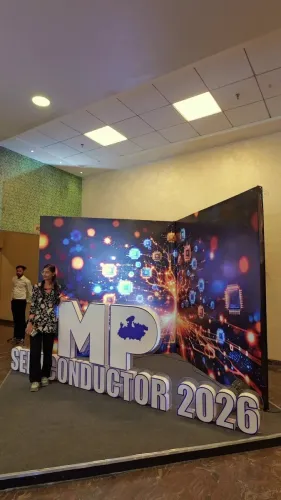
The statement was made in the context of the #MPSemiconductorSummit , a state-level event to attract semiconductor and electronics investment.
MAPIT and MPSeDC — the state's IT and electronics implementation agencies — were tagged, underscoring the operational focus of the summit.
Madhya Pradesh's Industrial Promotion Policy 2023–27 combines electronics manufacturing clusters with explicit labour welfare provisions.
The state is competing with Gujarat and Tamil Nadu to host units under India's Semiconductor Mission , launched in 2021 .
Specific investment announcements and detailed labour welfare measures from the summit are yet to be formally confirmed.
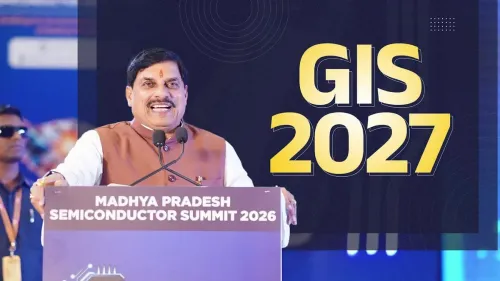
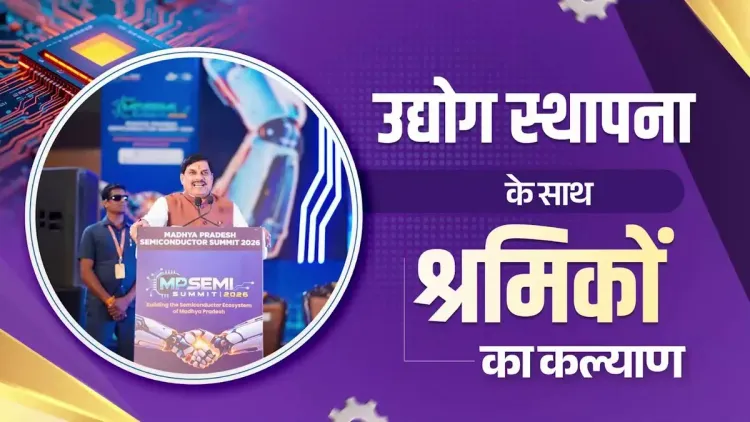
As Madhya Pradesh courts semiconductor giants at its state-level industry summit, Chief Minister Dr. Mohan Yadav made a pointed declaration on Friday, October 23, 2026: industrial growth and worker protection are not competing priorities — they are the same mission. The Chief Minister's Office of Madhya Pradesh posted the statement to X, signalling that labour welfare sits at the core of the state's aggressive industrial pitch.
In the original Hindi, 'प्रदेश सरकार उद्योगों की स्थापना और औद्योगिक विकास के साथ-साथ श्रमिकों के कल्याण एवं हितों के संरक्षण के लिए भी निरंतर कार्य कर रही है' — translated: 'The state government is continuously working not only for the establishment of industries and industrial development, but also for the welfare and protection of the interests of workers.' The remark came under the hashtag #MPSemiconductorSummit, tagging both MAPIT (Madhya Pradesh Agency for Promotion of Information Technology) and MPSeDC (Madhya Pradesh State Electronics Development Corporation under the Department of Science and Technology).
MP's Semiconductor Gambit — and What Makes It Different
Madhya Pradesh has been positioning itself as a lower-cost alternative to established chip and electronics hubs in Gujarat and Tamil Nadu, combining land incentives and infrastructure support with explicit commitments to worker protections. The state's Industrial Promotion Policy 2023–27 specifically emphasises electronics manufacturing clusters alongside labour welfare provisions — a dual-track strategy designed to reassure investors worried about social stability and workforce quality.
The backdrop is national: India's Semiconductor Mission, launched in 2021, has set off a fierce inter-state competition to host chip fabrication and assembly units under Production Linked Incentive and ISM frameworks. States that can demonstrate both cost competitiveness and regulatory compliance are pulling ahead. CM Yadav's public framing puts Madhya Pradesh squarely in that camp.
MAPIT and MPSeDC: The Execution Arms
The two agencies tagged in the post are not ceremonial presences. MAPIT drives IT and electronics policy implementation across the state, while MPSeDC functions as the operational arm under the Department of Science and Technology — together forming the institutional backbone that would translate any summit-level MoUs into on-the-ground projects. Their visibility in this communication signals that the summit is as much about execution architecture as it is about investor optics.
The MoUs, specific investment figures, and detailed labour welfare measures from the #MPSemiconductorSummit are yet to be formally announced. But the political signal is unmistakable — Madhya Pradesh wants investors to know that a stable, protected workforce is part of the deal, not a footnote to it.
In the race to become India's next chip corridor, the states that marry capital attraction with worker credibility may well be the ones that close the deals. Dr. Mohan Yadav is betting Madhya Pradesh can do both at once.
Point of View
But a stable, state-backed workforce. This dual framing mirrors a broader national pattern where states competing under the India Semiconductor Mission must differentiate beyond incentives alone. For the BJP government in Bhopal, it also serves a domestic audience: workers watching rapid industrialisation need reassurance that growth is not at their expense. Whether the summit produces binding MoUs that honour both commitments will be the real test of this positioning.
NationPress
23 Oct 2026
Frequently Asked Questions
What is the MP Semiconductor Summit?
The MP Semiconductor Summit is a state-level event organised by the Madhya Pradesh government to attract semiconductor and electronics manufacturers and investors, supported by agencies MAPIT and MPSeDC.
What did CM Mohan Yadav say about workers at the MP Semiconductor Summit?
CM Dr. Mohan Yadav stated that the state government is continuously working not only for industrial establishment and development, but equally for the welfare and protection of the interests of workers.
What is India's Semiconductor Mission?
India's Semiconductor Mission, launched in 2021, is a central government initiative to develop domestic chip manufacturing capabilities, with states competing to host fabrication and assembly units under its Production Linked Incentive framework.
What is Madhya Pradesh's Industrial Promotion Policy 2023-27?
It is the state's medium-term industrial policy that emphasises electronics manufacturing clusters while also including provisions for labour welfare, forming the policy backbone for initiatives like the semiconductor summit.
What do MAPIT and MPSeDC do in Madhya Pradesh?
MAPIT (Madhya Pradesh Agency for Promotion of Information Technology) implements IT and electronics policy, while MPSeDC (Madhya Pradesh State Electronics Development Corporation) operates under the Department of Science and Technology — together they execute the state's electronics investment agenda.