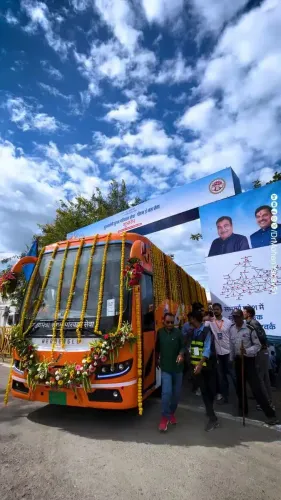
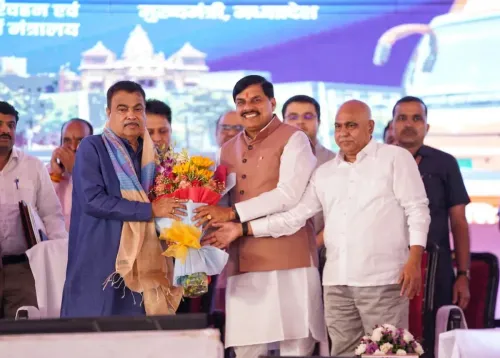
CM Mohan Yadav launches transport scheme, unveils Bhopal Master Plan-2047
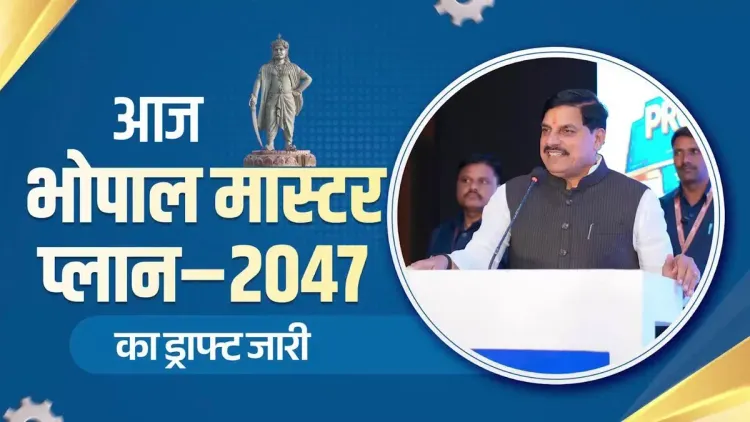
Synopsis
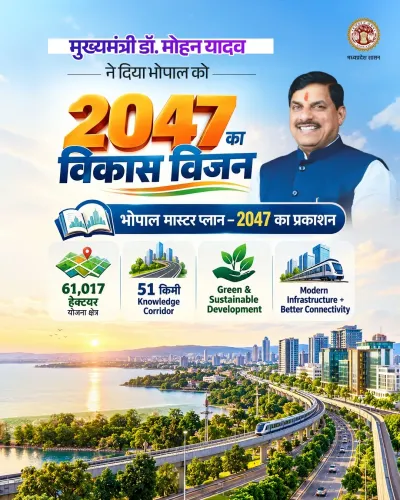
Madhya Pradesh CM Dr. Mohan Yadav on 26 September 2026 launched the 'Mukhyamantri Sugam Parivahan Seva' to strengthen public transport and published the draft Bhopal Master Plan-2047, marking two simultaneous urban development decisions for the state capital.
Key Takeaways
Bhopal Master Plan-2047 draft published on 26 September 2026 , charting the city's long-term urban development framework.
Mukhyamantri Sugam Parivahan Seva launched by the Madhya Pradesh government to strengthen public transport in the state.
Both decisions were announced by Chief Minister Dr.
Mohan Yadav via the official Chief Minister's Office account.
The draft master plan will now require public consultation before it can be formally notified as law.
The two announcements reflect a coordinated approach linking urban mobility with long-range city planning for Bhopal .
Two decisions, one city, one evening — and Madhya Pradesh Chief Minister Dr. Mohan Yadav is framing both as a turning point for Bhopal. On Saturday, 26 September 2026, the Chief Minister's Office announced the launch of the 'Mukhyamantri Sugam Parivahan Seva' — a new public transport initiative — alongside the publication of the draft Bhopal Master Plan-2047, a long-term urban development blueprint for the state capital.
What the Master Plan-2047 means for Bhopal's future
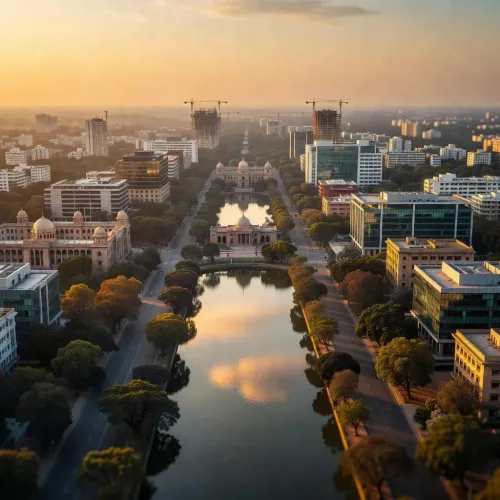
The draft Bhopal Master Plan-2047 is the state government's attempt to chart a planned, comprehensive growth path for the capital city over the next two decades. Master plans of this kind lay the legal and spatial groundwork for land use, infrastructure corridors, green zones, housing density, and commercial expansion. The Chief Minister's Office described it as an 'aithasik kadam' — an historic step — toward 'planned and holistic development' of Bhopal.
For a city that has long grappled with unplanned peripheral growth and infrastructure pressure, a fresh long-range master plan carries real stakes. Indian cities are required under urban planning law to periodically revise their development plans, and the 2047 horizon aligns Bhopal's framework with national urban planning cycles. The draft publication now opens the door for public consultation — the next critical test of how inclusive the process will be.
Mukhyamantri Sugam Parivahan Seva: strengthening the public bus network
Running in parallel, the state government announced the launch of the Mukhyamantri Sugam Parivahan Seva, described as a significant decision to 'strengthen public transport.' The name — 'Sugam' meaning easy or convenient — signals a focus on accessible, affordable last-mile connectivity for ordinary commuters. Details of the scheme's operational scope, routes, and fleet size were not specified in the official announcement.
The pairing of a transport service launch with a master plan publication is deliberate policy logic: urban master plans and mobility infrastructure are interdependent. Where and how people move shapes where cities grow, and vice versa. Bhopal, as both a fast-expanding capital and a heritage city, needs that integration to hold.
Public consultation: the draft's next hurdle
The publication of the draft is the beginning, not the end. Under standard planning protocol, the Bhopal Master Plan-2047 must now go through public objections and suggestions before it can be notified as law. How the government handles that consultation — whether it is genuinely participatory or procedural — will determine the plan's credibility and legal durability.
Similarly, the operational rollout of the Mukhyamantri Sugam Parivahan Seva will be watched for coverage, frequency, and whether it reaches Bhopal's underserved neighbourhoods. Announcements are easy. Timetables are the proof.
Point of View
Infrastructure-forward governance signal. Master plans, however, carry political risk: they zone land, restrict some uses, and invite stakeholder pushback during public consultation. The real test for both announcements will come in execution — how quickly the Sugam Parivahan Seva reaches underserved areas and whether the 2047 plan survives consultation without being diluted into a growth-permissive document that serves developer interests over planned density.
NationPress
26 Sept 2026
Frequently Asked Questions
What is the Bhopal Master Plan-2047?
The Bhopal Master Plan-2047 is a draft long-term urban development framework for Bhopal, published by the Madhya Pradesh government on 26 September 2026. It is designed to guide the city's planned and comprehensive growth through land use, infrastructure, and zoning regulations up to the year 2047.
What is Mukhyamantri Sugam Parivahan Seva?
Mukhyamantri Sugam Parivahan Seva is a public transport initiative launched by the Madhya Pradesh state government. It aims to strengthen and improve public transport connectivity, with 'Sugam' meaning easy or convenient access for commuters.
Who announced the Bhopal Master Plan-2047?
The announcement was made by Madhya Pradesh Chief Minister Dr. Mohan Yadav through the official Chief Minister's Office on 26 September 2026.
What happens after the Bhopal Master Plan-2047 draft is published?
After publication of the draft, the plan is typically open for public objections and suggestions before it can be formally notified as law. This public consultation phase is a standard requirement under Indian urban planning protocols.
How does the Bhopal Master Plan-2047 affect residents?
The master plan will determine land use, housing zones, commercial areas, green spaces, and infrastructure corridors in Bhopal until 2047. Residents have the opportunity to raise objections or suggestions during the public consultation period that follows the draft's publication.