MP CMO highlights digital agriculture services empowering farmers
Synopsis
The Chief Minister's Office of Madhya Pradesh has highlighted that farmers in the state are being empowered through digital agricultural services, reaffirming technology-led extension as a continuing state priority within India's wider Digital India and e-NAM policy framework.
Key Takeaways
The Chief Minister's Office of Madhya Pradesh posted on 4 June 2026 on digital agriculture services for farmers.
The Hindi message translates as 'farmers are being empowered through digital agricultural services'.
Madhya Pradesh is a major producer of wheat, soybean, gram and pulses with 55 districts.
Digital agriculture in India draws from the National e-Governance Plan in Agriculture (2010-11) , Digital India (2015) and e-NAM (2016) .
No specific app, portal or beneficiary count was named in the post.
The Chief Minister's Office of Madhya Pradesh on 4 June 2026 amplified a message underscoring that farmers across the state are being empowered through digital agricultural services. The post, shared from the official handle of the state's top executive office, frames technology-led extension as a continuing priority for the agrarian economy of Madhya Pradesh.
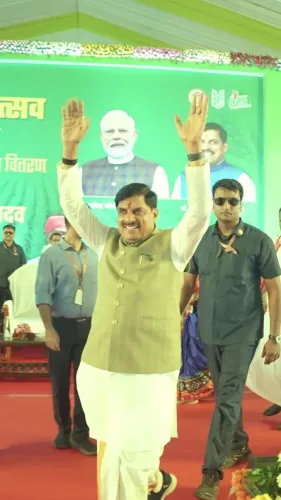
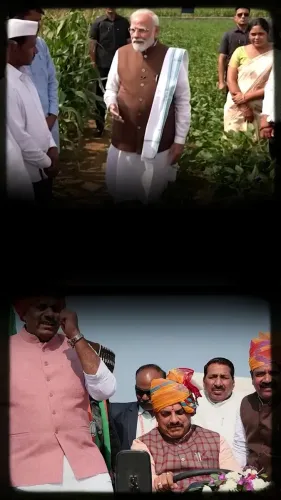
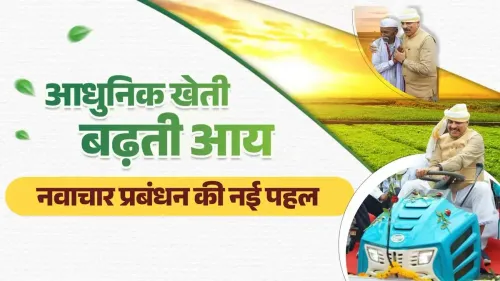
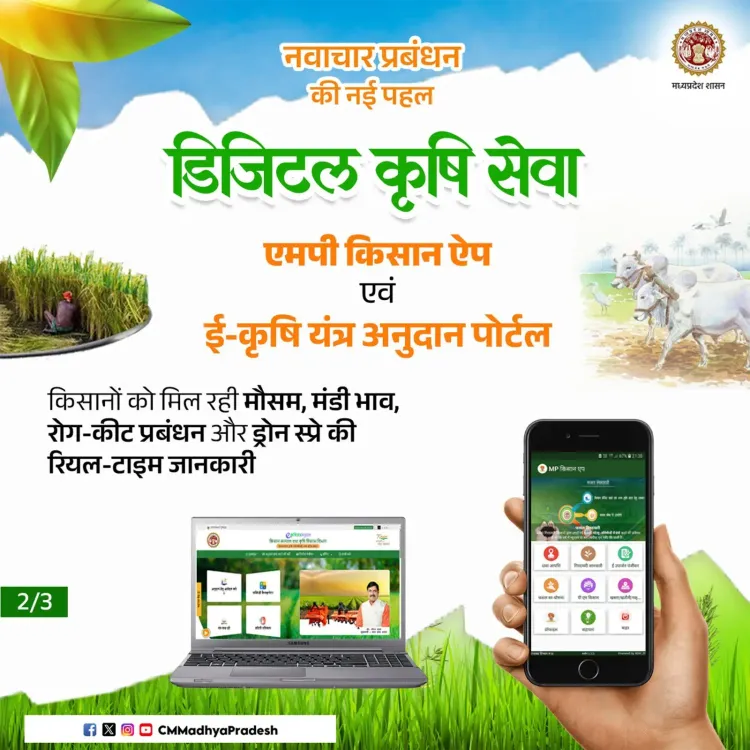
The original message, written in Hindi, reads 'digital krishi seva se sashakt ho rahe kisan' (farmers are being empowered through digital agricultural services). It was accompanied by a single image and shared on the verified handle of the Chief Minister's Office.
Context
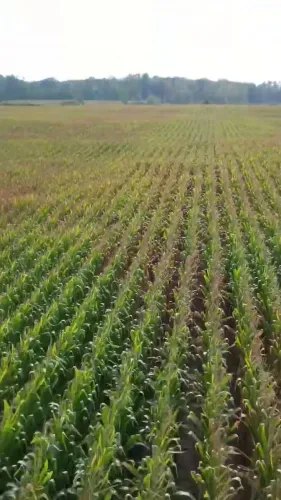
Madhya Pradesh is among India's largest agricultural states by sown area and a leading producer of wheat, soybean, gram and pulses. Successive state administrations have positioned digital tools, ranging from mobile advisories to online mandi linkages, as critical instruments to widen the reach of extension services and reduce information gaps for cultivators.
The post does not name a specific application, portal or beneficiary count. It instead signals continued political endorsement of digital delivery as the chosen vehicle to bring crop, market and welfare information closer to farm gates across the state's 55 districts.
Policy backdrop
India's digital agriculture push sits within a broader policy lineage. The National e-Governance Plan in Agriculture, launched in 2010-11, formalised farmer-centric portals and mobile services as a delivery channel. The Digital India programme, approved in 2015, expanded the underlying digital infrastructure for e-governance across sectors, including agriculture.
A year later, in 2016, the Centre rolled out the Electronic National Agriculture Market (e-NAM) to create a unified online trading platform for agricultural commodities. Madhya Pradesh has been an active participant in these national frameworks, integrating select mandis with e-NAM and layering its own state-level applications for soil health, crop advisory and direct benefit transfers.
Stakeholders and impact
The primary stakeholders are the state's farmers, a constituency that spans smallholders, tenant cultivators and large landholders. Digital services, when adopted at scale, are intended to lower transaction costs, reduce information asymmetry on prices and weather, and accelerate subsidy delivery into bank accounts.
For the state government, sustained communication on digital agriculture also serves a political function: it links the administration's record to a tangible, technology-driven welfare narrative ahead of routine policy reviews and budget cycles. For private agritech firms and cooperative networks, such public messaging often signals continued state appetite for partnerships in extension, advisory and market-linkage platforms.
What's next
Observers will watch for follow-on announcements that put numbers behind the message, such as fresh enrolment data on state portals, new mandi integrations with e-NAM, or the launch of updated mobile applications by the Madhya Pradesh agriculture department. State budget allocations for digital agriculture infrastructure in the next fiscal cycle will offer a clearer measure of how the rhetoric translates into outlay.
If the messaging is followed by specific scheme iterations or measurable enrolment targets, it could mark a sharper phase in the state's digital agriculture journey. Until then, the post stands as a high-level affirmation that technology-led farmer empowerment remains a stated priority of the Chief Minister's Office.
Point of View
Where digital agriculture is invoked as both governance shorthand and political signalling. Madhya Pradesh, with its heavy reliance on wheat and soybean, has incentive to stitch state-level applications into national platforms like e-NAM to firm up its claim as a tech-forward agrarian economy. The absence of specific numbers or scheme names suggests this is a thematic reaffirmation rather than a launch moment. The real test will be whether subsequent budget lines and app rollouts give the rhetoric measurable depth.
NationPress
20 Oct 2026
Frequently Asked Questions
What did the Madhya Pradesh CMO post about on 4 June 2026?
The Chief Minister's Office of Madhya Pradesh posted that farmers in the state are being empowered through digital agricultural services. The Hindi message was shared on the official handle along with an image.
What is digital agriculture in Madhya Pradesh?
It refers to the use of mobile applications, online portals and electronic services to deliver crop advisory, market prices, soil health information and subsidies to farmers in Madhya Pradesh, drawing on both state and central platforms.
How does e-NAM help Madhya Pradesh farmers?
e-NAM, launched in 2016, is a unified online trading platform that links agricultural mandis across states. Integrated Madhya Pradesh mandis allow farmers to access a wider buyer base and more transparent price discovery for their produce.
Which national schemes support digital agriculture in India?
Key frameworks include the National e-Governance Plan in Agriculture from 2010-11, the Digital India programme approved in 2015, and the Electronic National Agriculture Market (e-NAM) launched in 2016.
What should farmers watch for next from the Madhya Pradesh government?
They should look out for new mobile apps or portals from the state agriculture department, fresh mandi integrations with e-NAM, and budget allocations earmarked for digital agriculture infrastructure in upcoming fiscal cycles.