Is the MP electoral roll revision gaining traction with over 99,000 inclusion requests?
Synopsis
The electoral roll revision in Madhya Pradesh is witnessing an enthusiastic response, with over 99,000 inclusion requests recorded. This significant participation reflects the state's commitment to ensuring accurate voter representation ahead of the upcoming elections. Learn how political parties are actively engaging and what it means for democracy in the region.
Key Takeaways
Significant participation in electoral roll revision with over 99,000 inclusion requests.
Political parties actively engaging in the process, highlighting their roles in voter mobilization.
The revision is critical for accurate voter representation in upcoming elections.
Citizens encouraged to check the draft roll and submit claims.
Overall, a positive step towards inclusive democracy .
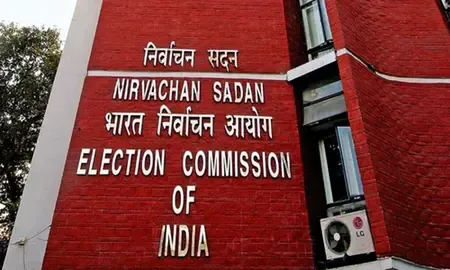
Bhopal, Jan 1 (NationPress) The Chief Electoral Officer (CEO) of Madhya Pradesh has released the first daily report on the Special Intensive Revision (SIR) of the electoral rolls, showcasing significant engagement in refreshing the voter registry.
This initiative, which runs from December 23, 2025, until January 22, 2026, seeks to enhance the Draft Electoral Roll, currently comprising 5,31,31,983 electors, ensuring precision for the forthcoming elections.
From December 23, 2025, to January 1, 2026, the report highlights a surge in claims and objections primarily initiated by political factions and individual voters.
In Section A, national parties submitted claims via their Booth Level Agents (BLAs).
The Bharatiya Janata Party (BJP) led the charge with 371 BLAs, filing 920 claims for inclusion and 27 for exclusion. The Indian National Congress (INC) followed with 159 BLAs, 279 inclusions, and 43 exclusions. The Bahujan Samaj Party (BSP) contributed with 18 BLAs, 19 inclusions, and 17 exclusions. Other national parties such as the Aam Aadmi Party (AAP), Communist Party of India (Marxist) [CPI(M)], and National People’s Party displayed no activity, while state parties reported no involvement.
In total, 548 BLAs facilitated 1,218 inclusion claims and 87 exclusion objections. The CEO remarked that BLAs can collect Form 6 (inclusions) and Form 7 (objections) from the public, but only adequately completed forms with required declarations are considered—generic complaints are not accepted. Names will be officially included in the electoral roll only after the necessary verifications are completed.
Before October 27, 2025, during ongoing updates, 42,953 Form 6 applications for additions and 24,709 Form 7 applications for deletions were recorded. After the draft was published, direct submissions from voters surged in Section D: 85,889 Form 6 for inclusions and 5,894 Form 7 for exclusions, resulting in a net inclusion of 79,995. Section E noted zero affidavits under Section 2(g) of the Representation of the People Act, 1950, from non-voters seeking exclusions, as per Rule 20(3)(b) of the Registration of Electors Rules, 1960.
In total, the net requests for inclusion stand at 99,370. This number reflects a strong civic commitment, particularly in a state with over 53 million voters. Election officials underline the significance of this revision for fostering inclusive democracy.
Citizens are encouraged to verify the draft roll at polling stations or online and promptly submit claims. With no major impediments reported, the process is anticipated to ramp up, potentially enhancing voter turnout in upcoming elections.
Political analysts view this as a preparatory measure for assembly or national elections, underscoring the proactive roles of parties in voter mobilization.
Point of View
It's essential to recognize the importance of this electoral roll revision in Madhya Pradesh. The significant engagement from political parties and citizens reflects a healthy democratic process. It showcases a commitment to inclusive representation, which is vital for the integrity of upcoming elections. The active involvement of voters and political entities should be commended as a positive step towards ensuring a vibrant democracy.
NationPress
22 Sept 2026
Frequently Asked Questions
What is the Special Intensive Revision (SIR)?
The Special Intensive Revision (SIR) is a process initiated by the Chief Electoral Officer to update the electoral rolls, ensuring accuracy and inclusivity ahead of elections.
How long will the electoral roll revision process take?
The electoral roll revision is scheduled from December 23, 2025, to January 22, 2026.
What is the significance of the net inclusion requests?
The net inclusion requests reflect strong civic engagement and a commitment to ensuring that every eligible voter is represented in the electoral process.